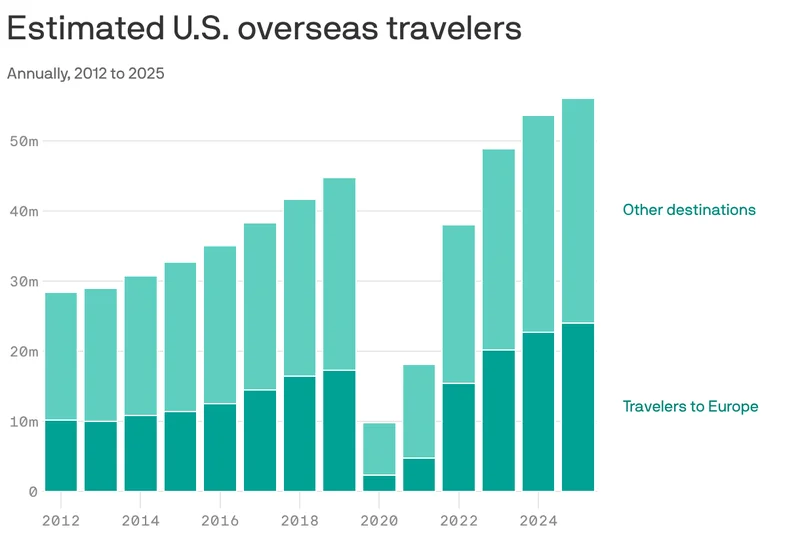
Data: International Trade Administration; Chart: Sara Wise/AxiosEven as U.S. policy has walled off Washington, D.C., from friends across the pond, Americans' travel overseas is reaching new heights.Why it matters: Much like the resilient consumer, the American tourist keeps riding the post-COVID travel wave, even as debt delays life milestones and global perceptions of the U.S. slip.Driving the news: More than 56 million U.S. residents traveled overseas last year, according to the International Trade Administration's estimate, up from roughly 53.7 million in 2024 and around 32.7 million a decade prior.Of that, a record high of nearly 24 million traveled to Europe in 2025, according to Survey of International Air Travelers (SIAT) data going back to 2012.The largest share of those travelers went to the United Kingdom, Italy or France — but Portugal and Greece saw the biggest growth in U.S. visits between 2015 and 2025, the Wall Street Journal reported from its analysis of SIAT data.Between the lines: The wealthiest income bracket is driving overseas travel — followed by those with a combined income of $100,000 to $119,000. Older travelers, in the 55-64 range and above, led the pack, followed by the youngest jet-setters, aged 18-24.What they're saying: Rich Harrill, the director of the University of South Carolina's International Tourism Research Institute, says older and younger generations have two schools of traveling thought.Baby boomers and Gen X, he says, are viewing travel as "something they have to do." Plus, for those older generations with more discretionary income, relocation could be another factor driving them overseas, Harrill said.Meanwhile, members of younger generations are prioritizing experiences over traditional life milestones. For them, Harrill says, "experiential tourism has a better return on investment ... than going out and buying shiny new stuff."By the numbers: That globetrotting itch is seen in passport data as well: The U.S. issued a record-shattering 27.3 million passports in FY 2025.Reality check: The glamorous Euro Summer — or a more permanent Euro move — is far from feasible for every traveler.This summer's higher airfare costs and broader economic concerns fueled the rise of the domestic weekend trip, Axios' Sami Sparber reports. The bottom line: Harrill, who is one of the thousands of Americans soaking up the summer in Greece, says he got his PhD in tourism at a time when it was considered "somewhat frivolous." But today, he says, "Among my students, travel's a must-have. You're not cool unless you go somewhere." Still, travel is more than swiping a credit card and snapping the perfect Instagram shot, he says. It's about the hidden gems, the word-of-mouth finds — and the places that make you picture a new home.Go deeper: Canadians' travel pullback costs U.S. tourism billions
Americans' wanderlust hits new heights