Major General Mikhail Drapaty, 43, former commander of the Joint Forces Command of Ukraine’s army, will be the country’s new commander-in-chief. He has been in the military service since 2004 and took part in hostilities in Donbass in 2014. Drapaty supported fired Defense Minister Mikhail Fyodorov, who had clashed with Syrsky.
The move came amid a political crisis in Ukraine. A little more than a week ago, Zelensky dismissed Prime Minister Yulia Sviridenko, replacing her with former Naftogaz CEO Sergey Koretsky.
Protests erupted following the Ukrainian government reshuffle, as activists marched with homemade signs and banners. More than 10,000 protesters took to the streets in central Kiev, Odessa, Kharkov, Lvov and other cities during the height of rallies.
Fedorov himself made it known that he wasn't pleased with his dismissal. He criticized Zelensky for what he called an unfounded decision while also letting the cat out of the bag that he and Syrsky were not on good terms. The largest Western media outlets, EU officials and part of Ukraine’s top brass backed Fyodorov. Against this background, Zelensky moved to appease his critics by removing Syrsky.
Leading expert at the Russian Institute for Strategic Studies Oleg Nemensky told Izvestia that he doesn't see Zelensky facing any issues due to the move. "The decision to replace the commander-in-chief looks like a concession, but it may not actually be so. Zelensky himself sought to dismiss Syrsky, and he had good reason to do so. We’ll see if this satisfies Zelensky’s opponents. If it does, everyone will be happy. And if it doesn't, he will have to come up with new workarounds to smooth things out," the expert emphasized.
Former Ukrainian lawmaker Spiridon Kilinkarov argued that Zelensky took a hit to his credibility by giving Syrsky the ax. "Zelensky succumbed to pressure. His opponents, including Ukrainian oligarchs who enjoy the support of globalists and the so-called Soros-sponsored activists, now feel emboldened and they will put more pressure on him. Their agenda includes not only replacing Syrsky but also reinstating Fyodorov as defense chief. Therefore, we can expect a new escalation in Ukraine in mid-August when the Verkhovna Rada convenes after its summer recess to discuss the issue. We’ll see how the world turns and whether there will be new street protests," he explained.
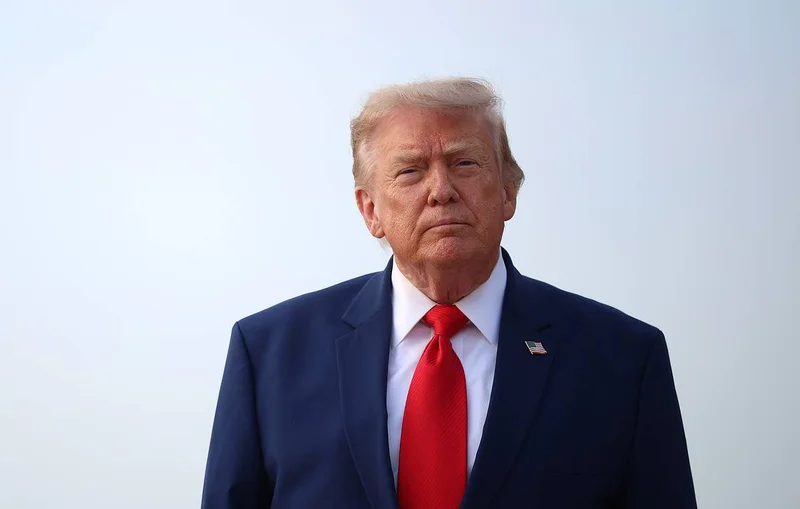
US President Donald Trump signed off on a 30-year civilian nuclear deal with Saudi Arabia, The Wall Street Journal (WSJ) reported on Wednesday, citing sources. The US leader approved the agreement at the end of last week, the newspaper emphasized.
According to information obtained by journalists, the deal will provide the kingdom with a civilian nuclear program as it will work in direct cooperation with US companies under the supervision of Washington itself. Reporters stressed that Trump should expect major pushback on the deal from both the left and the right at Congress, where it will now go for review. It's important to note, though, that Congress doesn't have the right to veto.
The main goal pursued by Saudi Arabia is not to possess nuclear weapons but to develop a peaceful nuclear program, Ivan Bocharov, program manager at the Russian International Affairs Council, told Vedomosti. The kingdom is seeking to diversify its economy, reduce reliance on oil, and source out for more electricity supplies, the expert explained. Riyadh has more than enough money to do that, while the technological aspect can be outsourced to international partners, like the UAE (South Korea is building a nuclear power plant for it), Egypt, Iran, Turkey (Rosatom is building NPPS for them) and other regional players do.
The agreement would strengthen US-Saudi relations that have been seriously shaken by both the Gaza war and the impact from the surrounding conflict between the United States, Israel and Iran, Andrey Yevseyenko, deputy director for research at the Russian Academy of Sciences’ Institute for US and Canadian Studies, explained to Vedomosti. Besides, he noted, the agreement will provide Washington with an additional lever of pressure on Tehran. Saudi recognition of Israel remains a key topic on the agenda of US-Saudi talks, the expert added as he doubted Riyadh will join the Abraham Accords amid the ongoing conflict in Gaza. As regards Congress, it could complicate things around the transfer of specific components by either passing separate bills or reducing appropriations, he concluded.
As the conflict around Iran escalates, US allies continue to support the White House. A unified military camp is taking shape in the West that may threaten the international system of relations, Grigory Karasin, chairman of the Federation Council Committee on International Affairs, told Izvestia. New British Prime Minister Andy Burnham has reportedly allowed the United States to use the kingdom's bases for strikes against Iran. Meanwhile, Donald Trump said Washington is currently not interested in pursuing negotiations with the Islamic Republic.
Burnham has approved the use of British military bases for US strikes on Iran, Bloomberg reported, citing sources. Therefore, the Pentagon will have access to two strategic facilities - Diego Garcia, a remote atoll in the Indian Ocean, and Royal Air Force (RAF) Fairford in England. "What is happening there, I mean in relations between NATO’s European members and, in particular, countries such as Great Britain and the United States, represents an extremely dangerous trend, because the idea is actually to create a unified military camp, and not in word, or NATO summit resolutions, but in deed. \<…> And this poses a potential risk to the entire international system of relations," Karasin argued.
Giving the US access to its military bases actually transforms Britain into a party to the conflict, with British facilities becoming legitimate targets for Tehran. According to Yelena Suponina, a political scientist who specializes in international affairs, this fully fits into the logic of the Islamic Revolutionary Guard Corps (IRGC): any country that helps Washington is automatically considered Iran's enemy. This is why most European NATO allies have refused to provide military assistance to the Americans. Spain has banned the use of its bases for strikes, Italy has withdrawn its fleet from American command to independently protect merchant ships, while French leader Emmanuel Macron has condemned the actions of the United States and Israel.
Military expert Dmitry Kornev argued that Burnham’s move to authorize access to British airfields for the US Air Force reaffirmed the strategic status quo. For nothing has actually changed for Washington in practical terms as the Pentagon will continue to use British infrastructure in its operations in the Middle East, the expert said.
However, it is too early to say that the kingdom will now fully participate in the conflict. The British contingent in the Middle East is too small, so the Royal Air Force can only support the Americans symbolically. The UK may confine itself to intercepting Iranian drones or covering the United States’ support base. London does not have enough resources for any larger-scale operations due to protracted budget cuts and the size of its own army, military expert Yury Lyamin told Izvestia.
At a meeting on July 22, the Council of the EU Working Party on Enlargement (COELA) decided to postpone opening EU accession negotiation clusters for Ukraine and Moldova to September 1. As in the era of Viktor Orban, Hungary blocked EU expansion. Its new government led by Prime Minister Peter Magyar is planning to resolve its dispute with Ukraine first, a scenario that will hardly materialize in the next few weeks as Magyar has no time for Kiev right now.
COELA held its last meeting before the summer recess for most European institutions on Wednesday when Brussels hosted a meeting of EU ambassadors authorized to make decisions on negotiation clusters. Had the group reached agreement, clusters No. 2 and 3 would have been opened for Ukraine, and a long, months-or even years-long process of finalizing reform parameters would have been launched on July 22. But Hungary intervened.
Budapest only approved a cluster for Moldova. This collided with the position of some in the EU, including Estonia and Lithuania. The two Baltic governments insist that Ukraine and Moldova’s integration into the European Union be synchronized. As a result, the move to open clusters for the two countries has been postponed to after the recess, or to September 1.
On the surface, Magyar appears to be continuing the policy course of his predecessor and staunch opponent. Orban opposed Ukraine’s integration into the EU, doing everything he could to stall the opening of clusters for it. The previous government also opposed supplying Hungarian weapons to Kiev. And nothing has changed in that regard as Magyar has come to power: he stated at the NATO summit in Ankara that Hungary will not arm Ukraine even as it supports the former Soviet republic. "Firstly, the current Hungarian government has prioritized economic stabilization, which does not envisage an increase in military spending. Secondly, the country lacks the capacity to supply Kiev with weapons. And both these things matter to the new prime minister. In many ways, Magyar's approach is similar to Orban's, but a little less extreme. The new prime minister expects to smooth things out in the Hungarian-Ukrainian relationship, particularly regarding the Hungarian diaspora," Mikhail Vedernikov, leading researcher with the Russian Academy of Sciences’ Institute of Europe, explained to Nezavisimaya Gazeta. According to him, Ukraine, too, is satisfied with this approach. "Kiev does not view Hungary as an obstacle to receiving funding from abroad or joining NATO," the expert said.
For the first time in the past month and a half, Brent traded above $95 per barrel. The nearly 5% rise came amid reports about the potential closure of the Bab el-Mandeb Strait by the Houthis, falling oil shipments through the Strait of Hormuz, and a halt to oil loading by the Caspian Pipeline Consortium. Market players say prices may revisit the $120 level if conflicts in the Middle East escalate further.
The latest price increase comes amid another bout of tensions between Washington and Tehran which quickly escalated from trading accusations of violating the memorandum to hostilities. "In the wake of new US strikes on Iran and the absence of negotiations, investors have actually taken a quick diplomatic solution off the table," Alyona Nikolayeva, an independent portfolio manager for global markets, told Kommersant.
The Houthis announcing a naval blockade of Saudi Arabia added a new wrinkle to the crisis. According to Vladimir Chernov, an analyst at Freedom Global, at least three tankers with Saudi oil have reversed course in the Red Sea. The market reacted harshly to the situation in the Hormuz Strait, and now the Bab el-Mandeb Strait, another key logistics hub in global trade, is under threat. "The market is penciling in quite a different scope of potential shock, hence a wider geopolitical premium," Nikolayeva explained.
Oil prices will remain highly sensitive to news about talks, new strikes, or tanker movement in the next few days. According to Chernov, Brent may hover between $92 to $98 per barrel in the absence of active diplomacy. In the event of additional strikes on tankers, reduced passage through the Hormuz, or a sustained blockade of the Red Sea, oil could quickly reach $100-105.
If infrastructure in the Middle East comes under pressure or "if commercial stocks drop, the market could easily switch to a real physical deficit mode," Nikolayeva warns. In this case, she argues, prices could soar to $110-120 per barrel. Or prices could fall back to $85 in the event of de-escalation, Chernov believes.
TASS is not responsible for the material quoted in these press reviews