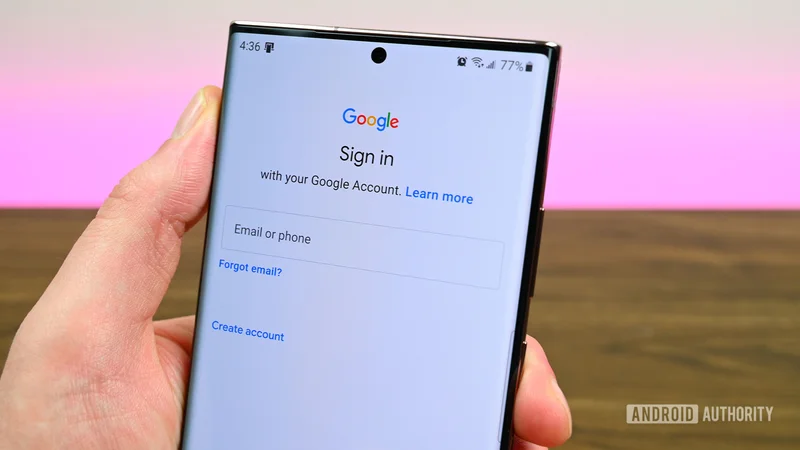
Joe Hindy / Android Authority
TL;DR
- Google is introducing a new selfie video sign-in and account recovery method that lets users verify their identity with a short selfie video.
- The feature uses liveness checks, facial matching, encryption, and Google’s existing security systems to help prevent spoofing attempts.
- Users can delete their saved selfie video at any time and can choose whether or not Google can use their videos to improve its facial recognition and verification tech.
Google is adding a new way for users to sign in and get back into their accounts when traditional recovery methods aren’t available. Called selfie video, the new feature allows users to record a short video of themselves and later use it to verify their identity when signing in to their Google account.
The feature is designed as an alternative recovery option rather than a replacement for existing methods like recovery phone numbers, recovery emails, passkeys, or recovery contacts. According to Google, the selfie video feature is rolling out today, though it won’t be available to everyone, including users with Google Workspace accounts, child accounts, or accounts enrolled in Google’s Advanced Protection Program.
How does Google’s selfie sign-in work?
Setting up the feature is relatively straightforward. Users simply head to the Security \& sign-in section of their Google Account, choose selfie video, and follow guided prompts that ask them to look into the camera while performing a few simple head movements. If a computer doesn’t have a camera, Google can hand off the process to another device via a QR code.
If users later lose access to their account, Google may prompt them to record another short selfie video. That fresh recording is compared against the one previously saved to the account, and if the faces match, access can be restored.
What about security?
Google says the new selfie video sign-in system is built with multiple security safeguards to prevent spoofing. Instead of simply comparing a static image, the sign-in flow requires users to perform guided movements to prove that the video is being recorded live. The company says this helps defend against attackers trying to get into accounts using fake photos or AI-generated deepfakes.
Beyond facial matching and liveness detection, Google also uses its existing suspicious sign-in detection systems when evaluating recovery attempts.
Google says selfie videos are encrypted while stored and are only used for sign-in purposes unless users explicitly choose otherwise. The company has also added controls that let users delete their saved selfie video whenever they want from their Google Account settings.
Once deleted, the video can no longer be used for account recovery, although Google notes it may temporarily retain deleted videos for security reasons or longer in cases involving policy enforcement.
Google is also making participation in its AI training efforts optional. When you upload a selfie video, you can choose whether to let Google use the video and related data to improve facial recognition, age estimation, and other identity verification tech. That setting can be enabled or revoked at any time from the selfie video page in your Google Account.
Thank you for being part of our community. Read our Comment Policy before posting.