Country Life: The Trust helping New Zealand's raptors take flight again
Ten years in the game, and 551 raptors on the books.
"We started this, basically, in my backyard," Ron Lindsay said, "and it's built to where it is now."
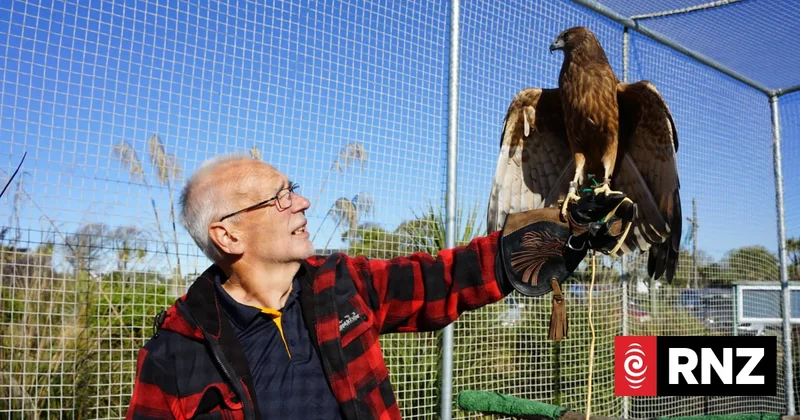
Lindsay is a founding member of the NZ Raptor Trust, a group which takes in injured kāhu (Australasian harrier hawks, or swamp harriers), kārearea (New Zealand falcons) and owls.
The volunteers look after the birds from recovery to release, taking them to vet checkups, feeding them, and housing them until they're strong enough to head back into the wild.
Lindsay's love of birds and wildlife photography led him to co-found the trust in 2016.
"I'd been breeding birds since I [was] about five or six, kind of bred from finches and budgies up to African greys, cockatoos."
In the early days, injured birds had no centre to go to - so volunteers would just bring them home.
"We were running rescue birds out of our garages, lounges.
"Then we got this place and we slowly started to build it."
Shipping containers and netted enclosures at the Trust's Timaru operations base now house birds through the later stages of their recovery.
The space also includes an education facility, where people can pay to learn about the birds - and also hold them.
"We're getting tourists; we have people come in off the cruise ships," Lindsay said.
"But my main emphasis really - it's great to have the tourists in - but I want to educate New Zealanders on these birds ... the things that we're doing to them, the things that we're doing to their habitat."
Birds enjoying a highway carcass are the trust's most common visitors. Other have built their nests in farm machinery, found their way inside a chicken coop, or been poisoned by bullet lead after scavenging culled pests.
Some birds cannot be saved, chairperson Jenni Fraser said.
"Our stats are, at the moment, one in three birds will be released.
"One bird will come in and it'll be so badly injured that we'll euthanise it immediately."
But for the birds who do get better and return to the wild, it's another shot at life.
"We're so happy, 175 we've released so far."
Fraser and fellow volunteer Angie Tidy, who both joined the cause in 2019, monitor the birds at home before bringing the strong ones into the centre for rehabilitation.
"Over the years we've built up and expanded and learnt more about the birds," Tidy said.
The most recent addition to the trust is a breeding centre for their live-in kārearea - not strong enough to return to the wild, but capable of making babies who are.
"We have four falcons here, one breeding pair already," Tidy said.
"These birds can't be released because they've been injured ... but their offspring can be."
The team hopes it will help rebuild the kārearea population, which sits between 5,000 and 8,000, according to DOC (although the website cites that as an "uncertain" number").
Learn more: