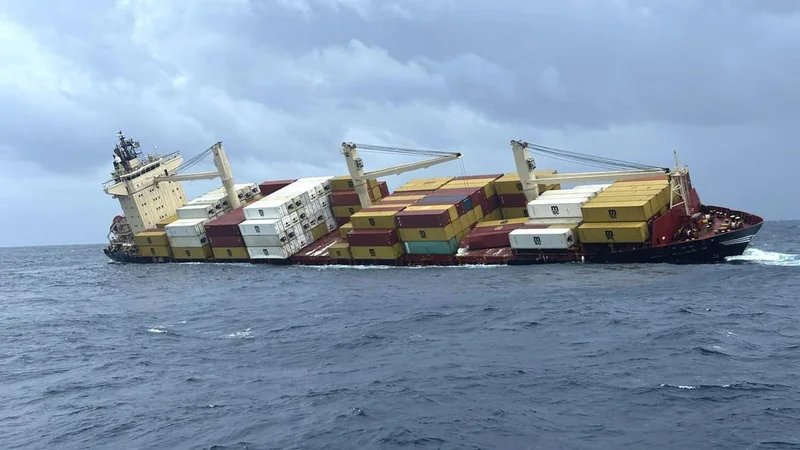
A comprehensive assessment carried out by the Chennai-based National Centre for Sustainable Coastal Management (NCSCM) on the potential environmental impact on the Lakshadweep islands following the sinking of the container vessel MSC Elsa 3 off the Kerala coast on May 25, 2025 has found that the shipwreck did not result in measurable ecological or socioeconomic damage to the archipelago.
However, the incident has underscored the inherent vulnerability of remote island ecosystems to maritime accidents and highlighted the importance of strengthening maritime incident preparedness through early warning systems, island-specific contingency planning, co-ordinated inter-agency response mechanisms and sustained environmental monitoring to enhance resilience against future spill risks, according to the research based on field surveys, lab-based analysis, remote sensing, numerical spill trajectory modelling and stakeholder consultations at Kalpeni and Andrott islands.
The study was carried out as per the directives issued by the Principal Bench of the National Green Tribunal after it took suo motu cognisance of the report titled ‘Containers from sunken ship likely to drift towards Alappuzha, Kollam Coasts in 48 hours: INCOIS’ published in The Hindu.
The tribunal had asked the Union Ministry of Ports, Shipping and Waterways to submit the details of States and Union Territories that may have suffered environmental damage following the shipwreck.
The Lakshadweep islands, characterised by ecologically-sensitive coral reefs, lagoons and seagrass ecosystems warranted a precautionary, science-based assessment to evaluate the impact caused by the shipwreck located approximately 38 nautical miles off the Kerala coast at a depth of about 51 m.
The vessel had went down with 640 containers, including 13 with hazardous cargo and 12 with calcium carbide. A large quantity of pellets, also called nurdles, had washed ashore on the southern coast following the incident.
A report prepared by the NCSCM under the Ministry of Environment, Forest and Climate Change on the potential environmental and socio-economic risks of the incident on the Lakshadweep islands stated that multiple lines of evidence indicated that physiochemical parameters of seawater and sediments, including nutrients, heavy metals and polycyclic acromatic hydrocarbons remained within the natural baseline ranges characteristic of coral atoll environments.
Biological assessments further confirmed the absence of stress or degradation in plankton communities, benthic assemblages, coral reefs, seagrass meadows and associated lagoonal habitats, it said.
The marine litter and microplastic observations by the researchers reflected background conditions linked to chronic regional sources rather than incident-specific inputs. The socio-economic evaluations demonstrated that fisheries operations, access to fishing grounds, catch composition and tourism activities continued uninterrupted as there was no reported livelihood losses or adverse community impacts.
Numerical modelling of spill fate and transport indicated that contaminants associated with the shipwreck did not reach the Lakshadweep coastal or lagoonal environment during the assessment period, it said.
The research found that the Lakshadweep’s small, low-lying coral islands faced inherent constraints in waste handling owing to limited land availability, fragile groundwater systems, high tourism pressure and dependence on imported goods. The findings emphasised that conventional mainland-centric waste systems are unsuitable, necessitating decentralised, low-footprint and circular economy-oriented solutions tailored to island conditions.
The way forward required strengthening maritime incident preparedness through early-warning systems, season-specific spill response planning, enhanced surveillance along the key corridors including the Nine Degree channel, according to the study.
Published - August 15, 2026 09:50 am IST