Now Published in Two Editions
Asia Intelligence Brief · Asia Intelligence Dossier
You’re reading the Brief — today’s hemisphere at a glance, free, every weekday. The Dossier is the full working document: an editor’s leader, a long-form deep dive on the week’s anchor story, the proprietary Country Risk Dashboard, Trade \& Positioning views, data exhibits, and full sources. Built for analysts, PMs, and diplomats who need the analytical layer the news cycle skips.
Rio Times · Asia Intelligence Brief July 21
—Iran conflict US strikes kill at least 14 in Iran, while Iranian missiles hit American bases in Bahrain, Kuwait, and Qatar.
—Oil shock Crude prices jump more than 4% in early Asian trading after reports of bombardment near Iran’s Bushehr nuclear plant.
—Korea verdict South Korea’s Constitutional Court unanimously removes President Yoon Suk-yeol for his unconstitutional martial-law attempt.
—Japan shift Prime Minister Fumio Kishida announces he will step down, triggering a leadership race as the country faces multiple crises.
—Market rout Global funds pull an estimated $11 billion from Asian equities over five sessions, the largest outflow in 18 months.
—Myanmar tragedy A powerful earthquake near Mandalay kills more than 200 people, with the junta bombing resistance areas hours later.
Asia Intelligence Brief July 21 — A full-blown American-Iranian conflict sends tremors from the Gulf to every Asian capital, with crude prices spiking and bases under fire. Meanwhile, political earthquakes in Seoul, Tokyo, and Dhaka add to a pervasive sense that the old order is crumbling overnight.
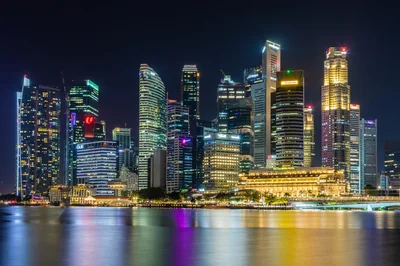
Asia Intelligence Brief July 21. (Photo internet reproduction)
One-stop reference
Company Intelligence
Every listed company in Latin America — financials, ownership and structure for 1,450+ companies across 26 exchanges, in one place.
RTAsk Rio TimesMarkets, currencies and the economy›
RT
Ask Rio Times
Latin American markets, currencies and companies.
×
Markets todayThe currencyRates \& inflationEconomy outlook
Iran / Gulf States – Open Conflict Erupts
Direct US-Iran strikes shatter any illusion of containment
American strikes over the past two days have killed at least 14 people and wounded 78 across Qeshm Island, Bandar Abbas, and Khuzestan province. Iranian health authorities confirmed the toll as rescue crews worked through damaged neighbourhoods.
In retaliation, Iranian missiles and drones struck US bases in Bahrain, Kuwait, and Qatar overnight, with civil-defence sirens wailing across Kuwait. The widening confrontation has now touched five countries in a single night.
Strait of Hormuz bill deepens global supply fears
Iran’s parliament introduced a bill to tighten Tehran’s legal control over the Strait of Hormuz, directly tying the move to the military escalation. This vital waterway carries about a fifth of the world’s oil supply.
A separate US strike hit a railway link in Golestān province described as a strategic goods corridor for Iran, Russia, and China. The attack signals that economic infrastructure is now a direct target in the spreading war.
Iran / Oil Markets – Energy Panic Grips Traders
Bushehr bombardment sends crude prices soaring
Iranian state media reported explosions and bombardments in Bushehr, the port city that hosts the country’s only civil nuclear power plant. The news immediately ignited fears of a catastrophic energy-infrastructure disaster.
Crude prices jumped more than 4% in early Asian trading as the Strait of Hormuz bill and the Bushehr reports combined to heighten supply panic. Markets are pricing in the possibility of a prolonged disruption to Gulf oil flows.
Asia braces for economic shockwaves
Every Asian economy that relies on imported energy is now recalculating its exposure, from Japan and South Korea to India and Southeast Asia. The psychological impact is as severe as the price move itself.
The sense of vulnerability is acute because the region has no quick alternative to Middle Eastern crude. Governments are scrambling to assess strategic reserves while citizens watch petrol prices climb.
The region is gripped by raw fear and irreversible fragmentation, with publics from Seoul to Dhaka feeling both vulnerable and defiantly mobilised.
South Korea – President Dismissed in Historic Ruling
Constitutional Court removes Yoon Suk-yeol unanimously
South Korea’s Constitutional Court ruled unanimously to remove President Yoon Suk-yeol from office, declaring his attempted martial-law declaration unconstitutional. The verdict marks a dramatic end to a political crisis that had paralysed the nation.
The ruling opens the door to criminal prosecution of Yoon and triggers a snap presidential election within 60 days. The country now faces a period of intense political campaigning amid deep public exhaustion.
A cathartic yet anxious national mood
The martial-law trauma has given way to a grim determination to reorder democracy, with many citizens expressing relief mixed with lingering distrust. Street celebrations near the court were tinged with the knowledge that deep divisions remain.
The coming election will be fought over economic fairness, security policy, and the legacy of Yoon’s dramatic overreach. South Koreans are mobilising with a sense that their democratic institutions have been both tested and vindicated.
Japan – Kishida Steps Down, Leadership Race Begins
Prime Minister announces he will not seek re-election
Prime Minister Fumio Kishida told a press conference he will not seek re-election as president of the ruling Liberal Democratic Party, effectively stepping down as premier. His decision comes at a moment of acute Middle East crisis and domestic cost-of-living strain.
At least four candidates are expected to contest the leadership race, with foreign-policy steadiness and economic relief as the central issues. The power vacuum adds another layer of uncertainty to a region already on edge.
A quiet anxiety pervades the country
The public mood is one of quiet anxiety rather than panic, but there is a palpable yearning for steadiness as the Gulf war threatens energy imports. Many Japanese feel the leadership transition could not come at a more fragile moment.
The new leader will inherit a relationship with Washington that is being tested by the Middle Eastern conflict and a defence posture that may need rapid adjustment. The race is being watched nervously across Asia.
Philippines / ASEAN – Regional Retreat Overshadowed by War
ASEAN foreign ministers gather in Manila under a dark cloud
ASEAN foreign ministers began a three-day retreat in Manila with the agenda dominated by the US-Iran war and recent violent confrontations in the South China Sea. The meeting was meant to focus on economic cooperation but has been overtaken by security crises.
Manila briefed counterparts on a Chinese coast guard vessel using a probable military-grade laser that temporarily blinded Philippine crew members last week. The incident has sharpened fears of miscalculation in already tense waters.
Resolute unease defines the Philippine mood
The Philippines is hosting the retreat while staring down a Chinese laser incident and a Gulf war that threatens millions of its overseas workers and energy lifelines. The national mood is one of resolute unease, determined to engage but deeply worried.
ASEAN ministers will likely discuss energy-supply alternatives to the Gulf, which could spill over into Latin American crude-exporting nations such as Brazil and Mexico. The search for stability is becoming a truly global scramble.
Myanmar – Quake Tragedy Compounded by Junta Bombings
Powerful Mandalay earthquake kills more than 200
A powerful earthquake centred near Mandalay has caused widespread destruction of housing and infrastructure, with early estimates of more than 200 people dead. Rescue efforts are being hampered by damaged roads and a lack of heavy equipment.
The scale of the disaster is still unfolding, but entire neighbourhoods have been flattened and hospitals are overwhelmed. The humanitarian need is already enormous and growing by the hour.
Junta bombs resistance areas even after the quake
The junta’s air force reportedly bombed resistance-held areas in Sagaing even hours after the earthquake struck, drawing condemnation from the United Nations. The attacks have transformed despair into rage among a population already suffering under civil war.
The sense that the state is both failing to protect its people and actively cruel has deepened the psychological chasm between the military and the public. International aid groups are struggling to access the worst-hit zones.
Bangladesh – Political Order Inverted Overnight
Khaleda Zia freed as Sheikh Hasina flees the country
A Dhaka court ordered the immediate release of Bangladesh Nationalist Party leader Khaleda Zia, the main opposition figure who had been jailed on corruption charges for about five years. The ruling came as former Prime Minister Sheikh Hasina reportedly left the country on a military aircraft bound for India.
Hasina’s flight and Zia’s release invert a decade of political order, mixing hope with fear of reprisals across a deeply polarised nation. Weeks of violent protests had already shaken the government’s grip on power.
Tectonic shock and a fragile path forward
The national mood is one of tectonic shock, with public fury over recent child-rape cases and economic hardship having fuelled the unrest that unseated Hasina. Many citizens are celebrating while others brace for a potentially chaotic transition.
The military is now playing a delicate role in managing the interim period, and the international community is watching closely for signs of stability or further upheaval. Bangladesh’s democratic experiment has entered uncharted territory.
Markets – $11 Billion Flees Asian Equities
Largest outflow in 18 months as fear takes hold
Global funds pulled an estimated $11 billion from Asian shares over the past five trading sessions, the largest outflow in 18 months. Technology and financial stocks led the fall across Seoul, Mumbai, and Shanghai as sentiment collapsed.
The flight of capital is a direct response to the Gulf hostilities and the broader sense of regional instability. Investors are seeking shelter in perceived safe havens, including gold and the US dollar.
A mood of defensive caution grips trading floors
The psychology across Asian markets is one of defensive caution verging on panic, with even optimistic voices acknowledging that the situation could worsen before it improves. Every headline from the Gulf is being treated as a potential trigger.
The massive outflow may prompt global funds to rotate into perceived safe havens, including Latin American commodity-linked assets. The interconnectedness of global finance means no region is truly insulated.
The Bigger Picture
Asia is waking to a day of historic upheaval, with a full-blown American-Iranian conflict sending shockwaves from Gulf bases to Asian trading floors. The psychological toll is as heavy as the physical destruction, with publics across the region feeling both vulnerable and defiantly mobilised.
At the same time, political earthquakes in South Korea, Japan, and Bangladesh are reshaping the domestic order of key nations, adding layers of uncertainty to an already volatile moment. A dismissed president, a fleeing prime minister, and a departing leader have left citizens grappling with vertigo and determination in equal measure.
The region is not merely reacting to events but actively recalibrating its future, from ASEAN ministers scrambling for energy alternatives to families in Mandalay mourning the dead while condemning a junta that bombs its own people. This is a day when the old certainties have been swept away, and the new landscape is still taking shape.
Asia Intelligence Brief July 21: What We Are Watching
- Today – US-Iran military developments and any further strikes on energy infrastructure.
- Today – ASEAN Foreign Ministers’ Retreat in Manila and any joint statement on the Gulf war.
- Today – South Korea sets the date for its snap presidential election within 60 days.
- Today – Japan’s LDP leadership race begins to take shape with candidate announcements.
- Today – Bangladesh interim arrangements and potential for further unrest or consolidation.
- Today – Oil price movements and any government announcements on strategic reserves.
- This week – Myanmar earthquake response and international aid access amid ongoing conflict.
- This week – Further market reactions and potential capital-flow shifts into alternative assets.
Go Deeper
The full Asia Intelligence Dossier — the interactive risk dashboard, the six people who matter and the downloadable PDF — is updated daily by the Rio Times Intelligence Desk.
The Asia Intelligence Brief July 21 returns tomorrow morning.
Frequently Asked Questions
What specific event caused the jump in crude oil prices?
Reports of bombardment near Iran’s Bushehr nuclear plant caused crude prices to jump more than 4%.
What was the immediate trigger for South Korea’s snap presidential election?
The Constitutional Court’s unanimous removal of President Yoon Suk-yeol triggers a snap election within 60 days.
Which US bases did Iranian missiles and drones strike in retaliation?
Iranian missiles and drones struck US bases in Bahrain, Kuwait, and Qatar.
Get the full Asia Intelligence Brief Dossier
The Dossier is the full working document — editor’s leader, deep dive, country risk dashboard, trade views, charts, full sources. Built for analysts and decision-makers.
Read More from The Rio Times