China Pledges US$28 Million Grant to Nigeria as Ties Deepen
Nigeria · GEOPOLITICS
What China’s grant to Nigeria covers
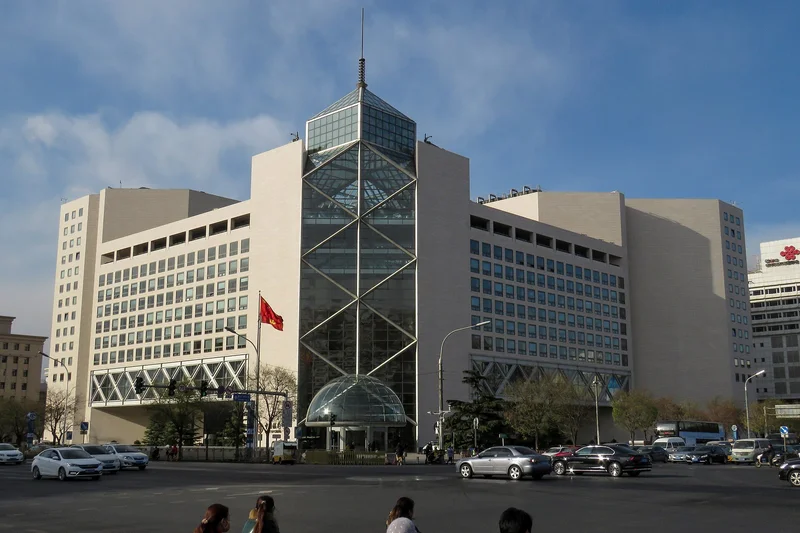
The US$28 million (RMB 200 million) grant was announced in Abuja during a meeting between Chinese Ambassador to Nigeria Yu Dunhai and Dr. Dunoma Umar Ahmed, Permanent Secretary at Nigeria’s Ministry of Foreign Affairs. The Chinese Embassy in Nigeria released the statement through its official channels, and Nigerian media echoed the announcement.
The funds are explicitly described as grant assistance, not a loan, meaning Nigeria carries no repayment obligation. At the Central Bank of Nigeria exchange rate cited in local reporting, the amount is worth about N40 billion to N40.3 billion.
The specific projects to be financed have not yet been disclosed publicly. Nigerian and Chinese officials say the grant will support national development and economic growth, framed as part of China’s broader support for Nigeria’s development agenda.
A diplomatic relationship built over five decades
China and Nigeria established diplomatic relations on 10 February 1971. In 2005, the two countries upgraded ties to a strategic partnership, and in September 2024 they elevated the relationship further to a comprehensive strategic partnership.
That upgrade came during President Bola Tinubu’s state visit to China and attendance at the Forum on China–Africa Cooperation, or FOCAC, Beijing Summit. It was accompanied by a Joint Statement on Building a High-level China–Nigeria Community with a Shared Future.
Chinese foreign ministry statements describe China–Nigeria cooperation as a successful example of South–South cooperation and a benchmark for China–Africa cooperation. Beijing also frames the relationship as an important platform for the collective rise, development and revitalization of the Global South.
Currency swap and panda bonds expand RMB use
The RMB 200 million grant is relatively small compared with the 15 billion yuan currency swap line renewed by the People’s Bank of China and the Central Bank of Nigeria. That swap, valid for three years, is valued at about N3.28 trillion or USD 2 billion.
The swap is designed to facilitate trade and investment in local currencies, promote the use of renminbi in Nigeria’s trade settlement, and reduce dependency on the US dollar in bilateral transactions. During his January 2025 visit to Abuja, Chinese Foreign Minister Wang Yi said China would favourably study Nigeria’s request to expand the swap line.
Wang also welcomed Nigeria’s intention to issue RMB-denominated panda bonds in China, citing Beijing’s full confidence in Nigeria’s credibility. Panda bonds would allow Nigeria to raise renminbi financing in China’s domestic market, diversifying funding sources away from traditional dollar markets.
Infrastructure finance and the debt question
The grant sits alongside larger Chinese state-backed infrastructure finance in Nigeria. On 8 January 2025, the China Development Bank disbursed USD 254.76 million to support the Kano–Kaduna standard-gauge railway project, which is projected to cost USD 973 million.
The railway, executed by China Civil Engineering Construction Corporation, aims to link Kano with Abuja, improving connectivity and trade. Critics in Western policy circles have framed such infrastructure loans as part of debt-trap diplomacy, though China and Nigeria officially characterise them as mutual-benefit South–South cooperation.
The presence of grants like the RMB 200 million alongside loans allows Beijing to soften the optics of indebtedness and highlight its role as a development partner, not only a creditor. For the Tinubu administration, the grant offers a visible win: tangible external support without adding to public debt.
The great-power contest in West Africa
China’s multi-channel approach to Nigeria blends grants, loans, currency tools and security support. During his January 2025 Africa tour, Wang Yi pledged 1 billion yuan in military aid to Africa, including training 6,000 troops and 1,000 police officers to fight militant groups such as Boko Haram.
Nigeria, as Africa’s most populous country and one of its largest economies, is central to Beijing’s vision of a China–Africa community with a shared future. China’s grant to Nigeria functions not only as bilateral aid but as a symbolic investment in China’s leadership narrative across the Global South.
The United States and European Union remain important partners for Nigeria, particularly in oil, security, governance and development. However, Western financing often comes with conditionality on governance and reforms, whereas Chinese financing is commonly perceived by Nigerian officials as more transactional and infrastructure-focused.
This dynamic fits the broader pattern covered in Africa: The New Scramble, where great-power competition is reshaping partnerships across the continent.
What to watch next
The specific projects to be financed by the RMB 200 million grant have not yet been named, leaving room for negotiation between Abuja and Beijing. The lack of publicly specified projects suggests the funds may be allocated to priority programmes under discussion.
Nigerian officials, including former Foreign Minister Yusuf Tuggar, have described relations with China as marked by mutual respect and fruitful results in trade, investment and infrastructure. The grant reinforces that narrative while giving Nigeria additional liquidity options against dollar volatility.
Watch for announcements on panda bond issuance and any expansion of the currency swap line, both of which would deepen Nigeria’s integration into China-centric financial circuits. The next FOCAC implementation milestones will also signal how quickly the comprehensive strategic partnership translates into concrete projects.
Frequently Asked Questions
How much is China giving Nigeria in grant assistance?
China has pledged RMB 200 million in grant assistance to Nigeria, worth about N40 billion at the Central Bank of Nigeria exchange rate.
Is the RMB 200 million a loan or a grant?
It is explicitly a grant, not a loan, meaning Nigeria has no repayment obligation for the funds.
When did China and Nigeria upgrade their diplomatic relationship?
China and Nigeria elevated ties to a comprehensive strategic partnership in September 2024, building on a strategic partnership established in 2005.
Sources
This article was produced by The Rio Times’ automated newsroom system. How we use AI · Report an error
LatAm Markets: Live Signals → — real-time movers, turnover leaders and FX across Latin America.