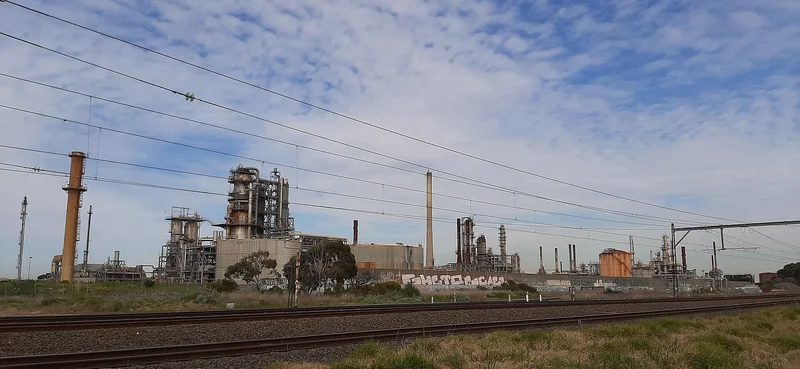
PDVSA Refining Runs at a Third of Capacity Even as Venezuela’s Crude Output Recovers
Venezuela · Energy
Venezuela now processes barely a third of the crude its plants were built to handle. Forcing it to import fuel it once exported in bulk.
Venezuela’s state oil company PDVSA can barely refine its own crude anymore. Its refineries processed about 399,000 barrels a day in April 2026, roughly a third of what they were built to handle.
Yet the country’s crude production is quietly climbing back toward levels not seen since 2019.
How far PDVSA refining has fallen
PDVSA once ran one of the biggest refining systems in the Americas. Today its plants process only a fraction of the crude they were designed for.
In April 2026, Reuters reported the network running at about 399,000 barrels a day. That is roughly 31% of its installed capacity, and it slips lower during breakdowns.
What the plants can handle on paper
On paper, Venezuela can refine about 1.29 million barrels a day across its main plants. In practice, most of that capacity now sits idle or half-broken.
Because so many units are offline, the country often imports gasoline and diesel. So a nation floating on oil frequently queues for fuel.
The 1999 benchmark that shows the collapse
Around 1999, Venezuela could refine roughly 1.3 million barrels a day. That figure is the yardstick for how far the system has slipped.
At recent low points near 350,000 barrels a day, runs fell to about 27% of that 1999 level. Even the better months rarely clear a third of capacity.
Why the refineries broke down
The decay built up over many years, not months. Because PDVSA skipped maintenance and lost skilled staff, units corroded, leaked and failed.
Investment dried up as cash flowed elsewhere, so spare parts grew scarce. Meanwhile, power blackouts and feedstock shortages kept knocking plants offline.
How US sanctions squeezed the system
US sanctions in 2019 cut PDVSA off from its biggest customer and key suppliers. Before that, US Gulf Coast plants took as much as 800,000 barrels a day of Venezuelan crude.
After the embargo, revenue and imported parts both dried up. As a result, already-weak refineries had even less money for repairs.
The refineries still limping along
The Paraguana Refining Center, with about 955,000 barrels a day of capacity, is the largest. It houses the Amuay and Cardon plants, which suffer frequent outages.
The smaller sites fare no better. El Palito holds about 146,000 barrels a day of capacity.
While Puerto La Cruz holds roughly 187,000, yet both run well below that.
Crude output tells a different story
While refining sank, crude production has quietly rebounded. By early 2026, output reached about 1.1 million barrels a day, the highest since 2019.
For instance, Chevron lifted its Venezuelan exports after Washington eased licence terms. So the wellheads are recovering faster than the refineries.
The gap between pumping and refining
This split defines Venezuela‘s oil paradox today. The country pumps far more crude than it can turn into fuel at home.
As a result, it exports raw crude while importing refined products. In short, the money leaves as barrels and comes back as bills.
What comes next for PDVSA
Officials talk of pushing output toward 1.3 million barrels a day. Still, that goal reads more as an ambition than a firm, funded target.
Rebuilding the refineries would cost far more and take years. Until then, Venezuela will keep pumping crude it cannot fully refine.
Frequently Asked Questions
How much crude can PDVSA refine now?
Its refineries processed about 399,000 barrels a day in April 2026, roughly 31% of installed capacity, with dips near 350,000 during breakdowns.
How does that compare with 1999?
Around 1999, Venezuela could refine about 1.3 million barrels a day. Recent low points near 350,000 equal roughly 27% of that level.
Why did the refineries collapse?
Years of skipped maintenance, lost investment, power blackouts and US sanctions since 2019 left most units broken or idle.
Is Venezuela’s crude output also falling?
No. Crude production has recovered to roughly 1.1 million barrels a day, its highest since 2019, even as refining stays weak.
This article was produced by The Rio Times’ automated newsroom system. How we use AI · Report an error