From Buenos Aires to Seoul and Back: Tango BA Expands Its Global Reach
Argentina · Culture
More than 800 couples, dancers arriving through an expanding international competition circuit, and a new generation placed alongside tango’s living masters: the 2026 Tango BA Festival y Mundial is positioning the Argentine capital not simply as the birthplace of tango, but as the centre of an increasingly global culture.
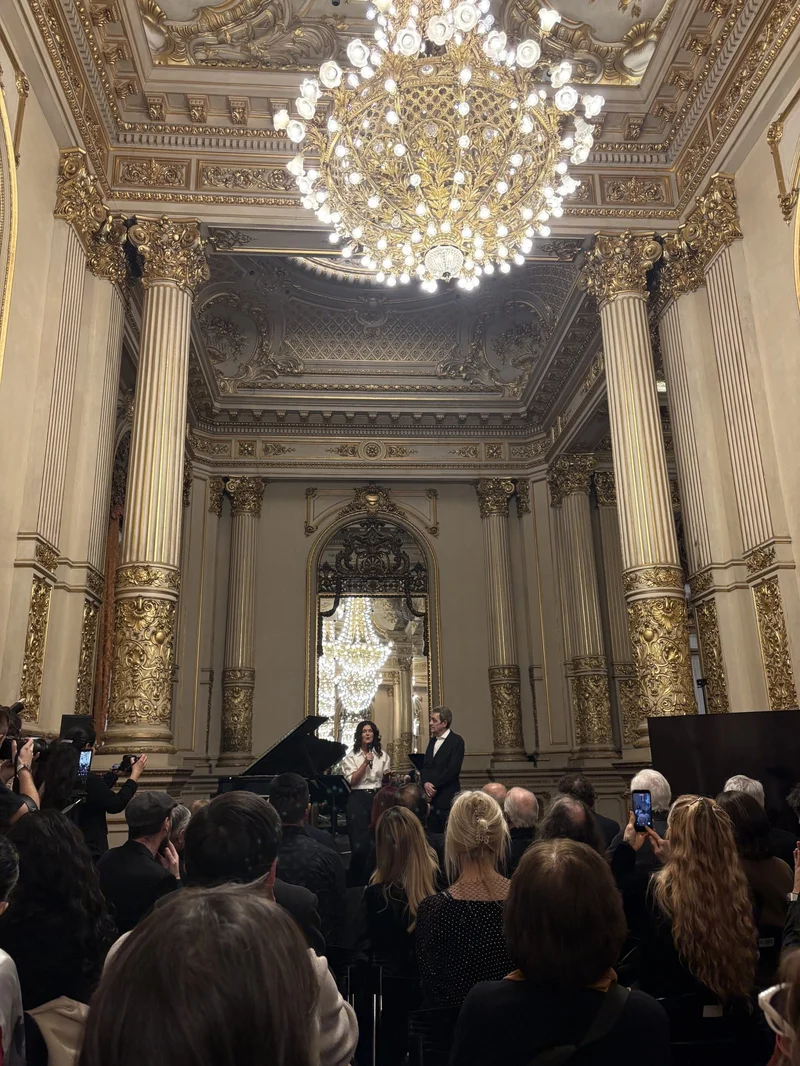
Buenos Aires City Culture Minister Gabriela Ricardes and Tango BA artistic director Gustavo Mozzi unveiled the vision for this year’s festival at Teatro Colón this week before an audience filled with musicians, dancers, teachers and leading figures from the tango community.
The presentation offered more than a preview of concerts and competitions. It revealed how Buenos Aires is thinking about the future of one of Argentina’s most powerful cultural exports. It is building the infrastructure for the world to keep bringing it back. That dual identity is at the heart of the Mundial. “Tango is our way of being in the world,” Ricardes writes, describing the festival as a gathering that brings together enthusiasts from across the globe, “reaffirms its relevance and sows the seeds of its future.”
A culture that comes back
Last year’s Tango BA drew more than 2,000 artists across more than 500 activities and 50 venues, while a record 841 couples from more than 50 countries entered the World Championship. More than 3,200 spectators attended the championship final at Teatro Gran Rex.
The 2026 edition builds on that international momentum, with this year’s official Mundial circuit expanding from Buenos Aires to Seoul, Tokyo, Bali, Warsaw and Istanbul, among other destinations. Portugal hosted an official preliminary for the first time, while more than 800 people attended two days of competition and activities at the Seoul preliminary alone.
Back in Argentina, the pipeline is growing too, as the city’s 22nd City Dance Championship attracted more than 450 entrants representing 22 countries in May, with Tango Escenario added to that competition for the first time.
The result is a striking reversal of tango’s historical journey: a culture Buenos Aires once exported to the world is increasingly creating pathways for the world to return to Buenos Aires.
Reinvention across generations
Mozzi takes that idea of reinvention even further. “The Buenos Aires Tango Festival and World Cup reflects and showcases the vitality of a genre that reinvents itself every day,” he writes in his introduction to this year’s festival.
He describes a contemporary tango ecosystem in which orchestras are multiplying, new poetic styles are emerging, choreographers are exploring the codes of movement, training programmes are growing and generations of milongueros are continually being renewed. Most tellingly, he describes a tango culture in which “the passing of the torch from one generation to the next becomes spontaneous and part of everyday life.”
The programme puts that philosophy on stage. At Usina del Arte, Argentine popular-music stars Abel Pintos and Vicentico will step into tango, appearing alongside Pablo Agri and the Camerata Argentina. The Orquesta del Tango de Buenos Aires, under maestros Néstor Marconi and Juan Carlos Cuacci, will also be part of the opening programme — a deliberate combination of celebrated masters and artists approaching tango through different musical traditions.
At Teatro Colón, the Salón Dorado will become home to chamber tango, bringing audiences closer to some of the genre’s most accomplished musicians. Mozzi describes an edition that “delves into new aesthetics” while remaining in dialogue “with the best of tradition.”
From the milongas to the Mundial
Tango BA is not attempting to modernise tango by abandoning its history, nor is it preserving the genre by recreating the past. It is trying to make the two coexist, and that tension extends beyond the artists to the city itself. Programming moves between internationally recognised cultural institutions and venues embedded throughout Buenos Aires’ neighbourhoods, connecting the global spectacle of the Mundial with the local ecosystem that sustains tango year-round.
For visitors, tango can appear to be Argentina’s great cultural export — the embrace, the bandoneón, the instantly recognisable image of Buenos Aires sold around the world. For porteños, its infrastructure is much deeper: tango lives in milongas, orchestras, dance schools, cultural centres, neighbourhoods and generations of people who have learned its codes not as performance but as community.
The Mundial brings those two worlds together. Competitors can arrive through international preliminaries thousands of kilometres from Argentina and ultimately find themselves dancing in Buenos Aires, where Tango de Pista and Tango Escenario champions will be crowned at Teatro Gran Rex on September 1 and 2.
A tradition, and its future
That global expansion takes on additional meaning alongside one of this year’s major historical tributes. The festival will celebrate the legacy of Claudio Segovia, the Argentine director and designer whose landmark production Tango Argentino helped propel tango onto international stages. An exhibition will revisit his work through costumes, photographs and archival material — a compelling symmetry between Segovia’s legacy and the international map of the Mundial today.
Another living link to tango history will be celebrated when dancer and choreographer Milena Plebs marks 40 years in tango. Her recognition embodies the generational story Mozzi is trying to tell: tango’s future does not require leaving its masters behind — it requires learning from them.
That idea has particular weight for a tradition recognised by UNESCO as Intangible Cultural Heritage since 2009. Heritage status can preserve an art form’s significance, but it cannot guarantee its future. That requires dancers who have not yet danced their first tanda, musicians who have not yet written their first tango, and audiences who may arrive through Vicentico or Abel Pintos rather than Aníbal Troilo.
The Teatro Colón presentation ended with Maestro Néstor Marconi and his trio performing the tango classics. More than a century after tango began its journey from the Río de la Plata to the world, Buenos Aires is no longer simply preserving what it created — it is cultivating the future of tango, and the next generation, globally.