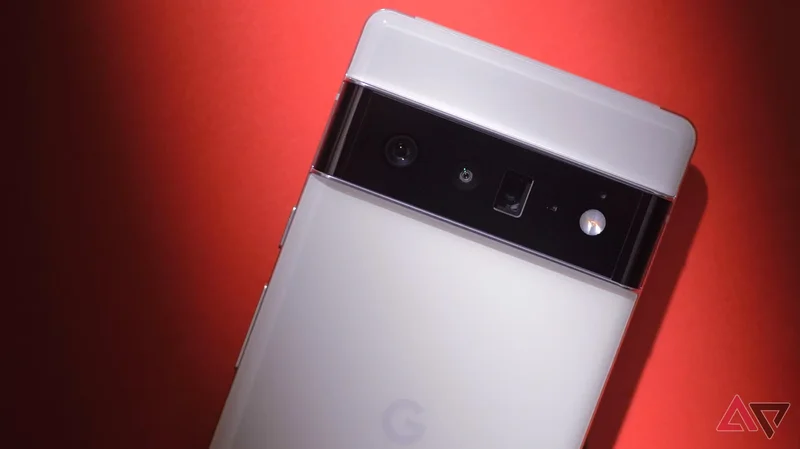
The first beta of Android 17 QPR2 landed a few days ago, and with it, one not-so-surprising but still sad piece of news: no update for the Google Pixel 6 and 6 Pro.
Google re-iterated that the two phones will reach their end-of-life in October, and that Android 17 QPR1 is their last update. Given that they were never supposed to receive Android 16, let alone 17, this news doesn't come as a surprise, but is still sad to see.
The Pixel 6 Pro was iconic. If you ask me which Pixel has been the most influential in Google's lineup, I would pick this one without second thought. And which one was the most horrible to use? Also the Pixel 6.
I have a love-hate relationship with this Pixel, and I'm both sad and relieved to see it's finally been sunset.
Related
Running Android 17 without the AI bloat, the Pixel 6 proves Google's long-term software support is a massive win for purists
The Pixel 6 signaled the start of something special with Pixels
Especially with that iconic design
When Google released the Pixel 6 series in 2021, it was met with a lot of enthusiasm and trepidation. This was the company's first attempt at building a phone with its own Tensor processor, but the chip wasn't the only gamble Google had taken.
The Pixel 6's design was unique and signaled the start of a proper Pixel DNA identity. The phones carried the colorful tonal play that we'd seen on earlier Pixels, but took it a step further. Plus, the horizontal camera island was a bold shout: "I'm here, I'm a Pixel."
The build quality was stellar for the time, too, the curves just right, and despite a small imbalance with a top-heavy design, both phones felt right in my hand. Google had finally embraced building a high-end smartphone, and it had done it right.
My colleague Parth called the Pixel 6 "peak Pixel," and I agree. It was a physical manifestation of Material Design, the first time Google's software design language and hardware design language meshed in a harmonious way.
This is when I really fell in love with the Pixel camera
Some of my best photos were shot with the Pixel 6 Pro
The Pixel 6 Pro, specifically, won me over the moment I started using it because of its excellent triple camera setup, adding a much-needed 4x 48MP telephoto lens to a 50MP wide lens and a 12MP ultrawide.
This was the first telephoto lens on a Pixel, and as someone who travels a lot and goes to plenty of events, I found it was the exact addition I needed to take my photos to the next level. It finally gave me the freedom to frame my shots exactly how I wanted.
Paris, Montreux, Amsterdam, Toronto, Madrid, Torino, Geneva — the Pixel 6 Pro went with me to all those cities and helped me shoot regular 1x photos then switch to a 4x zoom or a 0.7x ultrawide without any constraints. The results were stunning, every time.
Night mode was already a pillar of the Google Pixels camera experience by then, but the Pixel 6 Pro took it one step further. It delivered excellent shots in every dark environment I found myself in, even when zooming.
I still remember going to an outdoor Christmas light expo and seeing people struggle to shoot one good pic of the installations with their phones, whereas I had one excellent photo after the other because I could zoom (see the last photo in the gallery above).
So many problems plagued Pixel 6 units
This phone wasn't even a phone sometimes
My experience with the Pixel 6 wasn't all excitement and glee, though. This was, without the shadow of a doubt, the most problematic Pixel I've ever owned — and I've had every single one of them bar the Pixel 3.
Connectivity issues and signal losses were a daily occurrence for me. Specifically, each time I went somewhere with a weak signal (such as the Parisian metro) then returned to a place where I normally would have a signal, the Pixel wouldn't reconnect.
At the time, I ran a gamut of tests against other phones and found that every other one was finding a signal soon after I got back to street level, whereas my Pixel 6 Pro would remain offline for minutes on end.
This was a "phone," but I couldn't rely on it to be one. Each time I had a minor signal loss, I remained unreachable over phone calls or WhatsApp for a long time until I realized the issue and toggled airplane mode on then off to force it to reconnect.
Add the slow and finicky fingerprint scanner, a mediocre battery life, slow charging, a questionable Tensor performance with a side effect of overheating, and you get why I said this was the most problematic Pixel ever. And why it was the most horrible one to use.
Related
Years later, the same issues persist
Farewell, Pixel 6, you will be remembered but not missed
Today, five years later, the Google Pixel 6 series has outlived its original update promise. My very own Pixel 6 Pro still works, despite the bugs; it currently serves as my aunt's phone and will probably continue to do that for the next year or so.
But the Pixel 6's success was in its promise and the paradigm shift that it signaled for Google's hardware. It was the start of something special — a unique hardware design language, a stellar camera experience, and Google's own chipset dabbles.
Without it, we wouldn't have the good Pixel 7 series, the better Pixel 8 series, and the stellar Pixel 9 and 10 series. The best and worst Pixel phones owe their DNA to the Pixel 6, so farewell, champ, you will be remembered but not missed.