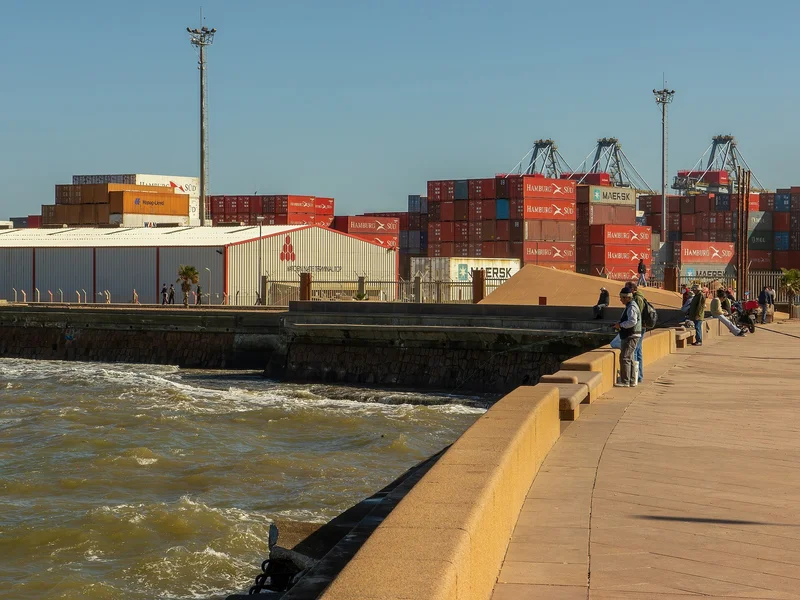
Port of Montevideo Crisis ‘Admits No Delay,’ Uruguay’s Industrialists Warn
Uruguay · Trade
As factory owners demand action. A separate deal hands Belgium’s Jan de Nul the job of keeping a vital regional shipping canal open.
The Port of Montevideo is in trouble, and the country’s factory owners are no longer whispering about it. On 14 August 2026, the Cámara de Industrias del Uruguay declared the situation ‘critical’ and warned that it ‘admits no delay.
‘ The manufacturers want the government to step in now, before more cargo slips away to neighboring countries.
What the industrialists actually said
The Cámara de Industrias del Uruguay, or CIU, is the country’s main manufacturers’ association. In a formal statement, it voiced ‘deep concern’ over what it called the delicate operating situation at the port.
Crucially, the group did not stop at worry. It urged the government, the Poder Ejecutivo, to adopt immediate measures rather than wait for negotiations to run their course.
CIU president Leonardo García has been the loudest voice on this. He argues that the repeated conflict raises logistics costs and quietly damages Uruguay’s image as a reliable place to do business.
Why the Port of Montevideo keeps grinding to a halt
The Port of Montevideo is Uruguay’s main gateway to the world, so every stoppage ripples through the whole economy. Yet in recent months it has stalled again and again.
Much of the trouble centers on the container terminal, where union disputes have repeatedly frozen operations. On some weekends the terminal simply stopped taking trucks.
For an exporter with perishable goods, even a few idle days can be ruinous. As a result, the industrialists see each stoppage not as a labor headache but as a direct threat to the country’s trade.
A united business front
The manufacturers are not alone in sounding the alarm. Earlier, five major business organizations signed a joint statement demanding that the government intervene.
Alongside the CIU stood the Asociación Rural del Uruguay. The Cámara de Comercio y Servicios, the Cámara Mercantil and the Unión de Exportadores.
Together they represent farmers, traders and exporters alike. Their communiqué put numbers to the pain.
It counted more than 30 days of operational disruptions in 2025, with roughly 25 additional days piling up in 2026.
Katoen Natie and the TCP terminal
The port’s only specialized container terminal is Terminal Cuenca del Plata, known as TCP. It is operated by the Belgian logistics giant Katoen Natie, while the Uruguayan state keeps a 20 percent stake.
Back in February 2021, under then-president Luis Lacalle Pou, the two sides struck a landmark deal. It extended Katoen Natie’s concession, originally due to expire in 2031, by fifty years to 2081.
In return, the company committed to invest US$455 million in expanding the terminal. That plan includes a new berth deep enough to receive large ships drawing 14 meters of water.
The competitiveness question
Uruguay has long sold itself as a dependable regional hub, a calm harbor in a turbulent neighborhood. That reputation is now the thing most at risk.
When a port becomes unreliable, shipping lines simply reroute. The industrialists fear that cargo and transshipment traffic will drift toward rival ports in Argentina.
Such as Buenos Aires, and in Brazil, like Santos and Rio Grande. Because a hub lives or dies on trust, even the perception of chaos can be costly.
Once a shipping line changes its schedule, winning that business back is slow and hard.
A second front: the Martín García Canal
While the port dispute simmered, a quieter but equally important decision was reached on the water. It concerns the Martín García Canal, a shipping channel most Uruguayans never think about.
The canal is a binational waterway shared by Argentina and Uruguay in the Río de la Plata. It is managed jointly by the Comisión Administradora del Río de la Plata, or CARP.
For landlocked cargo from Paraguay and inland Argentina, this channel is a strategic exit route to the sea. In short, keeping it open and deep is a regional priority, not just a local one.
Jan de Nul wins the dredging contract
On 30 July 2026, CARP signed a new contract with the Belgian dredging firm Jan de Nul. The award came through an international public tender, CARP tender number 1 of 2026.
Jan de Nul’s winning offer came in at about US$65.994 million for five years, with an option to extend for five more. That undercut a rival bid from Boskalis of roughly US$149.3 million.
The job covers maintaining and widening the channel. Which today runs about 34 feet deep in soft bottoms and 38 feet in harder ground.
Any further deepening, however, is treated as a possible extra rather than a locked-in guarantee.
Why both stories point the same way
At first glance the two threads seem unrelated: a labor crisis on shore and a dredging deal offshore. Yet both are really about the same thing, which is keeping Uruguay’s trade moving.
One decision quietly secures a vital canal for the next five years. The other, still unresolved, leaves the country’s flagship harbor exposed to fresh stoppages.
That contrast is exactly what worries the industrialists. Therefore they want the government to treat the port with the same urgency it showed on the water.
What happens next
For now, the pressure sits squarely with the government. The business chambers have made their demand public, and the numbers behind it are hard to dismiss.
Meanwhile, the clock keeps ticking on the port’s expansion, which is meant to make Montevideo more competitive, not less. If the stoppages continue, that investment risks arriving to a harbor that has already lost customers.
Ultimately, the industrialists’ message is simple. A country that depends on trade cannot afford to leave its main door swinging shut.
Frequently Asked Questions
What did Uruguay’s industrialists say about the Port of Montevideo?
On 14 August 2026. The Cámara de Industrias del Uruguay called the port’s situation ‘critical’ and said it ‘admits no delay,’ urging the government to take immediate action.
Who operates the main container terminal?
Terminal Cuenca del Plata (TCP) is run by Belgium’s Katoen Natie, with the Uruguayan state holding a 20 percent stake. Its concession runs to 2081 alongside a US$455 million investment pledge.
What is the Martín García Canal and who will dredge it?
It is a binational Argentina–Uruguay shipping channel in the Río de la Plata, managed by CARP. On 30 July 2026, CARP awarded its dredging to Belgium’s Jan de Nul for about US$66 million over five years.
Why does port reliability matter so much for Uruguay?
Uruguay markets itself as a dependable regional hub. Repeated stoppages risk pushing shipping lines and cargo toward rival ports in Argentina and Brazil, which is hard to reverse.
This article was produced by The Rio Times’ automated newsroom system. How we use AI · Report an error