Your support helps us to tell the story
From reproductive rights to climate change to Big Tech, The Independent is on the ground when the story is developing. Whether it's investigating the financials of Elon Musk's pro-Trump PAC or producing our latest documentary, 'The A Word', which shines a light on the American women fighting for reproductive rights, we know how important it is to parse out the facts from the messaging.
At such a critical moment in US history, we need reporters on the ground. Your donation allows us to keep sending journalists to speak to both sides of the story.
The Independent is trusted by Americans across the entire political spectrum. And unlike many other quality news outlets, we choose not to lock Americans out of our reporting and analysis with paywalls. We believe quality journalism should be available to everyone, paid for by those who can afford it.
Your support makes all the difference.
Read more
Ingesting capsules containing faecal microbes from healthy sleepers may help treat insomnia symptoms, data from a new clinical trial suggests.
About 1 in 10 adults worldwide show symptoms of insomnia, including difficulty falling asleep, staying asleep, or waking too early.
The sleep disorder can cause daytime cognitive impairment, mood disturbances, physical fatigue and in the long term, may even lead to increased risk of high blood pressure, heart disease, and diabetes.
Current treatments for insomnia include lifestyle changes and taking over-the-counter supplements like melatonin, which may pose dependency and other side effects.
Previous studies have shown that the stool contains beneficial bacteria that could potentially improve a patient's gut bacteria, which helps regulate metabolism and guards immune health.
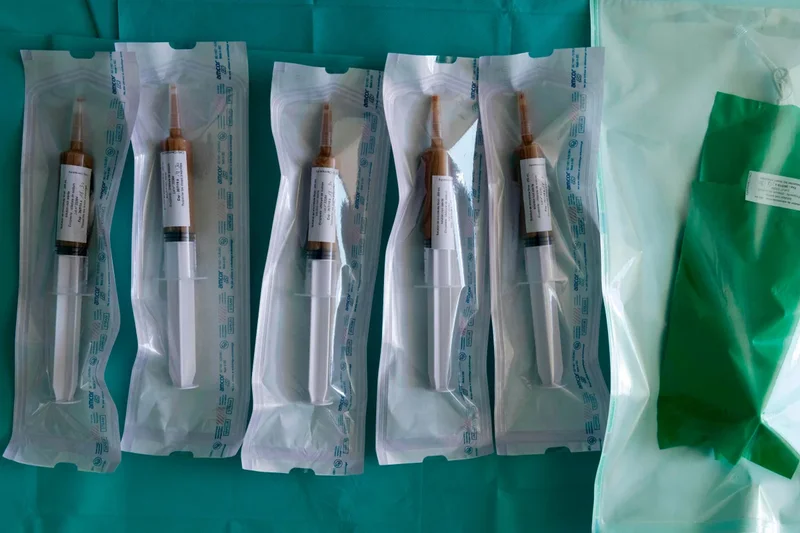
Syringes with stool mixed in a solution to treat patients with serious infections of the colon by faecal microbiota transplantation (FMT) (AFP/Getty)
The technique is already used to treat some gastrointestinal infections, with faeces from “healthy donors” used to repopulate the essential microbes in the gut of a patient.
Now, researchers from Peking University in Beijing have explored whether faecal microbiota transplantation (FMT) from healthy people to insomnia patients can help treat sleep disorder.
They found that FMT-based treatments along with antibiotic pretreatment “improved objective sleep continuity and sustained subjective insomnia outcomes”.
"Our findings provide clinical evidence that targeting the gut microbiota may offer a promising new therapeutic strategy for chronic insomnia disorder,” said Yanping Bao, an author of the study published in the Journal of Internal Medicine.
“This work also strengthens our understanding of the gut–brain axis as an important regulator of human sleep,” Dr Bao said.
Laboratory technicians at the Centre Hospitalier Universitaire (CHU) prepare syringes with stool mixed in a solution to treat patients with serious infections of the colon by faecal microbiota transplantation (FMT) (AFP via Getty Images)
In the study, about 40 participants were randomly assigned to receive short-course antibiotic pretreatment, following which they consumed faecal microbe capsules from healthy sleepers.
Another 40 participants consumed placebo capsules without any antibiotic pretreatment and served as the control group for comparison.
Each participant’s sleep efficiency was measured using polysomnography a month after treatment, and they also self-reported their sleep outcomes in a questionnaire.
Researchers found that compared with placebo, the FMT-based treatment protocol improved sleep efficiency and reduced wake after sleep onset.
There seemed to be sustained improvement in the treatment’s benefits from two to six months.
“Treatment was well tolerated, with mild, self-limited adverse events and no serious adverse events,” researchers wrote.
FMT treatment also increased the microbial richness and diversity, scientists said.
“In adults with chronic insomnia disorder, an FMT-based treatment protocol incorporating antibiotic pretreatment improved objective sleep continuity and sustained subjective insomnia outcomes,” they wrote.