You find some incredible species in Kashmir that you find nowhere else on our planet, says Indian National Geographic explorer, television presenter, and wildlife filmmaker Malaika Vaz. One of the places that harbours a great deal of the state’s wildlife is Dachigam National Park, which, she feels, isn’t celebrated enough. “I think just the fact that you have this beautiful national park that has been resilient through the years is incredible,” says Malaika, co-founder of the film production company, Untamed Planet.
Showcasing the remarkable biodiversity of Dachigam National Park was the prime motivation behind Wild Kashmir, a new documentary produced by Untamed Planet which will be premiering on August 15 on Animal Planet as part of India: Epic Wild Stories. “The Dachigam National Park is a very critical component of the Greater Himalayan biodiversity hotspot, so we wanted to document the flora and fauna of the region,” says the production company’s other co-founder, Nitye Sood, who hopes that the film will help viewers think of Kashmir a little differently.
“Many Indians do not immediately think of it as a hotspot for wildlife, and we wanted to bring that into the mainstream,” he says, pointing out that it is a great habitat for a unique set of species because of its distinct seasons. “I think that makes it special,” says the documentary filmmaker, cinematographer, and National Geographic Explorer.
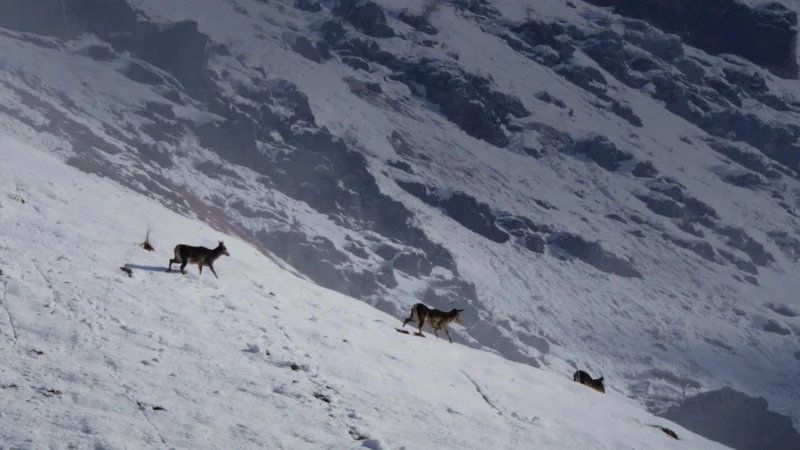
Wild Kashmir takes its viewers on an immersive journey into the serene heart of Dachigam, offering them glimpses of animals like the rare hangul, or Kashmir stag; highly social marmots or ground squirrels; mischievous Himalayan langurs; and languorous Himalayan black bears exhibiting pre-hibernation hyperphagia. “It has been such a joy to focus on species that are not the big charismatic megafauna, but will have people fall in love with them,” says Malaika, who believes that it is important for filmmakers to tell stories about species that are on the fringes.
“From a conservation standpoint, in our country, we have so many smaller species that we are often losing before we find out enough about them. So, it is our role as storytellers to keep the camera on these species to let people know that this is a witnessed record of animals that exist in our country,” says Malaika, the film’s presenter.
Work on the film, funded by a National Geographic Society Grant, started in September 2022, explains Nitye. “We had two primary filming windows, which were the end of summer/early autumn to film the bears, and then we went back in winter, February, each time going for a week to ten days,” he says. One of the most challenging things to shoot, he says, was the hangul. “It is an important part of the story, which is critically endangered, endemic to the area and also a source of great pride for the people of the region. So, we knew it had to be a part of the film,” he says, remembering how they had to trek all the way to Upper Dachigam in bad weather to spot these critically endangered animals. “It almost didn’t happen, to be honest, because the weather was bad. But then, just towards the end of the trip, the weather turned, and we had a small window to make it happen,” laughs Nitye, who has directed and shot Wild Kashmir.
The duo admits to being deeply grateful to the Jammu and Kashmir Forest Department, which helped them throughout the filmmaking process. “They were the best allies, giving us access and were very supportive,” says Malaika, who thinks of them as co-creators of sorts. “We wouldn’t have been able to tell this story without them,” she says.
They are also cognizant of one thing. “While the department is doing an exceptional job of protecting this region, the communities who live alongside the periphery of the park are equally responsible for how well-protected this area is. Their love for wildlife and natural heritage is so apparent, and that has been a joy to just experience,” Nitye says.
Another crucial aspect of this project, therefore, has been returning to these communities with a VR film to bring them the experience of Dachigam. “Very often these people do not experience wildlife the way outsiders do. So, we wanted to follow and document the wildlife as beautifully as possible and bring that experience to communities living around here. That was the larger goal,” explains Nitye, who believes that community conservation is critical to the protection of the area. “Communities are custodians of the national park in the truest sense, and they take care of it, like it is their home. Whether it be wildfires or poachers, it is the community which is the first line of defence,” he adds.
For Malaika, Wild Kashmir is also about celebrating India’s success in protecting nature in “beautiful ways.” “Part of the story, for us as a country, is our amazing connection with the natural world, and the coexistence we’ve had with animals,” she says. Malaika hopes that even people who do not share spaces with wildlife can connect with them. “Not just via natural history programs but (also) by going beyond that and exploring the wildlife in your own backyard. We need more people to find ways to connect with nature, not just because it is good for you, but also because it is an important way to have more advocates for the natural world,” she says, hoping that the film will become part of a larger cultural conversation about biodiversity and what it takes to protect it. “And hopefully, we can have a lot of Kashmiri people as well as people from across the country feel a sense of pride and learn something new through the process of watching this film,” she says.
Wild Kashmir premieres on 15 August on Animal Planet
Published - August 15, 2026 03:55 pm IST