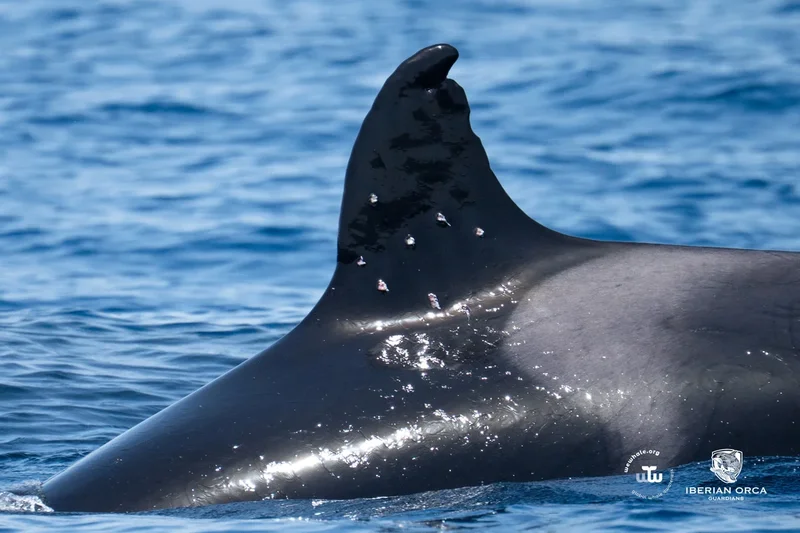
Spanish officials have launched a formal investigation after the matriarch of a famed Iberian orca pod was spotted with injuries consistent with shotgun or pellet gun fire.
The animal, named Toñi, is the oldest living matriarch of a critically endangered population known for jostling and ramming boats off the coast of Spain and Portugal.
Spain’s Ministry for Ecological Transition have since confirmed that Toñi was seen with multiple impact wounds along her dorsal fin in the Strait of Gibraltar.
Ministry sources have indicated that several projectiles remain lodged in the whale’s fin, creating a severe risk for infection.
Conservation group Iberian Orca Guardians (IOG) tracked Toñi shortly after the injuries were spotted, describing the sight of "la abuela" (which translates to “the grandmother”) as devastating.
"If someone has deliberately fired a shotgun at her, this is not only an act of extreme cruelty against an individual animal. It is an attack on one of the last remaining members of a critically endangered population.
"We were with her just a few weeks ago and these wounds were not there," said IOG co-founder Janek Andre.
Spanish authorities are now coordinating with Portuguese officials, as the injuries were first detected after the pod traveled from waters near Faro.
The Iberian orcas made international headlines in 2020 after sailors reported interactions where animals bumped rudders, spun vessels, and caused structural damage.
While the pod has been linked to damage on dozens of vessels and the sinking of at least four boats, scientists have repeatedly rejected claims that the behaviour constitutes an attack, suggesting instead that it represents social play or hunting practice.
However, tension between sailors and the pod has escalated significantly in recent years. Sailors have shared controversial methods to deter pods from approaching ships.
In 2023, video footage surfaced showing individuals throwing firecrackers into the water as orcas approached a boat's rudder.
Scientists warn that the tiny population, which is now estimated at just 30 to 40 whales — is already struggling for survival in one of the world's busiest maritime corridors.
Severe environmental stressors, including severe food scarcity, pollution, and dense commercial shipping traffic through the strait mean that human retaliation threatens to push the vulnerable pod closer toward regional extinction.
"Whatever someone's opinion about vessel interactions may be, shooting at these animals can never be acceptable," Andre added.
"These orcas need protection, not retaliation."
Spanish marine protection agencies have appealed for information from local sailors and boat operators as the investigation continues.