Why US Indo-Pacific ‘burden sharing’ risks deepening polarisation and big power rivalry
Washington may be ‘toning down’ its China rhetoric and seeking deterrence via allied capacity, but observers warn of deeper polarisation
But some analysts have questioned its chances of succeeding, arguing that this deterrence strategy has intensified great power rivalry and polarisation in the region, while driving deeper bilateral cooperation between China and Russia on the one hand and Russia and North Korea on the other.
The message was echoed at an online press briefing on Thursday, when he said that instead of shaping the US military for regime change, Washington was prioritising “burden sharing” now that it realised its allies “can and are prepared to do more”.
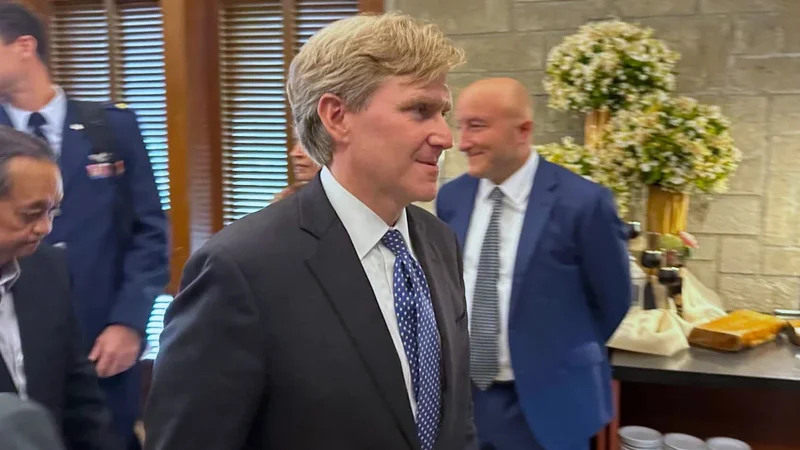
Colby also visited Thailand, Indonesia, and Cambodia during his visit, vowing to deepen security ties with each nation.
His comments suggested that the US would keep its security guarantees in place, but wanted allies to improve their ability to conduct air defence, anti-ship and reconnaissance operations, while utilising base structural capacity to provide logistics support, according to Sun Chenghao, a fellow at Tsinghua University’s Centre for International Security and Strategy.