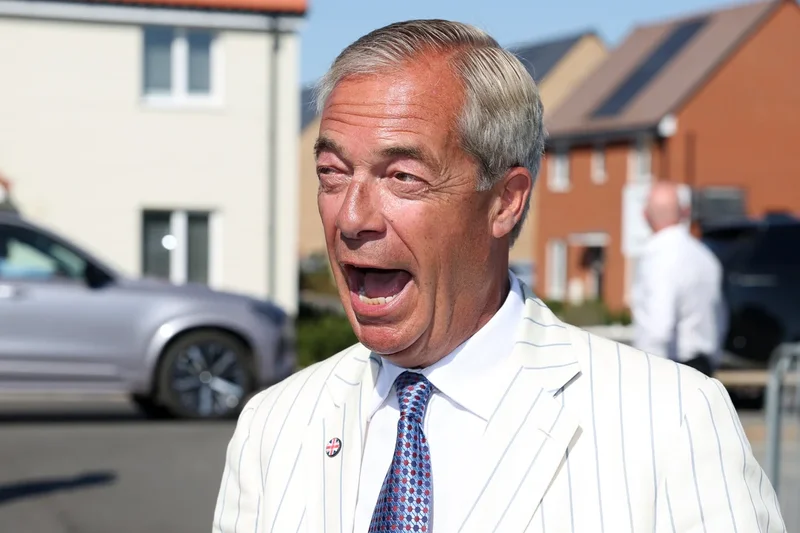
On one level, the Clacton by-election was a success for Nigel Farage. It was a kind of jolly break by the seaside, and he spent more time than usual in his constituency. The arrival of Count Binface and other exotic creatures lent this most unusual contest an end-of-the-pier quality. The fun and games gave Mr Farage what was for him a highly welcome respite from the parliamentary inquiry into the undeclared £5m gift from a cryptocurrency billionaire based in Thailand.
The Reform leader was rewarded with an easy win, an increased share of the vote and a marginally higher number of ballots than at the general election a little more than two years ago. He and his supporters also now have a “line to take” against anyone asking questions about his or his party’s finances – that the people of Clacton have given him a vote of confidence, and that, as far as Reform UK is concerned, is the end of the matter.
In reality, of course, it is not. All those questions about his finances, and some fresh ones about Richard Tice, the deputy leader, and the party as a whole, are now flooding back into Mr Farage’s life. The by-election resolved none of them, because it couldn’t. For all their great virtues, it was never the job of the people of Clacton, or anywhere else, to adjudicate whether Mr Farage broke the parliamentary rules, any more than they could say if, for example, a parking ticket he’d been given was lawful. Some felt that “all politicians do that” or that he was welcome to the cash because they liked him, or he needed it for security; but that is not the same as determining whether he should have properly declared the money once he was elected.
Indeed, such rules are in place to make sure that the electorate knows about such gifts. Had the £5m not been revealed by the media, Clacton and the nation at large might have remained in ignorance of the facts. That is wrong.
For the last few weeks, Mr Farage refrained from talking about such matters. He can no longer. The inquiry by Daniel Greenberg, the parliamentary commissioner for standards, into the £5m gift, or donation, will now resume, and Mr Farage must cooperate. There will be no let-up in legitimate press inquiries and police investigations into various other aspects of Reform’s finances. It is no defence to any of that to say, “I just won a by-election with 63 per cent of the vote. Go away.” That is not a legal defence; it is irrelevant, and the funding of any political party aspiring to government should be open and transparent. It is “our” business too.
It is not an “establishment plot”. Every political party, including the ones Mr Farage likes to dismiss, absurdly, as “establishment”, has had its money-related scandals and has had to explain what went wrong. If that is indeed the case with him, so should Mr Farage. At the very least, he should now publish his own factual account of what happened, including a timeline. This should be offered for all the cases of allegedly problematic financial transactions. Given where he finds himself now, it would do him no harm; the truth will out eventually.
On balance, his by-election gambit has weakened Mr Farage. The sleazy allegations still have “cut through”, and the contest looked like the stunt it was. Indeed, the result itself was not as resounding an endorsement for Mr Farage as he might want us to believe. Count Binface, the self-styled intergalactic warrior, commanded more than a quarter of the vote, which, given his status, is astonishing. It says as much about Mr Farage’s ability to polarise (or alienate) opinion as the power of the Binface phenomenon.
If things go badly for him and his party in the coming weeks, Mr Farage will suffer yet more reputational damage, and most likely another by-election in Clacton will be held. Second time around, the full facts about the £5m will be in the public domain, the other potential scandals will have festered for longer, and the main parties will stand candidates.
Given the proven ability of British voters in recent by-elections to coalesce around whichever party candidate has the best chance of beating Reform, and to vote accordingly, Mr Farage’s position is far from secure. This is especially true if a Restore Britain intervention splits the hard-right vote. That would imply the Tories would then eject Mr Farage and regain Clacton – a seismic event and a decisive one for the future of the right and Kemi Badenoch. Count Binface was a formidable opponent, but tactical voting could finally banish Mr Farage to the Phantom Zone.