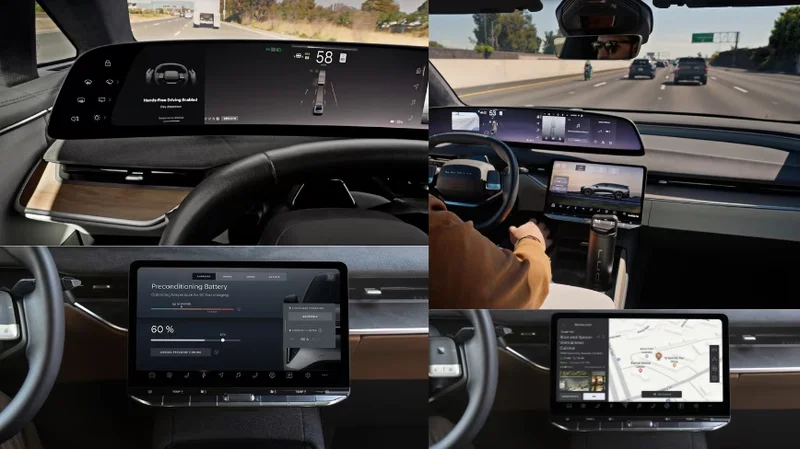
Robert Ferris put the question to forecasters and executives for CNBC on 15 August. The average American car is now 12.8 years old, on Mobility Global’s figures. A new one costs close to $50,000, and nobody selling software-defined vehicles will say they last that long.
Sam Fiorani forecasts vehicles for AutoForecastSolutions, and he gave the blunt version. “We honestly don’t know how long these vehicles will last,” he said. “We’re already seeing problems with hardware not being able to deal with new software.”
Two answers already exist
Tesla said in 2016 that every car it built carried the hardware for full self-driving. Elon Musk reaffirmed it in 2019, naming the Hardware 3 computer as the one that would deliver it. In April this year he said those cars need new computers and cameras for unsupervised FSD. Qualifying owners get a hardware upgrade or a discounted trade-in, and Tesla did not respond to CNBC’s request for comment.
Rivian is being sued over the same shape of problem. This desk covered the class action in June. It was brought by owners of first-generation R1T and R1S vehicles, marketed with hands-free, eyes-off driving.
The complaint contains the sentence that ends the argument about what a patch can fix. “No software update, no matter how sophisticated, will enable its Gen 1 vehicles to perform as advertised.” Second-generation R1s do have the hardware, and they got the feature by update.
What Rivian is promising now
Wassym Bensaid, the company’s chief software officer, makes the optimistic case. A software-defined vehicle is “no longer stale in time”, he told CNBC. The least capable Rivian you will ever own is the one you take delivery of.
The engineering answer underneath that is a number. Rivian tries to build in spare capability, which Bensaid calls headroom, to carry seven to 10 years of software upgrades.
Then comes the distinction doing all the work. New features are one thing, he said, and safety or security updates are another. Only the second category carries an indefinite commitment. Your car stays functional and safe for as long as you own it, which is not the same as staying current.
The precedent nobody remembers
This has happened once already, without a single line of car software changing. AT&T switched off its 3G network in 2022. Millions of vehicles lost emergency response, some navigation and parts of their infotainment.
The cars still drove. Owners simply stopped having features they had paid for, because a third party retired the network underneath them.
Europe answered this question for phones
Here is what makes the industry’s shrug awkward on this side of the Atlantic. Since 20 June 2025, EU ecodesign rules have required five years of operating system and security updates for smartphones and tablets. They also require seven years of spare parts availability, and a repairability label on the box.
Germany pushed for longer. The desk covered its bid for seven years of updates, which went beyond what Brussels eventually set.
So a €600 phone comes with a legal minimum support period. A €60,000 car does not. The car is the one people keep for 12.8 years.
What Europe did legislate for cars
Vehicles are not unregulated, and the rules are stricter than most drivers realise. Two United Nations regulations cover this ground, R155 on cybersecurity and R156 on software updates. They became mandatory for new vehicle types in July 2022, and for every new vehicle sold in the EU from July 2024.
R156 requires a software update management system covering a vehicle’s operational life. It also gives over-the-air updates a legal basis. The rules apply across the EU, the UK, Japan and South Korea, so American manufacturers selling into those markets comply even though the US sets no equivalent.
They have teeth. Porsche withdrew the 718 Boxster and Cayman from EU sale in 2024 rather than re-engineer them to meet R155.
But read what R156 actually governs. It sets out how a manufacturer must manage updates. It says nothing about how many years it has to keep issuing them. Europe regulated the process and left the duration open, which is exactly the gap Fiorani describes.
The used market may split in two
Alex Yurchenko of J.D. Power does not expect software to upend used-car pricing overall. He does expect a split, between vehicles with continuing over-the-air support and vehicles without it. The first group holds value better.
His reasoning is about the absence of a yardstick. “There are no widely accepted standards for assessing software-enabled features,” he said. Buyers worry about driver-assistance calibration, feature availability, data privacy, and how long subscriptions and connected services will last.
The battery is no longer the worry, which is the irony here. Data from Recurrent and Geotab showed EV batteries lasting longer than the industry expected. That leaves the computer as the part most likely to date first.
What you actually get for the subscription
The features in question are not cheap, and they differ sharply. Michael Wayland drove both systems for CNBC over hundreds of miles. He found Rivian’s Autonomy+ ahead of GM’s Super Cruise, and still behind Tesla off the motorway.
Rivian’s system spots traffic signals and tells the driver about them, without acting on them. Tesla’s FSD handled every signal, interchange and exit ramp across nearly 200 miles of Michigan. That included roundabouts and parallel parking.
Pricing runs from $39.99 a month for Super Cruise to $99 for Tesla. Rivian sits between them at $49.99 a month, or $2,500 outright for the life of the vehicle. That last option is the one to think about, because it prices a subscription against a lifespan nobody will define.
The sensor argument cuts the other way. Rivian uses at least 10 cameras, five radars and map data, with lidar due on the R2 early next year. Tesla relies on cameras alone. NHTSA escalated a probe into FSD this year after crashes, including a fatal one where the system failed to warn about reduced visibility.
None of this is cheap to run either. The average US electric vehicle sold for $56,126 in July, the first rise of 2026.
What would settle it
Three things, and the first is a published support period. No manufacturer currently states how many years of feature updates a buyer is entitled to. The first one to do it will make the others answer.
The second is whether Brussels extends the phone rule to cars. The ecodesign framework already sets minimum support lifetimes for consumer electronics, and a car is the most expensive computer most people will ever buy.
The third is what happens at the end. Sam Abuelsamid of Telemetry argues that firms which stop supporting a product should have to release the software to third parties who will maintain it. No regulator anywhere has required that yet.
Get the TNW newsletter
Get the most important tech news in your inbox each week.