Supporting Iran’s counter-narcotics work pays off beyond its borders: UNODC
TEHRAN – The United Nations Office on Drugs and Crime (UNODC) has released a report, emphasizing the need to support Iran in the battle against narcotics.
Supporting Iran’s counternarcotics work pays off beyond its borders, the report highlighted, saying it keeps drugs from reaching other regions, cuts into the money that funds the organized crime and supports public health by slowing the spread of addictive synthetic substances.
The main seizure of methamphetamine in and around Middle East and South-East Asia over the past few years has been reported in Iran, according to the report which was published on Thursday.
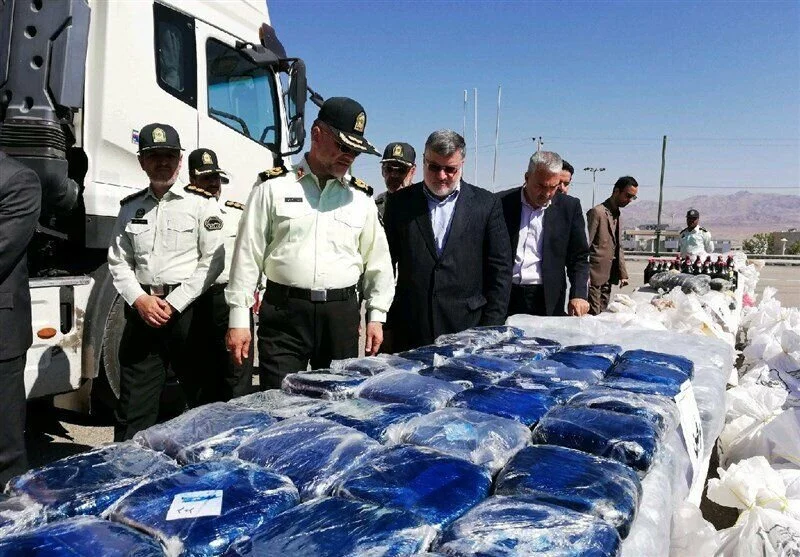
Iranian seizure of methamphetamine increased from 30,393 kilos in 2022 to 40,453 kilos in 2025, placing the country at the forefront of the fight against drugs trafficking.
In the first quarter of 2026 alone, Iranian authorities have intercepted 3,663 kilograms of methamphetamines destined for Europe and the Persian Gulf.
These weren’t just street-level busts. These were five intelligence-led operations targeting industrial-scale shipments originating in Afghanistan, evidence that trafficking networks in the region are shifting toward synthetic drugs.
While international attention has primarily focused on the vast region’s declining opium production, advanced criminal drug trafficking networks have successfully shifted toward manufacturing and exporting synthetic drugs such as methamphetamine, commonly known as meth. West Asia is now the epicenter of a synthetic drug boom.
Iran is strategically positioned along the “Afghanistan-West Asia corridor,” which serves as the primary trafficking route for these illicit commodities. The clear signal from Tehran is that these substantial shipments are being intercepted before they can reach international markets. Yet, sustained success will require enhanced international cooperation and support.
Each interception reduces the illicit financial flows that fund organized crime and slows the spread of synthetic drugs into new markets. These shipments are not merely statistics. Each seizure disrupts a supply chain that would otherwise put methamphetamine on the streets of Europe and the Persian Gulf, while cutting into the earnings of organized criminal networks.
Through its Country Partnership Programme as well as the Cooperation Framework with the Islamic Republic of Iran, UNODC supports the country efforts in advancing border technology with procurement of detection scanners, strengthening labs forensic capabilities in identify new synthetic compounds as well as regional intelligence sharing.
Sustained donor investment is critical to prevent this route from becoming a gateway for synthetic drugs. However, the scale of the challenge demands more than financial contributions—it requires a collective and sustainable approach by the international community. By supporting UNODC’s work in Iran, donor nations are investing in regional stability and international security, while also protecting their own borders from the flow of illicit substances.
UNODC lauds Iran’s achievements
In July, officials from UNODC lauded Iran’s achievements in seizing Afghan-origin methamphetamine consignments, highlighting that the country’s accomplishment showcases the operational capability, professionalism, and dedication of Iranian anti-narcotics police in countering transnational drug trafficking networks.
The UNODC regional Representative in Tashkent, Alexander Fedulov, in an online meeting with the officials from Drug Control Headquarters (DCHQ) held on the occasion of the interception of methamphetamine shipment delivered from Afghanistan to European markets, underscored the need for ongoing international cooperation to combat this global threat, and recognizing the operational realities faced by front line forces who work diligently to prevent illicit drugs from reaching communities in the region or beyond, ISNA reported.
The significant discovery of narcotics over the first three months of 2026 illustrates the complex dimensions of the challenges posed by transnational organized crimes and drug-trafficking networks, Fedulov said.
The seized drugs highlight the operational efficiency, dedication, and commitment of the personnel from agencies involved in safeguarding public health, public security, and regional stability, he added.
Iran has been at the forefront of the fight against drug trafficking originating from Afghanistan for years; the UNODC acknowledges the heavy burden placed on national institutions in tackling this challenge and commends the dedication of law enforcement personnel in fulfilling their duties, the official noted.
“The evolving drug landscape presents growing threats; the manufacture and trafficking of synthetic drugs, particularly methamphetamine, have become a major concern for the international community.
These substances can be produced, transported, and distributed by criminal networks operating across borders—leveraging technological advancements and regional instability—and no single country can manage these challenges alone.
That is why international cooperation remains essential; drug trafficking is a transnational phenomenon requiring coordinated responses based on shared responsibility, information exchange, operational cooperation, and balanced drug control policies.