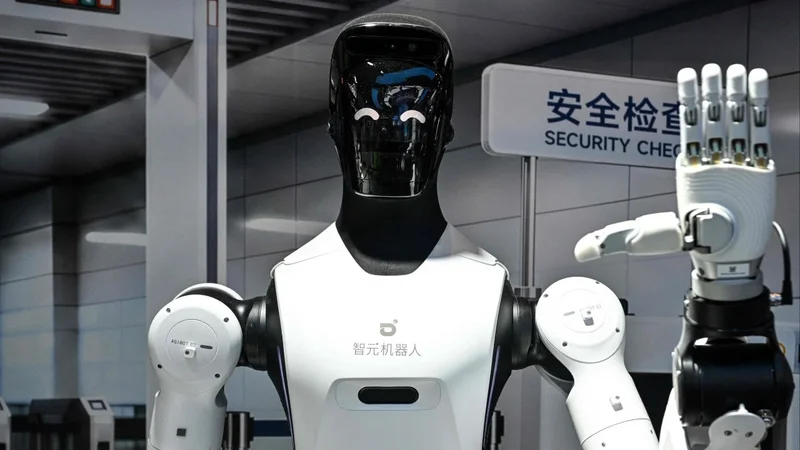
US scrutiny of Chinese technology has expanded to a new frontier, as lawmakers in Washington advance defence legislation prohibiting the military from deploying Chinese-made humanoid robots.
The US House of Representatives has passed the National Defence Authorisation Act (NDAA), an annual military policy bill that incorporates provisions restricting the use of foreign autonomous systems over national security and data privacy concerns.
Under Section 163 of the draft bill, the Pentagon would be barred from procuring, leasing or operating covered humanoid robotic systems linked to designated “foreign adversaries”, including China, Russia and Iran.
While the defence bill incorporates key elements of the proposed Guarding the US Against Adversarial Robotics Dominance (GUARD) Act – introduced last summer by Representative John Moolenaar, chairman of a House select committee focusing on competition with China – it excludes the legislative proposal’s most sweeping measures.
Under the full GUARD Act framework, Chinese humanoid and quadruped “robot dog” systems would be evaluated for inclusion on the Federal Communications Commission’s “Covered List”. That designation would strip the machines of their wireless communication licences, effectively banning their commercial sale across the US market.
By limiting Section 163 strictly to military procurement, lawmakers have left commercial sales untouched for now.