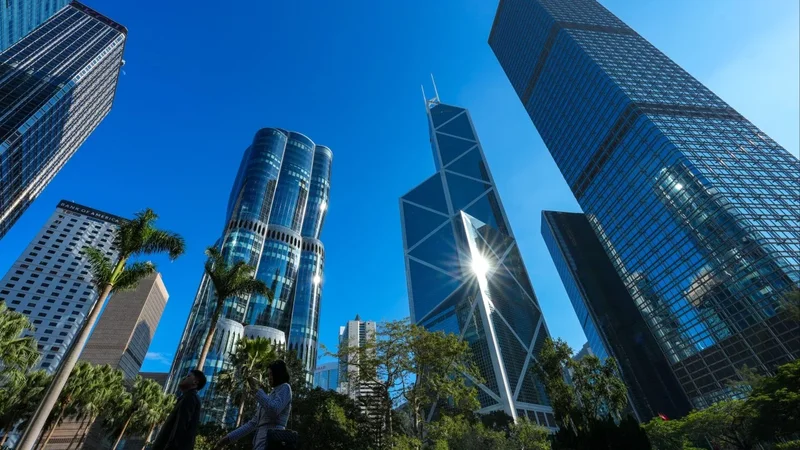
I’m a little perplexed and bemused by the brouhaha surrounding Hong Kong’s decision to draft its
first five-year plan, as if the sky is falling in around the city’s famed laissez-faire economy.
Predictably, Yale University’s Stephen Roach (he of “Hong Kong is over” fame)
warned in a commentary last month that “Chinese-style central planning” could “over-promise and under-deliver”. In a 2024 commentary, he said Hong Kong had been “shackled by the deadweight of autocracy”.
But from my vantage point, Hong Kong is decades overdue for a long-term planning framework that can provide strategic coherence to how we optimise our future as a conduit between a radically changing China and a turbulent global economy.
Chinese leader Deng Xiaoping, way back in 1992 during his famous
Southern Tour, was astutely aware that capitalism and communism were agnostic on the need to balance practical day-to-day administration with a clear long-term vision. Already, brittle Soviet concepts of “state planning” were old hat. He said: “A planned economy is not equivalent to socialism, because there is planning under capitalism too; a market economy is not capitalism, because there are markets under socialism too.”
Anyone familiar with the clever work of
Yuen Yuen Ang at Johns Hopkins University will be aware that China’s five-year planning process has for many years been much more nuanced. She calls it “directed improvisation”: Beijing sets the big-picture objectives and local administrations are tasked with improvising to suit local circumstances.
Recall too Hong Kong’s old colonial days. Up to 1997, the British colonial government maintained the Central Policy Unit (CPU) to answer exclusively to the governor of the day on long-term strategic planning that aligned where necessary with the United Kingdom.