- READ MORE: Expert shares five subtle symptoms of ovarian cancer
- See more Daily Mail on Google - save us as a Preferred Source
Doctors have discovered a pioneering procedure that can prevent nearly 80 per cent of deadly ovarian cancers.
Known as the 'silent killer', ovarian cancer kills more than 4,000 British women every year - with one in 50 women developing it in their lifetime.
The disease causes notoriously few symptoms until it has already spread to surrounding organs.
As a result, nearly 80 per cent of ovarian cancers are caught at a late stage, when they are no longer curable. Just 17 per cent of women with stage four ovarian cancer live for five years or more.
Now, new research suggests there may be a way to prevent the disease from developing in the first place.
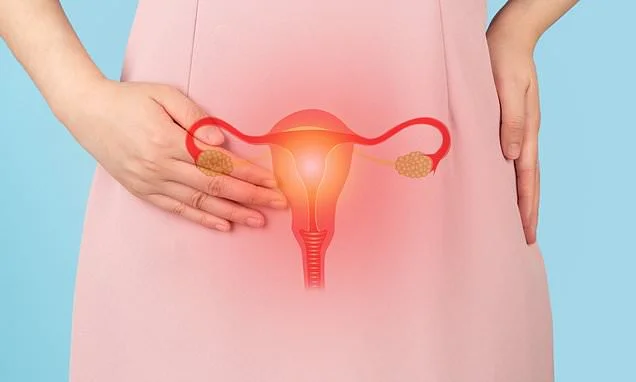
Studies published over the last 20 years have shown that nearly all ovarian cancers - and certainly the vast majority of the deadliest ones - are actually cancers of the fallopian tubes.
These tubular ducts, responsible for carrying eggs from the ovaries to the uterus, are just 10cm long, on average.
By removing them, research suggests, you can slash the risk of deadly cancer by up to 80 per cent.
It's estimated that there are more than 7,000 new cases of ovarian cancer in the UK each year
The five-minute operation can be done as part of nearly any abdominal surgery - including hysterectomies, tubal ligations, gallbladder surgeries, hernia repairs and even caesarian sections.
And a growing body of research suggests it could be the future of ovarian cancer prevention.
In Britain, women considered 'high-risk' for ovarian cancer - whether from a family history of breast or ovarian cancer, or those carrying inherited gene mutations like BRCA1 or BRCA2 - are already offered preventative surgeries to reduce their chance of developing the disease.
Standard NHS guidance advises removing both the ovaries and fallopian tubes.
But this procedure sends women into early menopause, which carries its own health risks - including increased chance of bone-thinning disease osteoporosis, neurocognitive decline and even heart disease.
Instead, a new nation-wide trial in Britain is examining whether these high-risk women should instead be offered fallopian tube removal alone - with the option to remove the ovaries after menopause.
While results won't be published for another few years, initial findings of the PROTECTOR trial suggest that this two-tiered approach can considerably improve a woman's quality of life by not sending her into early menopause, while still cutting her cancer risk by 80 to 96 per cent.
Now, a growing number of experts say that the procedure should be offered to women at average risk of the disease as well.
Studies show that removing the fallopian tubes of all women - no matter theirrisk level - can slash the likelihood of developing some of the most common, and lethal, forms of ovarian cancer by as much as 80 per cent.
The graphic shows the warning signs of ovarian cancer, including bloating and back pain
The 20 per cent or so of cancers that begin in the ovaries, meanwhile, tend to be the more curable forms of the disease, research suggests.
While stand-alone surgery to remove the tubes is still typically reserved for women at high genetic or familial risk, experts say the procedure should be offered to any women already undergoing an unrelated pelvic operation, once she has completed her family.
Health bodies in the US are now recommending that all women above the age of 45 - when they are unlikely to want to conceive - who are already undergoing abdominal surgery, be given the option to have their fallopian tubes removed.
In the last few years, the American College of Surgeons, American Cancer Society and even EU body the European Society of Gynaecological Oncology, have all issued statements encouraging doctors to offer tube removal at the time of other abdominal procedures.
And the American Cancer Society is even working on a national campaign to make more women and doctors aware that tube removal can help prevent most ovarian cancers.
Experts say that the procedure is already being offered in Britain to women of average risk of ovarian cancer during routine abdominal surgeries.
But more awareness is needed about the procedure amongst women and doctors alike, says Dr Ranjit Manchanda, professor of gynaecological oncology at Queen Mary University of London and chief investigator on the PROTECTOR trial.
'This is a huge and important finding. But there needs to be more awareness of the procedure,' he said.
'It's something where practice is gradually changing as data emerges. Over the next few years we should see it more embedded in practice.'