Film on Maguindanao Massacre ‘58th’ comes home to PH in possible sole screening
GMA Pictures’ “58th” team hopes more Filipinos would get the chance to see the animated documentary on the Maguindanao Massacre despite the possibility that its Aug. 13 Philippine premiere could be its only public screening in the country.
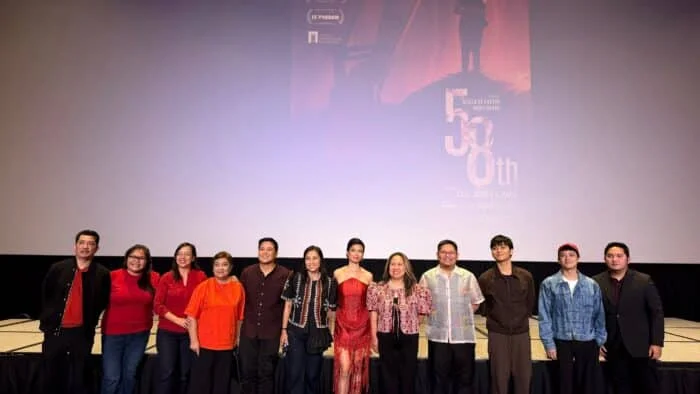
The highly anticipated film made its official Philippine premiere at the 22nd Cinemalaya on Thursday after it screened in international festivals in Rotterdam, Annecy, Auckland, and Colombia.
Producer Nessa Valdellon said bringing the film home was a tough journey. “We’re finally home,” she said during the premiere. “Medyo nagulat kami na ang hirap-hirap palang palabasin sa Pilipinas.”
Article continues after this advertisement
Valdellon noted that the team only received its permit to exhibit the film a day before the premiere, explaining why many guests received last-minute invitations.
“This might be our only public screening,” she added. “But I really hope that more of the young people and more of our countrymen could see it.”
“58th” follows Reynafe Castillo (Glaiza de Castro) as she searches for answers surrounding the death of her father, photojournalist Reynaldo “Bebot” Momay, whose remains were never found after the 2009 Maguindanao Massacre.
It serves as the final film performance of the late actor Ricky Davao, who portrayed Reynaldo Momay. The film stars De Castro alongside Mikoy Morales, Marco Masa, Zyren Dela Cruz, and Biboy Ramirez.
Article continues after this advertisement
Momay, who has yet to be officially recognized by the courts as the massacre’s 58th victim, was killed in what is widely regarded as the deadliest attack on journalists in history, alongside 57 others.
Valdellon underscored that the film serves as a way to ensure that the tragedy is never forgotten. “58th” is still set to premiere in other parts of the world but has yet to receive a proper nationwide screening in the Philippines.
Article continues after this advertisement
“We are here tonight 17 years after the Maguindanao massacre to remember. To remember the 58 lives that were taken and to make sure that we never allow something like this to happen again,” she said.
De Castro, who portrays Reynafe, meanwhile, admitted that she feared for her safety after the film’s premiere in Rotterdam.
“Alam ko po na bilang Sanggre Pirena, wala po akong kinatatakutan. Pero bilang Glaiza De Castro, marami pa rin po akong kinatatakutan. Pero kaninang hapon, nung nakausap ko po si Miss Reynafe, ang sabi niya, naubos na ‘yung takot niya. At sana ganun din ako,” said the actress.
Castillo, on the other hand, said people often remember 58 as a number; but for her, it’s her life story alongside other victims who were mothers, fathers, daughters, sons, journalists, and ordinary people who had dreams and hopes for the future.
“As the years pass, it becomes easier for the world to move on. But for the families left behind, there is no moving on,” she tearfully expressed.
She said the film is important not only for remembering the victims but also for continuing the pursuit of justice.
“Justice is also remembering. It is about refusing to let history fade into silence. It is about ensuring that future generations know what happened and why it should never happen again,” she said.
Castillo thanked the filmmakers for telling the victims’ stories with dignity and compassion, saying their work had given the victims “another voice.”
“Tonight, I am not here only as a daughter. I am here carrying the voice of those who can no longer speak,” Castillo said.
Meanwhile, Director Carl Papa, credited Cinemalaya for supporting the film and giving it a platform to be screened for Filipino audiences.
Papa said he initially did not feel brave enough to make “58th,” but returned to the same principle that guided his 2023 film “Iti Mapukpukaw”—using his voice for people who have been deprived of the ability to speak.
“In a perfect world, wala, dapat wala tayo dito. Hindi dapat pinapalabas ang pelikula na ito,” he said. “Pero dahil ang daming injustices in the world, [nandito tayo ngayon].” /edv