In Iowa, one of the key battleground states in November’s midterm elections, just about every political candidate agrees on one thing: something must be done about the state’s rising rates of cancer.
The midwestern state has the second-highest rate of cancer nationwide and, together with Utah and West Virginia, is one of only three states where incidences of the disease are rising, according to cancer rate monitoring from the National Institute on Minority Health and Health Disparities.
Promises to address the issue are now top of mind for candidates ahead of the 3 November elections, in which Iowa may play an important role in deciding control of Congress for the final two years of Donald Trump’s term.
Republicans hoping to preserve their party’s dominance of the state and Democrats who believe conditions are right for them to win key races have pledged to make fighting the disease a priority. Where they differ is in their views over the degree to which the state’s powerhouse farm economy has contributed to making Iowans sick, and what to do about it.
“I think state leadership and industrial agriculture are very hesitant to have those conversations, but I think the Iowa public is calling and demanding action and conversation and answers in a way that both parties are needing to respond, and [that’s] why it has become the campaign issue of this upcoming election,” said Sarah Green, executive director of the Iowa Environmental Council, a nonpartisan group whose research into the disease’s prevalence has helped fuel public awareness of the crisis.
Iowa’s cancer rates followed national trends until 2012, when they began climbing upwards for reasons that Green said remain unclear. Cancer includes a broad group of diseases, and many aspects of life, from stress to food to environment, can modify someone’s risk. What’s plain is the importance to voters – one survey has cancer ranked as the top issue facing the state, eclipsing even the cost of living.
In the race for the state’s open US Senate seat, Democrat Josh Turek whose spina bifida he attributes to his father’s exposure to Agent Orange during the Vietnam war, has brought up his sister’s struggle with breast cancer, while his opponent, Republican congresswoman Ashley Hinson, has emphasized her attempts to reform health policy in Washington.
Candidates of both parties vying for the state’s four Republican-held US House districts have battled over who would be better suited to channel federal resources to the state’s needs. In the race to replace the incumbent governor, Kim Reynolds, Zach Lahn won an upset victory in the Republican primary with the support of a Pac connected to the “Make America Healthy Again” movement, and both he and his Democratic opponent, Rob Sand, have unveiled lengthy plans to curb rates of the disease.
“The road I live on, I think there’s only one family that has not dealt with some kind of cancer,” said Seth Watkins, a longtime farmer in south-west Iowa who sees the emphasis on fighting the disease – and potentially changing the state’s approach to agriculture – as long overdue.
“We have a farm policy that has resulted in less soil, less biodiversity in wild species, more cancer, fewer farmers and fewer opportunities. I mean, at some point, wouldn’t people just look at that data and say, you know, maybe we should do something different?”
‘Taboo’ conversations
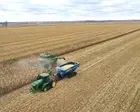
Iowa is the top producer of corn and pork in the US and one of the largest growers of soy, and agriculture generates a third of the state’s economic output and a fifth of its jobs.
But that immense productivity comes at a cost: Iowa’s farmers use more fertilizer than those of any other state, and it also leads in the number of concentrated animal feeding operations (Cafos), which are part of the meat processing supply chain and generate runoff.
Green pointed out that Iowa also has relatively few regulations intended to keep pesticides and farm runoff, which can be heavy with cancer-linked nitrates, away from people and out of water supplies.
In 2022, Iowa’s overall rate of cancer was approximately 506 cases per 100,000 people, higher than the national average of 442 per 100,000 people, according to National Institutes of Health data. It also has elevated rates of non-Hodgkin lymphoma and acute myeloid leukemia, two cancers that some studies have found may be linked to glyphosate, the fertilizer marketed as Roundup that is the most used in the state.
Agriculture’s impacts on Iowans has recently become pronounced, even for people that have nothing to do with farming.
Some Iowa waterways are among the most polluted by nitrates in the US, and last year the water utility serving Des Moines, the state’s capital and largest city, announced its first-ever lawn watering ban because levels of the compounds in the rivers from which it draws its water supply had hit near-record levels. The utility ordered water rationed again this summer.
When the Iowa Environmental Council last year dispatched researchers across the midwestern state to learn more about how cancer was affecting its residents, Green said talking about the link with agriculture was often regarded as a “taboo”.
“Iowans knew there were issues, but felt like they were not supported by their state and by elected officials in, one, hearing their stories, and then two, addressing and recognizing real challenges that Iowans are experiencing a health crisis,” said Green, whose group convened the 16 listening sessions together with the Iowa Farmers Union and Drake University’s Harkin Institute, a public policy thinktank.
There are other factors connected to cancer diagnoses in Iowa – its residents face a higher risk of exposure to naturally occurring radon, and this year the state legislature approved a law mandating that mitigation systems be installed in new homes. Under Reynolds, the state has also sought to curb alcohol and tobacco use, and in June the GOP-dominated legislature approved a $320m investment in water quality. But Green said that measure offers relatively little new funding and “doesn’t address pollution at the source”.
The gubernatorial candidates Lahn and Sand came out against a June supreme court ruling making it more difficult for people who believe they contracted cancer from exposure to Roundup to sue its manufacturer.
The Republican Lahn’s campaign platform has largely focused on incentivizing farmers to change their ways to prevent water pollution, while accusing major chemical manufacturers of misleading Iowans about their products’ safety.
“We all know something is terribly wrong, but too many politicians from Washington DC to Des Moines have had their heads stuck in the sand while big ag and big pharma printed money. This will not go on when I’m governor,” Lahn said after winning the nomination in June.
His Democratic opponent, Sand, has called cancer “the top issue on everyone’s mind no matter what part of the state I’m in, and rightfully so”, and proposed measures to better manage farmers’ use of manure, test for radon and help farms enroll in conservation programs.
Neither has as aggressive a platform as Chris Jones, the Democratic candidate for state agriculture secretary. A former University of Iowa researcher, he wrote a popular blog that explored the state’s water quality issues, but stopped writing it after, he told the Iowa Capital Dispatch, two Republican state senators threatened the university’s funding over his writings. One of the lawmakers denied the allegations, and Jones later left the school.
Jones is proposing a wholesale transformation of the state’s approach to farming to reduce its impact on water quality. His platform includes zoning changes to address the environmental effects of Cafos and a “strategic retreat” from growing corn for ethanol, a top cash crop for the state’s farmers.
“We know radon is a driver of lung cancer here. Well, guess what? We have policies to help reduce exposure to radon,” Jone said. “The same could be said for nitrate and drinking water. Let’s develop policies that reduce that risk.”
The incumbent agriculture secretary, Mike Naig, a Republican and former lobbyist for Monsanto, the manufacturer of Roundup that’s now part of Bayer, did not respond to an interview request sent to his campaign.
‘The Lobe Rangers’
Some farmers aren’t waiting for the election results to change their agricultural practices.
Last March, three farmers in north-central Iowa announced themselves as “the Lobe Rangers”, unveiling a website complete with a logo of a masked man standing amid the corn in which they made their case for how it is possible to farm profitably without harming themselves or the environment..
“This has been boiling underneath the surface for me for 15 years, and the reason I think we launched is that we just kind of had enough. We saw the inaction of the political class and the ag lobbying leadership class of putting up the same nonsense,” said Zack Smith, a corn and soybean farmer who is one of the rangers.
The group – which took its name from a particularly fertile part of the state called the Des Moines lobe – follows the state’s nutrient-reduction strategy, a blueprint to keep nitrates out of the state’s waterways and the far-off Gulf of Mexico that’s only voluntary, but which the rangers insist works.
Watkins, who works land his great-grandfather first cultivated in 1848, has in recent years downsized what was once a 4,000-acre (1,600-hectare) farm, helping younger farmers grow diversified crops on smaller plots of land.
The change in tack follows more than three decades of Watkins farming at scale and growing more disillusioned by an industry that depends heavily on federal subsidies while exacting a worsening toll on the environment.
“I feel like we’re mining instead of practicing agriculture. And, you know, show me an area, whether it’s the oil industry or mining or any of that, where when the resources are gone, the people are better off,” Watkins said.
Watching the state’s political class focus on cancer, and by extension, water quality, has been a curious experience, since it’s been a concern of theirs for more than a decade, said Smith.
While the group – which has not endorsed any candidates – doubt any single election can reverse Iowa’s frightening health trajectory, it can at least make a step in the right direction.
“It’s definitely not gonna be solved by what’s gonna happen in the election in 2026,” said Smith. “We’ll maybe start making some steps in the right direction, but this is going to be something that is going to take a lot of change at a lot of different levels.”