Crews are planting thousands of trees in a vast national park in western Newfoundland to help its forests recover from a moose population that was once among the most abundant on Earth.
Darroch Whitaker, a Parks Canada ecosystems scientist in Gros Morne National Park, said teams have planted about 730,000 since 2023 in once-forested areas that were chewed into grasslands by hungry hoards of moose.
He figures they’ll keep at it for another three years, by which time they’ll have planted 1.25 million trees, covering a combined area of about four square kilometres.
But they’re not just planting to restore the forests that were taken down by moose, he said. They’re planting a careful mix of trees that will survive warmer temperatures, creating hardy new forests that will better withstand climate change.
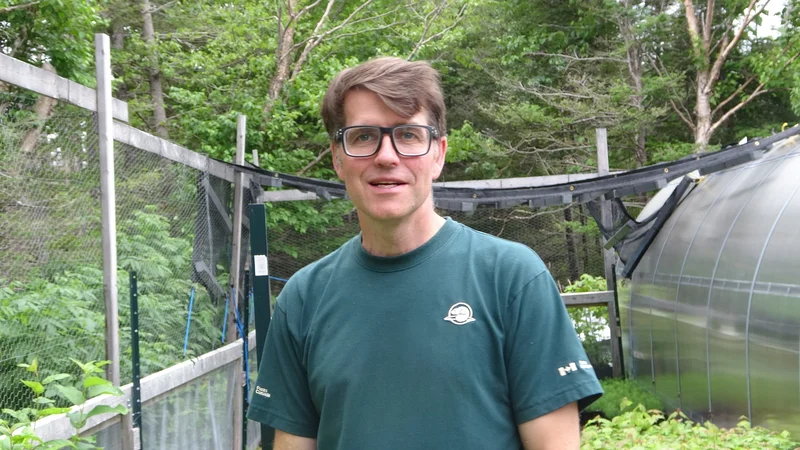
“The trees we plant today have to survive probably for another century, and we know the climate is changing,” Whitaker said in an interview outside a Parks Canada tree nursery and greenhouse in Rocky Harbour, N.L., a town in the heart of the park.
“So we’re also thinking about the forecasted climate … decades into the future and making sure these are trees that will be suited for that.”
Gros Morne is known for its towering fjords and boreal forests cut with rivers and waterfalls. The 1,805 square-kilometre park was established in western Newfoundland in 1973 and it is the second-largest national park in Atlantic Canada.
Moose are plentiful across Newfoundland, but they became particularly abundant in Gros Morne, where a hunting ban once kept them safe from humans, their only apex predator on the island.
In the 1990s, there were about 6,500 moose in the park. Some areas were home to six or more animals per square kilometre, Whitaker said.
“We were recording some of the highest densities of moose that had ever been recorded in the world,” Whitaker said. “You would see moose just about everywhere. And where they weren’t hunted, they also weren’t wary of people”
They were wandering on the roads, walking through towns and sleeping on the hiking trails – they were all over the place, he said. And they were eating a lot of young trees.
Their diets became a problem in areas where trees had been killed off, perhaps by beetles, for example, Whitaker said. Normally, these areas would recover on their own, but the moose ate all the fresh shoots that could have grown into trees. The result was a network of bald patches, or so-called moose meadows, dotting the park’s forests.
Officials opened the park up to moose hunters in 2011, who have since brought the population down to a manageable 2,000 animals, Whitaker said. And in 2023, tree planters with bags of two-year-old saplings were dropped into moose meadows to start work to replant the forest.
The saplings are planted when they are about two years old, and many are grown at the Rocky Harbour tree nursery. On a recent Thursday, the small building was lined inside with trays of tiny saplings. Outside, Whitaker and a colleague spent much of their time bent over, rifling through the leaves of new red maples and other young trees in search of destructive pests.
Gros Morne is home to a lot of black and white spruce and balsam fir. Whitaker and his team are mixing in what he called “boutique trees” – yellow birch, white pine and wild cherry, for example – which are mostly found in the southern reaches of the park. They’re also using seeds from the southern parts of the park, he said. That way, those trees are already adapted to the warmer temperatures anticipated in a few decades, when the trees have fully grown.
“A tree can’t migrate on its own, it’s stuck where it starts, where a seed falls,” he said. “They can’t migrate at the same rate as the climate, and so they may need a helping hand.”