There have been calls for the prosecution of both Jingir and Fadahunsi. Unlikely as that eventuality may be, let us at least do what grown-ups do: introspect. The ultimate test of an elder’s relevance is not how much religious divisiveness or political violence he can incite but how he inspires the younger generation — permit me to paraphrase Oscar Hammerstein II — to climb every mountain, ford every stream, and follow every rainbow till they find their dream.
Anyone against the universal brotherhood of humankind and the secularism of multicultural Nigeria is an infidel. So is anyone who canvasses for bloodletting as a campaign tool or the required red carpet to line the route to gory electoral victory. In my books, both Sheikh Yahaya Jingir and Senator Francis Fadahunsi fit the bill.
First, let’s look at Sheikh Yahaya Jingir.
Seventy-six-year-old Sheikh Sani Yahaya Jingir is the National Chairman of the Council of Ulama of Jama’atu Izalatil Bid’ah Wa Iqamatis Sunnah (JIBWIS) headquartered in Jos, Plateau State. As the leader of one of Northern Nigeria’s largest Salafi Islamic organisations, his sermons and public declarations hold significant influence among millions of followers.
However, his decades-long public career has also been marked by frequent controversies surrounding sectarian dogma, political ethno-religious mobilisation, and polarising rhetoric. As a prominent Salafi cleric, Jingir’s preaching has historically targeted Sufi orders (such as Tijaniyyah and Qadiriyyah) and Shia Muslims. He has repeatedly issued strict fatwas (theological rulings), declaring certain practices or venerations as acts of takfir (unbelief).
| | |
|---|
**Divisive Rhetorics **
With the finality of a religious potentate, he interprets empirical reality from a decidedly narrow lens as if he alone has the private number of the Unmade Maker. These uncompromising theological stances have historically heightened intra-religious friction, leading to theological rivalries among Muslim sects in Northern Nigeria. During election cycles, his sermons often advocate for Muslims to vote strictly along religious lines to maintain political advantage.
His base in Jos is burdened with a delicate history of ethno-religious conflicts. Yet, there’s no holding Jingir back when he wants to play his divisive card. Admittedly, his speeches carry significant local weight among his followers. But if the leader is blurry-eyed, what hope do the followers have?
His most tendentious habit is his use of exclusionary and derogatory language (e.g., ‘Kafir’) when referencing non-Muslims. Human rights organisations, including the National Human Rights Commission (NHRC), have explicitly labelled such electoral sermons as hate speech and incitement, which violates constitutional guarantees against religious discrimination.
I don’t have the competence to access his brilliance in Islamic theology, but I recall that he has exposed his ignorance on global issues on several occasions, notably during the COVID-19 pandemic in early 2020, when he publicly dismissed the virus as a foreign conspiracy designed to stop Muslim congregational prayers and prevent pilgrimage. He eventually recanted his stance after government reined him in.
Recently, he stirred the hornet’s nest when he made some controversial remarks at a political gathering organised by the Jama’atu Izalatil Bid’ah Wa Iqamatus Sunnah in the presence of the Kano State Governor, Abba Yusuf, and his Jigawa State counterpart, Umar Namadi, among other political bigwigs. (You can’t miss the irony!)
In a video circulating on social media, Jingir renewed his support for Muslim-Muslim presidential tickets, commending President Bola Tinubu for adopting the arrangement in the 2023 presidential election. “Special thanks to my (political) hero, Bola Tinubu… I am among the staunch advocates of the Muslim-Muslim ticket, and I call on you to come together for a Muslim-Muslim ticket,” Jingir added.
The Islamic cleric advised anyone uncomfortable with his preaching to broadcast their own version. “Have I stopped the Christians from their own slogans? Have I stopped traditionalists from a similar campaign? … I urge all of us here to go and get our voters’ cards ready. Let’s show the infidels, who claim they are more populous than us in Nigeria, their limit.”
Christian clerics and groups have roundly condemned the unprovoked attack. Some prominent Muslim politicians, including Senator Rabiu Musa Kwankwaso, have also spoken against the medieval worldview of Jingir. “Let it be clearly stated: the good people of Kano do not endorse or support these divisive remarks,” argued Kwankwaso.
Say what you will, Jingir’s supporters view him as a steadfast defender of orthodox Sunni doctrine (Sunnah) and a key voice in promoting Islamic literacy and moral discipline in Northern Nigeria.
The truth, as far as I’m concerned, is that Jingir is an electoral infidel. He does not believe in democracy. His allegiance is not to the Federal Republic of Nigeria. His idea of religion is exclusionary — only his own set of beliefs qualify to be called religion; only his sect’s members are believers. Everybody else is an infidel.
If God Is God
I have a question for this bigot. If God is God (and is omnipotent, omniscient, omnipresent, and omni-benevolent), why would He allow 2.4 billion people to be Christians and about 1.2 billion people to identify as Hindus?
Christianity, which makes up roughly 31 per cent of the world’s population, is the largest religious group globally, while Hinduism is the third-largest religion, accounting for about 15 per cent. Islam accounts for about 25 per cent. The 508 million Buddhists in the world constitute 6 per cent of the population.
Why didn’t God steamroll everybody into one religion?
The fundamental flaw of the “infidel” label lies in the fact that the term relies entirely on where the speaker happens to stand. Labelling some people “infidels” attempts to compress the vast tapestry of human consciousness into a crude binary: believer vs. non-believer. This is reductionist and dogmatically jaundiced.
Rather than inviting reflection, hostile categorisation forces people into polarised positions. It fosters conflict: historically, branding others as faithless has served as a moral justification for exclusion, persecution, violence, or even genocide. True understanding comes not from measuring others against our own dogma, but from recognising our shared humanity across diverse perspectives. After all, one man’s infidel is another man’s saint.
**Reckless Senator **
Another electoral infidel who has earned the right to be called out in the same breath as Jingir is Senator Francis Adenigba Fadahunsi, whose recent call for the killing of Accord Party members in the run-up to the just-concluded Osun State governorship elections has attracted worldwide condemnation. The remark has generated widespread concern because of its explicit reference to killing members of an opposing political party.
Senator Fadahunsi (OFR) is a 74-year-old retired Customs officer who serves as the senator representing the Osun East Senatorial District in the National Assembly. He has served on several strategic national security and anti-corruption committees, including the Senate Committee on Security, and is involved in setting up frameworks for dealing with small arms and violent crimes.
His panicky attempt to walk back his reckless rhetoric following the deluge of criticisms by both local and international organisations has been largely unsuccessful. Many veteran analysts agree with Arise News’ Reuben Abati’s characterisation of the embattled senator as a liar and a coward. Only an electoral infidel will advocate death as an instrument of political mobilisation.
There have been calls for the prosecution of both Jingir and Fadahunsi. Unlikely as that eventuality may be, let us at least do what grown-ups do: introspect. The ultimate test of an elder’s relevance is not how much religious divisiveness or political violence he can incite but how he inspires the younger generation — permit me to paraphrase Oscar Hammerstein II — to climb every mountain, ford every stream, and follow every rainbow till they find their dream.
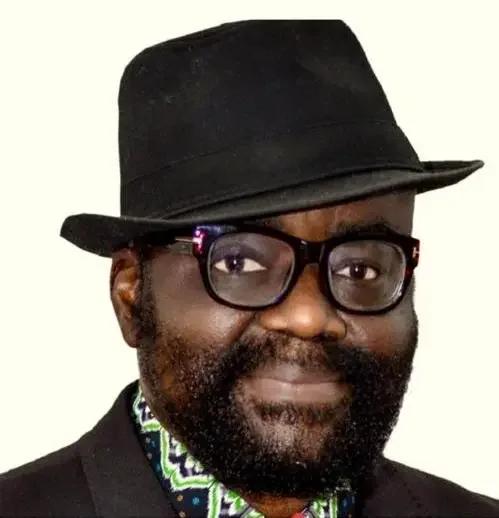
Wole Olaoye is a Public Relations consultant and veteran journalist. He can be reached on [email protected], Twitter: @wole_olaoye; Instagram: woleola2021