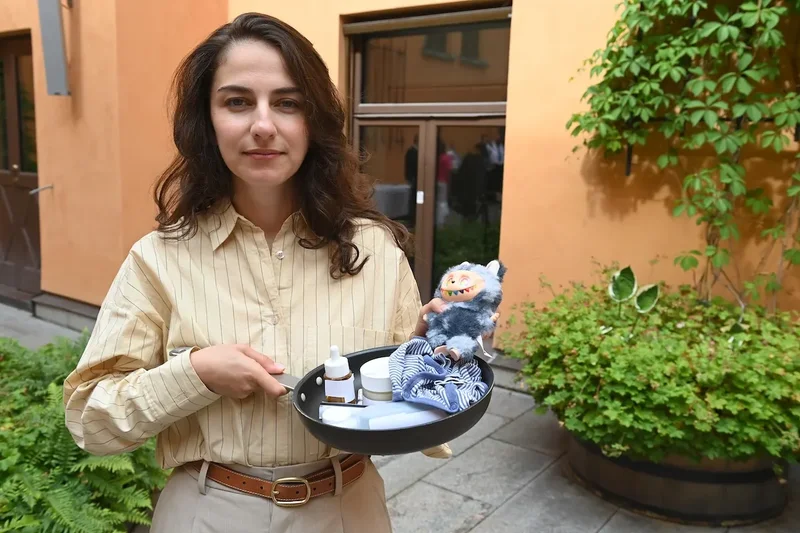
Sweden said on Thursday that it plans to ban so-called "forever chemicals" in consumer products such as clothing and kitchenware as early as 2028, before expected European Union regulation comes into force.
Per- and polyfluoroalkyl substances or PFAS "have no place in clothing, cosmetics, cookware and other everyday products when effective alternatives exist," the Minister for Climate and the Environment, Romina Pourmokhtari, said in a statement.
"Sweden has no intention of standing by while 'forever chemicals' continue to spread in our homes, in nature, and in our bodies," she said.
The ban intended to take effect on January 1, 2028, is expected to cover clothing, shoes, waterproofing agents used in clothing and shoes, kitchenware, cosmetic products, and ski wax.
The national legislation will eventually be superseded by EU-wide regulations once they have been decided by the EU Commission.
PFAS are a class of synthetic chemicals used in everyday products from nonstick cookware and clothing to industrial manufacturing, increasingly being restricted across the world due to adverse health effects.
The chemical substances take an extremely long time to break down, which has given rise to their nickname "forever chemicals".
In 2027, the European Commission is expected to present a proposal for a broad restriction on the use of PFAS in common consumer products, such as clothing or pizza boxes, with exceptions for strategic sectors, for example in the medical field.
But Brussels first needs a second opinion from the European Chemicals Agency (ECHA) on the socio-economic impact of anti-PFAS measures, expected by the end of this year.
A first scientific opinion published at the end of March recommended a broad restriction on forever chemicals.
France has already banned certain PFAS in clothing, shoes, cosmetics, and ski waxes since January, with a few exemptions.