**So many new managers **
This looks like the most unpredictable Premier League season in years. Nine clubs (Manchester City, Liverpool, Chelsea, Bournemouth, Nottingham Forest, Crystal Palace, Fulham, Ipswich and Newcastle) begin the season with new managers, with a further two in Michael Carrick at Manchester United and Roberto De Zerbi at Tottenham Hotspur starting their first full season in charge. With so much change, it can be even more difficult to know how certain teams will line up to begin the new season, or how certain players who impressed last season could be made to fit into a new system.
**World Cup hangover **
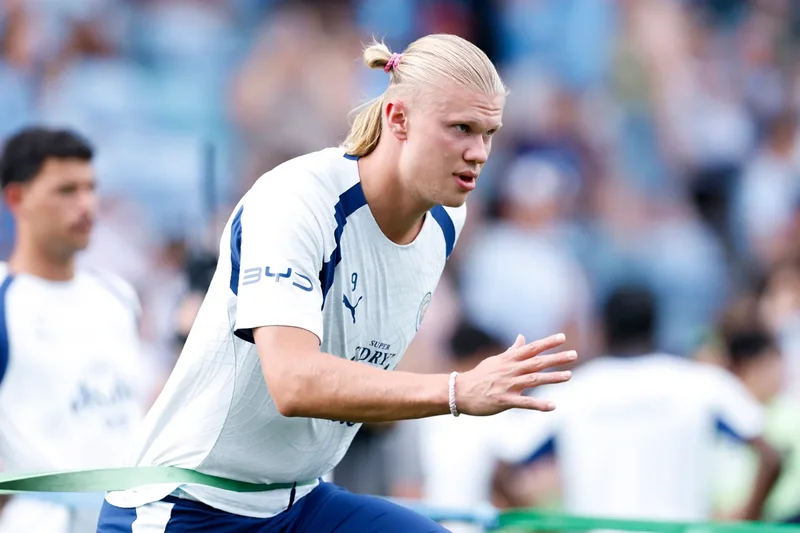
There are just 33 days between the World Cup final and the start of the Premier League season. England players, such as Arsenal’s Declan Rice and Bukayo Saka, only returned to their clubs a couple of weeks before the new season and may need to be eased in over the first few matches. Erling Haaland usually hits the ground running (he has twice reached 10 goals after just six games) but what will the impact of reaching the World Cup quarter-finals with Norway and a shortened pre-season have on the Manchester City striker?
**New signings beware **
It can take time to adjust to a new club or a new league. Liverpool’s Florian Wirtz is the most obvious example of a player who arrived on a huge fee and with high expectations last summer but who then struggled to adapt to the pace and physicality of the Premier League. Morgan Rogers is this summer’s biggest signing but while he has Premier League experience and thrived at Aston Villa last season, it could be a risk to drop him straight in without knowing how he will operate under Xabi Alonso at Chelsea.
**European impact **
Manchester United were flying over the second half of last season under Michael Carrick, but the Premier League was the only competition they were involved in. How do United balance a busier schedule this season and what impact will playing in the Champions League have on players such as Bruno Fernandes? Crystal Palace, Bournemouth and Sunderland have tougher schedules as they also compete in the Europa League, with Brighton in the Conference League.
Conversely, Chelsea and Tottenham are not in Europe this season, so Xabi Alonso and Roberto De Zerbi will be able to spend more time on the training ground preparing for matches while affording their players more of a rest between games. Both Chelsea and Tottenham should be looking to significantly improve upon last season’s finishes of 10th and 17th respectively.
**Arsenal hangover? **
Since Arsenal’s previous Premier League crown in 2004, only three managers have led their team to a defence of their title: Jose Mourinho, Sir Alex Ferguson and Pep Guardiola. Drop-off in intensity, performance and results can be hard to avoid and Arsenal could be susceptible to just that after such a physically and emotionally exhausting end to last season – just look at how knackered Declan Rice was at the World Cup. Arsenal may start the season as favourites but they were also reliant on set-pieces and clean sheets last year. A drop-off in either could result in a wider dip, while losing William Saliba for the first few months of the season is also a concern.
**The Anderson effect **
After starting the season at £5.5m, Elliot Anderson was one of the best players in the game last year. By consistently picking up defensive contribution points, by making tackles, blocks and recoveries in midfield, as well as chipping in with the odd attacking return, Anderson quietly racked the fifth-most points among midfielders by the end of the season. He then starred for England at the World Cup and completed a £116m move to Manchester City.
Anderson’s price has now gone up to £6.5m, but will he be the same player at Manchester City, who were top of the Premier League when it came to average possession, than he was at Nottingham Forest, who were 18th? While City having more of the ball can allow for Anderson to showcase his creativity and passing ability, he is unlikely to generate as many defensive contribution points as he did at Forest because City will dominate most games.
**The new Sunderland? **
After two consecutive seasons where the three promoted clubs went straight back down, Sunderland were a breath of fresh air last year. From an FPL perspective, Sunderland players were also of excellent value, particularly in defence, with Nordi Mukiele reaching 151 points last year despite starting the season at the cheapest possible price point of £4.0m. The gulf between the Championship and the Premier League remains large but that doesn't mean Coventry, Ipswich and Hull should be discounted.
**Don’t hesitate to use early chips **
FPL players get two sets of chips (consisting of wildcard, bench boost and triple captain) to use per season. The first set must be used before gameweek 19 of players will lose them. It can be tempting to hoard these, but using chips early in the season – particularly after a World Cup and when so many teams look so unpredictable – could be a smart move this year. Selecting your team from the start to open up a bench boost in gameweek one or gameweek two could then be followed by an early wildcard, while the early triple captain or free hit could be deployed to take advantage of fixtures such as Manchester City v Coventry in gameweek three or Chelsea v Hull in gameweek four.
**Changes to Bonus Point System **
Tweaks to BPS (which reward up to three players per match additional points based on their overall statistical performance) have been made to benefit wingers, attacking full-backs and goalkeepers, while the earning potential for centre-backs has been slightly reduced.
The longer international break
International breaks are going to be different this season. For the first time, the September and October breaks are going to be combined, meaning that there will be a three-week break from Premier League matches between Sunday 20 September and Saturday 10 October (between Premier League gameweek five and gameweek six). International teams will play up to four matches during this break, rather than the usual two.
A longer break, plus more matches, means there could be more of a risk of players returning from international duty with an injury. With that in mind, it could be sensible to save up some free transfers ahead of the Premier League’s resumption in gameweek six, or even consider an early wildcard. There will then be a standard international break in November, between gameweek 10 and gameweek 11.