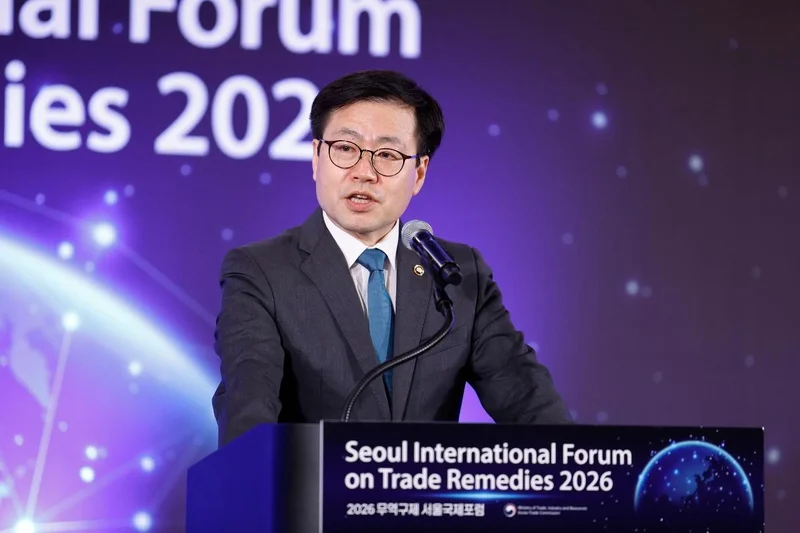
The abrupt dismissal of Trade Minister Yeo Han-koo has raised concerns over Korea's ability to navigate sensitive negotiations with the United States, as the two countries work to finalize a major investment package in exchange for a tariff reduction.
President Lee Jae Myung dismissed Yeo, who had led trade negotiations with Washington, effective midnight on Saturday, without giving a reason or naming a successor.
The move came as Seoul and Washington work to finalize a large-scale investment package, with the Donald Trump administration expected to announce later this month the results of a Section 301 investigation into Korea for alleged excess industrial capacity and forced labor.
In July, the U.S. Trade Representative (USTR) announced a 12.5 percent tariff on Korea and other economies over forced labor allegations under Section 301 of the U.S. Trade Act. Separately, the USTR is investigating 16 economies, including Korea, under the same law over alleged excess industrial capacity and production.
The sudden leadership vacuum resulting from Yeo's dismissal has raised questions over the continuity of Korea's trade diplomacy, particularly its engagement with the USTR. Yeo had been handling tariff and nontariff issues as part of follow-up talks for last year's tariff agreement.
"It appears that the U.S. believes progress on Korea's first U.S. investment project has been somewhat slow, and with the sudden dismissal of one of the two key officials who had been coordinating the project — the industry minister and the trade minister — Washington could misunderstand the move as a sign that Korea is dragging its feet or trying to delay the project further," said Heo Yoon, a professor of international trade at Sogang University.
"With the atmosphere between Korea and the U.S. already considerably strained, and uncertainty over U.S. trade policy continuing to grow, the dismissal of the country's top trade negotiator comes at a particularly sensitive time."
Amid growing concerns over the potential fallout, the Ministry of Trade, Industry and Resources said the decision was up to the president and declined to disclose the reasons for the sudden dismissal.
"Personnel appointments involving political appointees fall within the authority and political judgment of the appointing authority, and it would be inappropriate for the ministry to comment on the background," the ministry said.
"We are making every effort to ensure that there is no disruption to trade issues in accordance with the personnel decision of the appointing authority."
Yeo rejected allegations of misconduct surrounding his departure and warned that he would take legal action over unverified claims.
The government has sought to reassure Washington that the personnel change will not disrupt negotiations. Industry Minister Kim Jung-kwan flew to Washington on Sunday, a day after Yeo's dismissal, to discuss what would be the first project under a $200 billion U.S. investment commitment agreed on as part of last year's bilateral trade deal, along with other outstanding trade issues.
“As we are reaching the final stage (in announcing the first project), various specific issues are emerging at the working level between Korea and the U.S.,” Kim told reporters after arriving at Dulles International Airport near Washington.
“I came here because we are in a situation where we need to put everything together."
Kim said negotiations were continuing with the goal of announcing the project by early September, while acknowledging that there were more issues than initially expected.
The visit is also aimed at maintaining momentum in broader trade talks, including Washington's Section 301 investigations and follow-up discussions on tariffs and other trade and economic issues.
Kim played down concerns that Yeo's departure would create a problem, saying the work will continue under senior trade officials.
"Yeo has mainly handled the nontariff areas and free trade agreement issues, and the deputy trade minister will continue to take care of those areas within the ministry," Kim said.
"We will do our best to ensure that there is no gap."
Still, the vacancy could weaken Korea's leverage in the negotiations and disrupt the continuity of talks at a particularly delicate moment, given Yeo's extensive contacts with U.S. trade officials, lawmakers and policymakers.
The presidential office said Seoul and Washington were continuing close discussions through various channels on strategic investment projects, while declining to disclose details.
"Regarding trade issues with the U.S., the government is also responding through close communication from time to time," an official said.