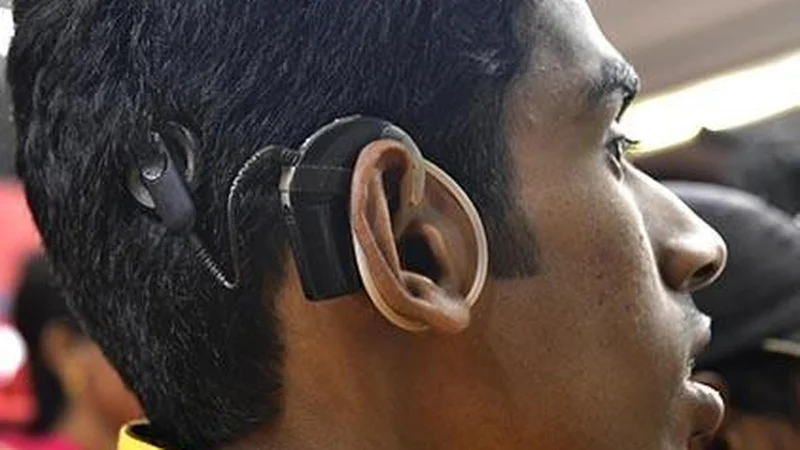
When cochlear implants were first invented, they were used only for restoration of hearing in adult patients who had lost their hearing due to myriad causes. With time the use of this marvellous device was expanded to include children born deaf, to help them join mainstream. society. In the Indian subcontinent especially, cochlear implantations have traditionally been used mostly to restore hearing in paediatric populations as evidence has shown that early implantation can result in the greatest benefits to not only the child’s speech and language development, but also their overall development. This line of thought was possibly strengthened by the deep impact cochlear implants have on the lives of not only affected children but also on their families.
Unfortunately, even though cochlear implants were very much part of the armamentarium in treating adult hearing loss in the West, in our part of the, world quality of life parameters are often underplayed, especially in older adults. It is only recently that our society is waking up to the endless possibilities that this technology has to offer to improve the lives of our adult patients with hearing loss that cannot be helped with hearing aids.
Awareness is now growing about the fact that adults and older people dealing with severe and profound hearing loss (not otherwise amenable to non-invasive forms of treatment) are also benefiting from cochlear implants, regaining not only their ability to communicate, but also enabling them to continue to be productive at work while continuing to enjoy the little pleasures of senior life such as talking to their friends, children and grandchildren.
Hearing aids vs. cochlear implants
Hearing loss may develop slowly or suddenly, and is usually caused by ageing, prolonged exposure to loud sounds, certain diseases like diabetes or kidney failure, medications, or various other causes. Many people start using hearing aids that amplify the sounds they hear. While these work well for mild to moderate hearing loss, as hearing gets worse, hearing aids become ineffective especially when it comes to hearing speech in group settings and noisy places.
Cochlear implants differ from hearing aids in that while the latter amplify sounds, the former bypass the damaged hair cells in the inner ear and stimulate the auditory nerve directly via electrical signals. A cochlear implant comprises of an external device that houses the battery, microphone and sound processor and an internal surgically placed device that picks up the signal from the outer device and presents it directly to the auditory nerve.
One of the myths surrounding cochlear implants is that they are only meant for children. However, adults of all ages can be implanted successfully as long as they have undergone a suitable evaluation.
More than hearing
The benefits of cochlear implants go beyond just improvement in hearing. An implanted device enables a person to interact with the environment more efficiently. Cochlear implants empower individuals with greater ability to communicate with friends and family, and improve self-esteem and productivity at work.
It is worth noting that hearing restoration also has a positive impact on mental health. If hearing impairment is not treated appropriately, it may result in tiredness, anxiety, social isolation, depression and even cognitive decline leading eventually to dementia.
Not the end of the line
For many in India, hearing loss continues to be undiagnosed, and for many others, it is undertreated. Many also assume that when hearing aids stop helping, there is nothing more to be done. This is a misconception, and can lead to years of hearing difficulties associated with a poor quality of life.
However, it is important to note that cochlear implant surgery is not the final step in the fight against deafening silence. Instead, it is the beginning of a long journey from silence to the world of sound. There are mandatory steps and stages that need to be completed by the patient and the family to achieve desired results. Here, dedicated teamwork between the patient, family and the clinicians is vital in achieving success.
While the journey from surgery to proper hearing and speech is lengthy in children born deaf, for adults who have lost their hearing later in life, the rehabilitation process is considerably shorter and less arduous. Adults can expect to see benefits from their implants within weeks to months as opposed to months to years in children.
It is also important to contact an ENT specialist or cochlear implant team in case a person experiences difficulties in understanding conversations, has to often ask others to repeat themselves, or avoids social interactions because of hearing problems even while wearing properly-fitted hearing aids.
What patients should know is this: cochlear implants should not be considered a solely paediatric intervention anymore. Their use has turned into a game-changer in the realm of hearing rehabilitation for people of all ages. With prompt diagnosis, proper selection and rehabilitation, many can begin to hear well again.
(Dr. N.V.K Mohan is a consultant otologist, ENT and cochlear implant surgeon at CK Birla Hospitals, CMRI, Kolkata. nvk68@outlook.com)
Published - July 23, 2026 06:19 pm IST