- See more This is Money on Google - save us as a Preferred Source
Last week hundreds of thousands of young people found out whether they have secured the A-level grades they were hoping for.
For many, those results will be the passport to university, with this year's figures showing a rise in the number of people who secured their first choice university and a record overall number of places offered.
For others, they might have meant clearing, an apprenticeship, further training or a rethink about what comes next.
It's a time of enormous change and some anxiety, but there is one question I would like us to ask much more often on A-level results day: why do we still talk about success as though there is only one route to it?
For decades, the implicit message to young people has been pretty consistent. Work hard at school, get good grades, go to university and then get a good job.
Without a doubt, university is a brilliant route for many people and should absolutely remain an option.
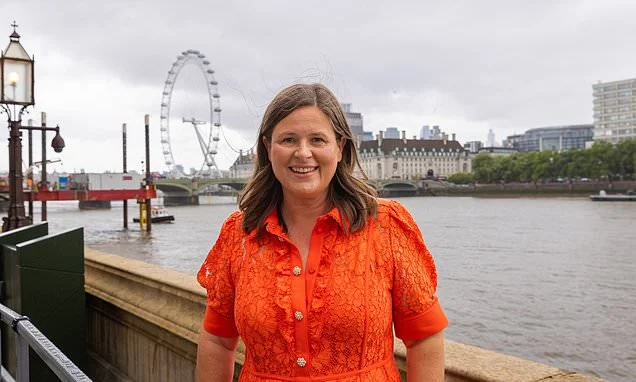
Michelle Ovens CBE believes young people should be allowed to create their own jobs
And we all know that it is not just the academic achievement graduates benefit from, but the chance to live away from home, forge friendships and make that first step into an adult future.
But it is not the only route to a successful or financially secure life.
The Prime Minister is right to challenge the idea that we should value the graduation cap above the hard hat.
His push to give technical education, practical skills and work experience greater status is an important recognition that young people need more than one route into the world of work.
But there is another route we should put much more firmly on the map – entrepreneurship.
Starting a business will not be right for everyone. It is difficult, uncertain and comes with no guarantees. But neither is university a guarantee of a particular salary or career.
What entrepreneurship does offer is something we should be taking seriously in a changing economy, which is the opportunity to create your own job, build something from scratch and potentially create jobs for other people too.
We should be teaching young people about that possibility much earlier, ensuring they leave formal education with at least the knowledge of what is possible.
That doesn't mean telling every 16- or 18-year-old to become an entrepreneur. It means giving young people the kinds of practical skills that help them spot an opportunity, solve problems, manage money and make decisions with confidence, often on limited information.
Just as importantly, entrepreneurship can teach resilience and how to cope when things don't go to plan, how to learn from setbacks, pivot and keep going.
In a world where few careers follow a perfectly straight line, these aren't simply business skills.
They are life skills and they could be particularly important for young people who don't have the family networks or financial safety nets that others take for granted.
The economic case for this is compelling. Small businesses are the backbone of communities across the country, providing employment, services and opportunities.
But business ownership can also offer a route to greater financial independence for individuals who might otherwise struggle to progress.
Our government-backed Maple Review, supported by Xero, highlighted the powerful role entrepreneurship can play in social mobility.
Talent and ambition are not confined to affluent postcodes but opportunity often is. That matters enormously when we look at the inequalities facing young people today.
The latest government figures show that four million children – more than a quarter (27 per cent) of all children – were living in poverty in 2024-25 which is around eight children in an average classroom of 30. In some areas the number of children living in poverty is more than 40 per cent.
Against that backdrop, giving young people more routes into economic security isn't a nice-to-have. It is an absolute essential.
However, we know from our own work that entrepreneurship is not a magic wand. It goes without saying that starting a business is not easy but those from disadvantaged backgrounds will be facing specific challenges that may not always be obvious – this could be anything from fear of debt to issues dealing with formal processes due to lack of experience.
Entrepreneurship and business ownership offer great opportunity, but there has to be the right support, whether that is mentoring, finance or access to networks.
That is why the role of schools, businesses and government matters so much, and why a National Business Skills Guarantee is our core recommendation to bridge the entrepreneurial divide.
A young person hearing directly from a local business owner about how they built a company from nothing can learn something very different from a textbook.
They can discover careers they didn't know existed and begin to build networks that could prove invaluable later. As the saying goes, you can't be what you can't see.
We need an education system that recognises that the economy that young people are entering is changing rapidly.
AI is transforming jobs. Traditional career paths are becoming less predictable. Portfolio careers, freelancing and small businesses are increasingly part of the employment landscape.
If we want the next generation to be financially resilient, we need to teach them not just how to get a job, but how the world of work actually works and how to forge their own path within it.
Michelle Ovens CBE is the founder of Small Business Britain.