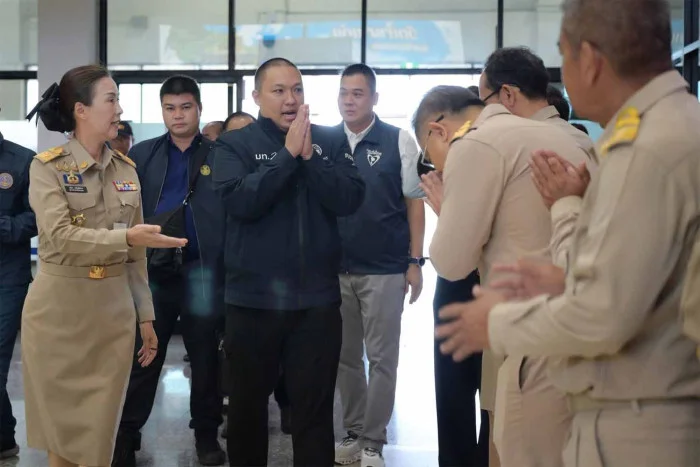
The Interior Ministry has expanded its investigation into foreign-owned proxy companies to Sakon Nakhon, while a senior Phuket official has proposed the government stop providing welfare benefits for foreign workers who give birth at public hospitals.
Deputy Interior Minister Polapee Suwunchwee, speaking in the northeastern province of Sakon Nakhon on Monday, said an initial investigation had identified 53 suspect companies in four of the province's 18 districts that were probably illegally owned by foreigners. He did not name the four districts or any of the companies.
The finding followed complaints from about 50 local Thais that copies of their ID cards and house registration details were misused for the registration of companies, and the registrations later sold to Chinese nationals. Other local residents had been unaware their identities had been stolen and similarly abused, Mr Polapee said.
Provincial administrative and commerce officials had identified 53 suspect companies, of which 43 were actually wholly owned by Chinese nationals.
“The investigation will not stop with a list of the companies but will continue to pinpoint the masterminds - the Chinese operators, their Thai accomplices, accounting companies and law firms involved,” the deputy interior minister said.
Sakon Nakhon is the latest target of the government's drive against proxy holdings that has already identified offenders in Chiang Mai, Krabi, Phangnga, Phuket, Prachuap Khiri Khan and Surat Thani provinces.
- Phuket hospitals over-stretched -
In Phuket, Rewat Areerop, president of the Phuket Provincial Administration Organisation, said on Monday he had proposed the government stop providing health welfare for migrant workers giving birth in Thailand.
He said pregnant migrant workers had flocked to state hospitals in Phuket to give birth and that had affected Thais’ access to public health services. Local hospitals had only limited resources, including the number of beds and medical staff.
Mr Rewat said he sent his proposal to the labour minister, who has authority over migrant workers and their welfare.