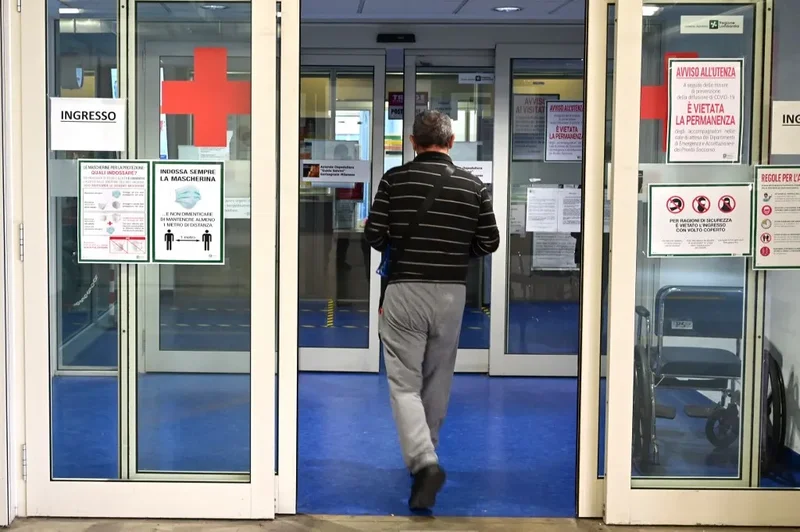
You might find that your Italian doctor or dentist's office is shut for a few weeks in August, especially if there are just one or two doctors on staff at your clinic.
So what happens if you need medical assistance while your regular doctor is away? Fortunately, Italy has several systems in place to ensure patients can still access medical care.
Here's what you need to know.
Visit your doctor's replacement
First you can check if your doctor has made arrangements for a medico sostituto – a replacement doctor – to look after their patients while they are away.
If you call their office, a voicemail has usually been set providing the replacement doctor's contact details and instructions for making an appointment.
READ ALSO: EXPLAINED: How to make a doctor's appointment in Italy
You can also get this information by contacting your local health authority (ASL – Azienda Sanitaria Locale) or by checking a physical sign which should be posted on the door of your doctor's office.
Find another doctor nearby
You can also book an appointment with another doctor of your choosing. This is particularly useful if you need to speak with a specialist rather than a GP (medico di base).
An easy way to find the type of doctor you need with availability is by using an app like Doctolib or MedInAction.
These apps allow you to search by speciality and location, and filter by languages spoken. Most times, you can find a doctor with an open appointment within 24 hours.
READ ALSO: The key Italian vocabulary you’ll need for a doctor’s visit
However, the services on these apps aren't cheap, and most doctors are available only in the larger cities.
See a doctor online
If your condition doesn't require a physical examination, a video consultation (televista) may be enough.
Telemedicine is becoming more common in Italy, and many doctors offer remote appointments through platforms such as Doctolib.
If necessary, doctors can also issue electronic prescriptions (ricette) during an online visit, which can be used at the pharmacy just like traditional written prescriptions.
Walk-in medical centres
If you need an urgent appointment, you can see a doctor at Italy’s Guardia Medica, a medical care centre that operates outside of normal working hours and on weekends and holidays.
These centres are intended for urgent problems that cannot wait for your regular doctor's return but are not serious enough to require a trip to the emergency room – something like an urgent care in the US.
You can find your nearest Guardia Medica by searching in Apple Maps or Google Maps. The Guardia Medica is now officially called 'servizio di continuità assistenziale', though you will still hear it referred to by its old name.
You can also call the Guardia Medica. The number depends on your area; for example, in Rome, you can call them at 116117.
If you're not a resident of Italy, you should visit the Guardia Medica Turistica, which is an urgent care specifically for tourists. There is a small fee for these services for tourists. (Standard Guardia Medica services are free for Italian residents.)
Emergency room
Emergency healthcare is of course always available. Hospital emergency departments (pronto soccorso) are open to walk-ins 24 hours a day, and ambulances are available to be dispatched regardless of holidays.
For emergency medical issues, call the number 118, which is the Italian line for health-related emergencies, or 112, the general European emergency number.
Pharmacies and prescriptions
During holidays, such as Ferragosto, Italian pharmacies operate on a rota basis, which ensures that there is at least one open in every area or neighbourhood. Details should be posted in the window of your local pharmacy.
If your prescription runs out while your doctor is away, you can ask your pharmacist about the situation.
Italian pharmacists do, in certain circumstances, provide an emergency supply of some medications to avoid interrupting treatment until you can see a doctor.
This generally applies to ongoing treatments rather than new prescriptions, and pharmacists will assess requests on a case-by-case basis. Make sure to bring your old prescriptions with you to the pharmacy.