Your support helps us to tell the story
From reproductive rights to climate change to Big Tech, The Independent is on the ground when the story is developing. Whether it's investigating the financials of Elon Musk's pro-Trump PAC or producing our latest documentary, 'The A Word', which shines a light on the American women fighting for reproductive rights, we know how important it is to parse out the facts from the messaging.
At such a critical moment in US history, we need reporters on the ground. Your donation allows us to keep sending journalists to speak to both sides of the story.
The Independent is trusted by Americans across the entire political spectrum. And unlike many other quality news outlets, we choose not to lock Americans out of our reporting and analysis with paywalls. We believe quality journalism should be available to everyone, paid for by those who can afford it.
Your support makes all the difference.
Read more
Bill Peterson, a Chicago home remodeler, once frequented upscale grocers like Whole Foods or Kroger for his produce and dairy.
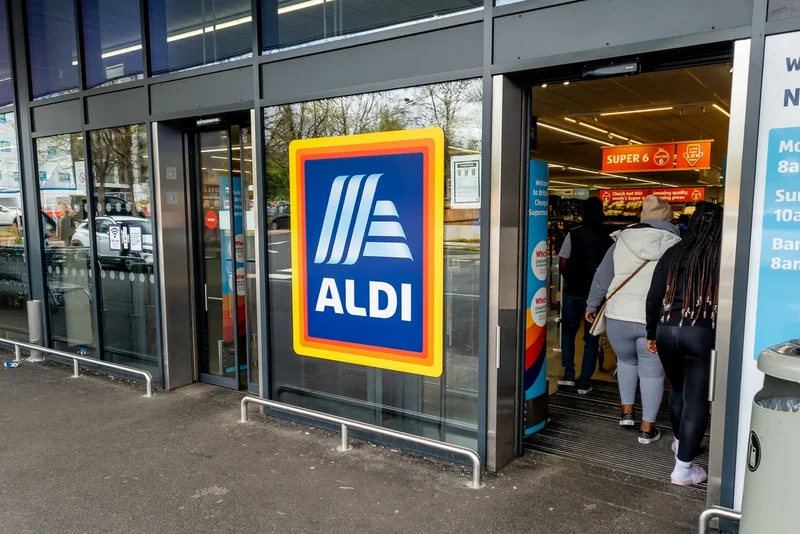
Now, he's a staunch advocate for the private-label chain Aldi, where he finds those same staples at a significantly lower cost. Despite being gainfully employed, Peterson, 61, articulates a widespread sentiment: the economy feels precarious.
"There’s no job security ... everything has gotten stupid expensive," he stated.
This shift in consumer behavior, driven by years of persistent inflation, extends beyond just budget-conscious shoppers. Experts are increasingly viewing it as a profound re-evaluation of how Americans approach shopping, dismantling a long-held stigma associated with private-label goods.
Sarah Henry, managing partner at Logan Capital Management, described inflation as "an accelerant to fundamental shifts already set to unfold."
Walmart, the nation's largest retailer, is increasing the number of items under its ‘bettergoods’ food label to nearly 1,000 (Getty Images)
Retailers are rapidly adjusting to this "trade-down" consumer trend, which encompasses both cash-strapped individuals seeking essentials and wealthier shoppers looking to economize on discretionary purchases.
Data from NielsenIQ reveals a stark contrast: from January through May this year, value retailers saw an 11.6% year-on-year sales growth, while conventional retailers managed only 2.3%.
The notion of "shopping smart" has evolved into a universal mindset rather than a niche demographic, according to Julie Barber, Walmart's chief merchandising officer, who told Reuters, "Shopping smart has become a mindset, not a customer segment."
Walmart, the nation's largest retailer, is expanding its "bettergoods" food label to nearly 1,000 items, with CEO David Guggina noting its success in attracting new, higher-income customers.
RBC analyst Nik Modi highlighted this strategic pivot, writing in June that private brands are being elevated "from a defensive tactic to a core growth strategy," representing a "structural commitment rather than cyclical opportunism."
Aldi exemplifies this commitment. The German chain, with approximately 2,700 US stores, plans to open 180 more this year and an additional 400 through 2028.
Scott Patton, chief commercial officer of Aldi's US arm, told Reuters, "High inflation or low inflation, high unemployment or low unemployment, there are always consumers who are looking to save more money," adding, "I think consumers have figured out they don't need national brands."
Even those with ample disposable income are feeling the pinch. Amy Fox, a Cincinnati business owner, described rising grocery bills, particularly with three sons in college, as "death by a thousand cuts."
She has switched to Midwestern supermarket Meijer for private-label beef and chicken, finding them significantly cheaper than at Whole Foods.
A fundamental shopping shift
"It just doesn't make sense anymore" to pay premium prices for such items, she said.
While high inflation and the shock of rising energy and grocery costs are immediate drivers, Dana Peterson, chief economist at The Conference Board, suggests more fundamental factors are at play. Industry experts believe these underlying forces could solidify "trading down" as the new norm.
Logan Capital's Henry pointed to existential concerns like job displacement by AI, alongside AI's role in simplifying bargain-hunting, as factors clouding consumers' future outlook.
Target plans to add 600 private-label food and beverage items, including 400 under its Good \& Gather brand (Getty Images)
NielsenIQ researchers observed that both value and premium retailers are outperforming mid-market stores, indicating a "more intentional approach to spending" across all income brackets.
Major retailers are responding: Kroger executives report private-label sales growing faster than national brands, while Target plans to add 600 private-label food and beverage items, including 400 under its Good \& Gather brand. Dollar General is also expanding its private-brand offerings, emphasizing value across income levels.
For Bill Peterson, who grew up with limited means, private labels once carried a negative connotation of poor quality. That perception has now largely vanished.
"That stigma is pretty much gone," he affirmed, encapsulating a widespread shift in American consumer attitudes.