Tehran municipality official highlights restoration of war-damaged heritage sites
TEHRAN – Ali Shamsipour, head of the Urban Research and Planning Center of Tehran Municipality, has highlighted plans and ongoing efforts to restore heritage sites damaged during the recent war involving the United States and the Israeli regime.
He noted that studies conducted by the center on historical buildings damaged during wars and crises have focused on ways to preserve and restore the sites while also identifying new functions for them.
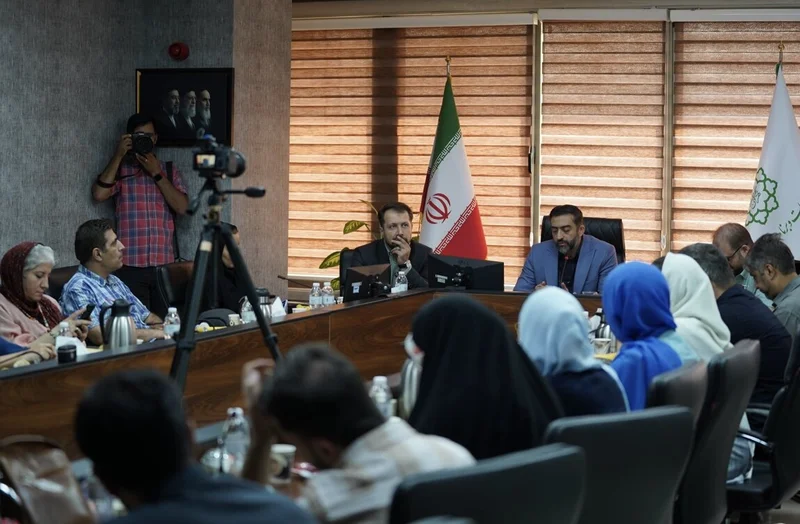
“The restoration of historical buildings damaged during wars and crises should not erase all traces of the events that affected them.” Shamsipour, said during a press conference on Sunday.
He said documenting the effects of war on historic buildings was an important part of the studies, stressing that restoration should not remove every sign of a historic event.
“Some traces of that damage can be preserved as historical memory,” he said.
Elsewhere in his remarks on center’s responsibilities, he said turning a research idea into an implemented project is a lengthy process that involves designing the research project, conducting the study, preparing a report and eventually putting its findings into practice. The process can sometimes take several years, he added.
Some completed studies have been translated into operational programs, including research on urban sports that resulted in the development of an action plan for Tehran Municipality, Shamsipour said.
He added that the center's approach was to ensure that research goes beyond the reporting stage and is converted into applicable knowledge and effective decisions for urban management.
Calls for clearer responsibility for Tehran's historical heritage
Shamsipour also called for greater attention to Tehran's historical identity and clearer responsibilities for protecting and managing its historical buildings, sites and urban areas.
He said responsibility for many historical buildings is currently divided among different government bodies, with no single authority fully accountable for their protection.
Municipalities can only be fully accountable for the preservation and maintenance of a city's historic heritage if the necessary powers and responsibilities are also assigned to them, Shamsipour added.
Shamsipour also said the center had undertaken several research projects on neighborhood-based planning, including initiatives focusing on mosques.
Some of the projects have been completed, while others are still being implemented or undergoing further study.
Regarding the center's academic publications, Shamsipour said not all studies are necessarily turned into books because some are conducted primarily for managerial and policymaking purposes.
The center's editorial and translation committee nevertheless seeks to publish academic books and reference works on urban management, he said.
“The center's main objective is to extract “urban knowledge” from research projects and turn it into practical solutions for addressing real problems facing the metropolis.”
Referring to challenges such as traffic congestion and air pollution, he said the evaluation of urban management measures should consider the entire chain of research, decision-making, implementation and impact assessment.
During a visit in June to the UNESCO-listed Golestan Palace, which was damaged by shockwaves from US-Israeli missile strikes, Shamsipour had also called for a broader understanding of heritage resilience.
He said resilience should extend beyond the physical preservation and restoration of monuments to encompass their social, cultural and human dimensions.
Attacks on cultural sites can create new layers of historical memory and cultural significance, he said, adding that places associated with wartime events may themselves eventually become part of a nation's cultural heritage and collective identity.
AM