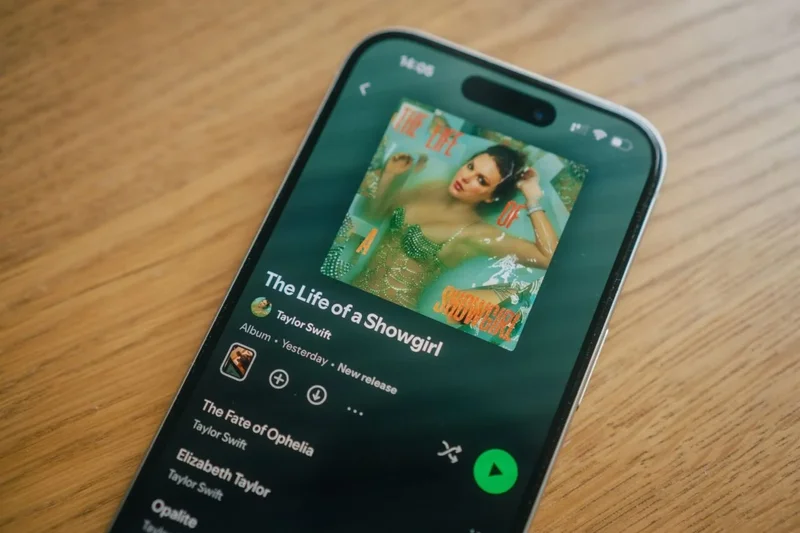
Swifties, Beyhivers, and other fans of music who regularly drive, take heed. Research out today shows a link between the release of a major music album and an increased risk of fatal traffic collisions.
Scientists at Harvard Medical School and others looked at five years worth of traffic fatality data. Deadly car crashes noticeably rose on days when a major album hit the streaming waves compared to days right before and after the release, they found. The findings suggest that people can and should be more mindful about how they’re playing their favorite artist’s new songs while on the road, the authors say.
“Nobody is asking you to drive in silence. Just move the fiddling to before you’re moving—pick the album, hit play, put the phone down,” lead author Vishal Patel, a physician and researcher in the department of health care policy at Harvard, told Gizmodo.
Killer streaming
Patel was actually partly inspired to look into this topic by his own personal near-miss experience. One day while driving, his wife (a singer herself) had texted him about the latest Taylor Swift album. As Patel was flipping through his Spotify to find the songs she recommended, he suddenly noticed that he had drifted out of his lane.
Though Patel escaped any harm, plenty of research has shown that the more we use our phones while driving, the greater the risk of a serious car accident. Some studies of simulated driving have also suggested that listening to unfamiliar, fast-tempo music can be especially distracting. It’s not exactly easy to observe the real-world effects of music on people’s driving, though.
“You can’t randomize people into using their phones behind the wheel, and drivers rarely admit what they were doing in the seconds before a crash,” Patal notes.
Instead, the team opted to scour through data from the Fatality Analysis Reporting System (FARS), which tracks all reported fatal car crashes in the country. Other research has leveraged FARS data to study how major holidays and widely shared events, such as Super Bowl Sunday, might influence the risk of deadly driving, so why not a big new album, the researchers figured.
“Album releases seemed like an obvious candidate nobody had tried,” Patel said.
In addition to FARS, the researchers analyzed data from Spotify, looking for the top 10 biggest album release days, streaming-wise, from 2017 to 2022. Number one, in case you’re wondering, was the October 21, 2022, release of Taylor Swift’s Midnights, which saw over 184,000,000 first-day streams. They looked at nationwide reported fatal car crashes on each of these release days and compared them to the 10 days before and after the release date.
As expected, total streams increased on these release days (about 43% relatively higher), as did fatal crashes. After adjusting for things like the day of the week or major holidays (known risk factors), the occurrence of a fatal traffic collision increased by about 15% on release days relative to before and after. In absolute terms, there were approximately 182 more deaths spread across the 10 release days, or around 18 added deaths on average for a release day.
Ultimately these findings, which were published Monday in the journal JAMA Network Open, can only show a correlation between the release of a big music album and increased traffic deaths, not prove a cause-and-effect relationship. But Patel says the team did run other calculations that further strengthen their conclusions.
“On causality, I’d put it this way: we can’t prove any individual driver was on a phone, and I wouldn’t claim otherwise. What we can say is that the alternative explanations don’t hold up well,” he explained. “Most albums drop on Fridays, so we compared release Fridays to adjacent Fridays, and the increase persisted. We ran a thousand simulations using randomly assigned placebo dates, and our result was larger than chance in 98% to 99% of them. We checked the same calendar dates in years without a release and saw nothing.”
Patel also notes that the increase in traffic deaths was more pronounced among sober drivers, daytime drivers, and people driving alone—trends suggestive of a direct impact from people playing a new album rather than something more tangential, such as a trove of people drinking and driving after attending a big release party. Increased deaths were also higher among younger drivers (under 40), men, and white and Asian drivers (relative to Black drivers).
What should this mean?
Given these results, it might be prudent for big streamers like Spotify to run public service announcements when a major new album is set to hit airwaves, the researchers say. “Streaming platforms know months ahead when a major album is dropping, and they already send push notifications to promote it. Adding a line about setting up your music before you drive would cost essentially nothing,” Patel said.
The researchers also argue that policymakers should modernize statutes related to distracted driving. These laws typically only focus on texting and calling, but more than half of drivers today are estimated to stream audio while driving, according to some surveys. A car’s design might be important, too, since the researchers saw a higher increase among cars having built-in infotainment systems that integrate with smartphones. These systems tend to have valuable safety features, such as hands-free voice control, but making it easier to stream audio while driving could offset some of these benefits, Patel says.
Of course, there are ways to lower your personal risk while streaming your favorite musician’s latest hits. Aside from setting up your phone before driving, it might be wise to bring along a fellow music buddy who can do all the Spotify fiddling for you. “If someone’s in the passenger seat, hand it to them. That was the closest thing we found to a protective factor: the increase showed up almost entirely among drivers who were alone,” Patel said.
Assuming you’re alone, though, a little patience goes a long way. “And if a song comes to mind mid-drive, it will still be there when you park,” he added.
The researchers say their method can be used to study other major events that can shift smartphone use on a national level. So don’t worry too much, Taylor Swift fans—we’ll probably keep learning about other big days that make people noticeably less cautious behind the wheel.