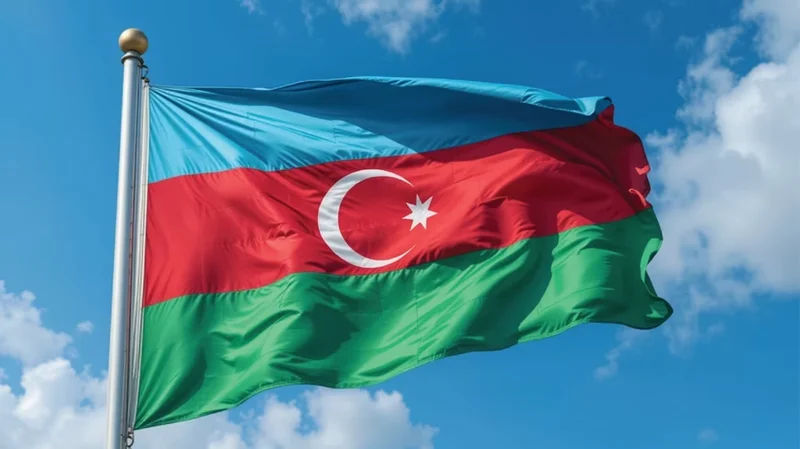
Every petrostate eventually discovers that the oil will not last forever, and Azerbaijan has reached the stage of the story where the government starts talking about technology.
Hydrocarbons once made up roughly 75% of the country’s economic output and 90% of its exports, according to the IMF, which is a comfortable arrangement right up until the moment it is not.
So Baku has begun assembling the familiar toolkit of the aspiring tech hub, and the effort is worth watching, if only because the gap between the pitch and the delivery is where these stories usually live.
The instinct is not unique to the Caspian, either: across the region, oil money has been chasing servers and startups for years, with mixed results, as the Gulf’s own bet on AI data centres has lately shown.
Technology accounted for 2.1% of gross domestic product in 2025, up from 1.9% the year before, a rise that is genuine and also almost invisible next to the energy sector. The venture scene is smaller still.
Twenty-two startups raised a combined $2.62 million in 2025, a figure that a single mid-sized seed round in Berlin or London would swallow whole.
Three local funds, Caucasus Ventures, INMerge Ventures, and Tumar Ventures, hold around $11 million in disclosed capital between them.
In July, parliament passed a legal framework for investment instruments, and the government is preparing a fund that combines local and international money. How big will it be? Deputy Digital Development Minister Rashad Hasanov declined to name a figure.
“The size will be set by the quality of the pipeline and the partners we bring in, not the other way around,” he said, which is either admirable discipline or a courteous way of noting that nobody has committed the cash yet.
The central bank, whose governor Taleh Kazimov expects fresh entrants once the rules bed in, has six months to sign off on regulations for equity and debt-based crowdfunding.
The incentives on offer are, on paper, lavish. Reporting from Azerbaijani outlets describes two decades of zero income tax for qualifying migrants and returning researchers, a comparable corporate-tax holiday for digital, AI, and cybersecurity firms, and a customs waiver on imported equipment, all aimed partly at reversing the brain drain that has quietly hollowed out the talent pool.
Officials cite Singapore and Estonia as the models they have in mind, and they would like Baku to become the technology hub of the Caspian.
The ambition is easy to state and considerably harder to reach. Azerbaijan trails its immediate neighbours by an uncomfortable margin: Kazakhstan hosts more than 20 private venture funds and drew something like $130 million in 2025, while Armenia has already produced a couple of unicorns.
TNW’s own dispatch from Kazakhstan’s tech scene found a market several steps down the road Baku is only now setting out on.
A government target of 500 startups by the end of 2026, against roughly 151 today, has the ring of a number chosen for a slide rather than a spreadsheet.
Founders, for their part, sound cautiously grateful and quietly wary. Tural Selimli, who runs the startup Sera AI, welcomed the framework but pointed to the harder task, which is convincing foreign investors and angels that Azerbaijan is worth their attention in the first place.
No statute can legislate that into being. And that is the recurring difficulty with state-led diversification, from the Gulf to the Caspian: the paperwork is the easy part.
Norway, whose sovereign wealth fund turned petroleum into a trillion-dollar portfolio, is proof that resource rents can be converted into something durable, but it took patience, credible institutions, and a tolerance for long stretches in which very little appeared to happen. Baku has written the law.
Whether the capital, the founders, and the exits follow is a question the legislation cannot answer, and the honest reply, for now, is that nobody yet knows.
Get the TNW newsletter
Get the most important tech news in your inbox each week.