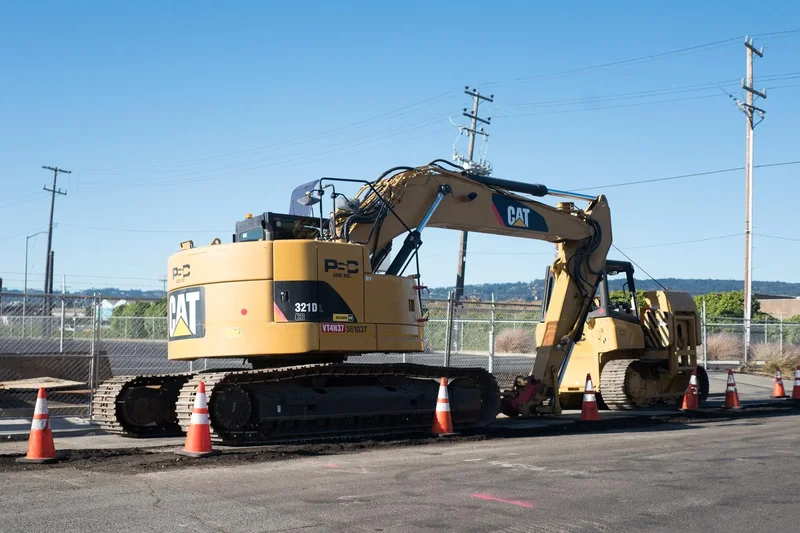
“Tap your finger, move a mountain,” Gravis Robotics’ home page says. The Swiss-based company doesn’t make a single excavator, backhoe, bulldozer, or crane, but it’s looking to add super-smart AI brains to heavy construction metal. And now SoftBank, the Japanese-based technology investor that often tries to crown winners in a sector by injecting huge sums of cash into selected startups, backed up and dumped off a load of $200 million in cash to help make that happen.
It’s the largest Series A in the history of construction robotics, the company says.
Gravis Robotics sells the Gravis Rack, a control kit that bolts onto equipment already sitting on a jobsite. The Rack has been installed on Caterpillar, John Deere, Volvo, JCB, Hitachi, Case, Develon, Sumitomo and Yanmar iron, the company says. Once installed, operators can run machinery with AI assist, telling them whether they’re in the right spot and doing the right thing, or define a job for a machine and press start. There’s also a remote mode where operators can supervise one or several machines over video streams, with optional joystick and pedal peripherals plug into a tablet for in case they need to take manual control.
Gravis claims up to a 30% productivity gain over peak manual operation.
"Skilled operators read the earth through subtle physical feedback — listening to the engine strain, sensing the machine vibration and reacting to hydraulic resistance," Gravis CTO Dominic Jud said in a statement. “Our AI takes that same physical input and grounds it in machine telemetry.”
Gravis had already raised $23 million last November, in a round led by IQ Capital and Zacua Ventures. In late July, Bloomberg reported SoftBank was weighing an outright acquisition valuing the company at more than $500 million. Three weeks later, it settled for a minority stake at double that price, valuing Gravis Robotics at $1 billion.
"Physical AI is central to SoftBank's vision for the next phase of AI," said Dai Sakata, a managing director at SoftBank Group.
SoftBank bought ABB’s robotics division for $5.375 billion last October and finished selling down its Boston Dynamics stake this summer, essentially trading a famous demo company (with high potential) for existing industrial installed base.
Gravis still has to prove retrofit autonomy scales past its existing pilots and out-competes heavy equipment manufacturers building their own stacks. It also has significant competition from SafeAI, though that’s more focused on mining, and companies like Teleo, which also offers brand-agnostic supervised-autonomy retrofit kits for construction equipment.
But it now has a lot more cash than its startup competitors.
"To build the future, we need to change the world, literally," CEO Johns said. "Every project starts with moving earth."