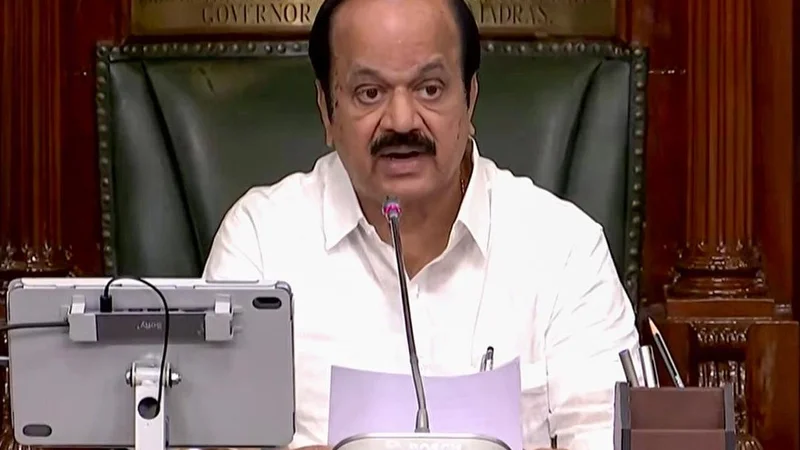
Tamil Nadu Legislative Assembly Speaker J.C.D. Prabhakar on Monday (August 17, 2026) told the Madras High Court he did conduct a “limited inquiry” before accepting the resignations of six AIADMK MLAs between May 26, 2026 and June 29, 2026.
In an affidavit filed before the first Division Bench comprising Chief Justice Sushrut Arvind Dharmadhikari and Justice G. Arul Murugan, he claimed to have inquired with the MLAs to ascertain whether they were resigning voluntarily and that their resignation letters were genuine.
The Speaker also entered appearance through Senior Counsel K.K. Venugopal in order to oppose a batch of four writ petitions filed by AIADMK Whip Agri S.S. Krishnamurthy. The petitioner had challenged the acceptance of the resignations submitted by Esakki Subaya, S. Jayakumar, Maragatham Kumaravel, P. Sathyabama, C. Vijayabaskar and M.R. Vijayabhaskar who had been elected from Ambasamudram, Perundurai, Maduranthagam, Dharapuram, Viralimalai and Karur constituencies respectively.
Mr Prabhakar filed the affidavit after senior counsel V Giri, representing the writ petitioner, had during the last hearing contended the Speaker had not subjected himself to the jurisdiction of the High Court by authorising the Legislative Assembly Secretary R. Santhi to file a counter affidavit on his behalf. Asserting there was no disrespectful intent behind the filing of the counter affidavit through the Assembly Secretary, the Speaker said: “Any suggestions to the contrary by the petitioner are mischevious and stoutly denied.”
As a co-constitutional authority, “I have the highest regard and respect for the judicial process of this honorable Court and hence it has never been my intent to abstain from participating in the present matter... Since I was under the bonafide impression that it would suffice if the second respondent (Assembly Secretary), who had the necessary competence to depose as regards the facts germane to the present matter, files a counter, I had not formally entered appearance through a law officer in the present matter,” he explained.
Clarifying all six MLAs had tendered their resignations in person and in their own handwritings, the Speaker said, he had individually inquired with each of those MLAs to find out whether they were resigning out of their free will and own volition and that there was no element of undue influence or coercion behind their decisions to resign.
Stating some of the MLAs were accompanied by their well wishers and supporters while submitting their resignations, the Speaker said the conduct of the MLAs did not give him any impression that they were being coerced or forced in any manner to tender their resignations.
He also told the court there were no other materials or circumstances to doubt the genuineness or voluntary nature of their resignations. Therefore, he conducted a “limited inquiry” with the MLAs and it appeared to him that they were stating the truth and were not under any pressure from any other person.
“In these circumstances, there was no further inquiry necessary in my view... In this entire sequence of events I was guided by the mandate stipulated under the proviso to Article 190(3)(b) of the Constitution and Rule 22 of the Tamil Nadu Legislative Assembly (TNLA) Rules,” the affidavit read.
Mr Prabhakar said, the inquiry conducted by him was in consonance with the permissible scope of inquiry envisaged under the Constitution and the TNLA Rules and therefore the acceptance of the resignation letters was perfectly valid and suffered from no legal or constitutional infirmities as canvassed by the writ petitioner.
After taking the Speaker’s affidavit on file, the Chief Justice’s Bench adjourned the hearing of the case to September 1, 2026 by when the writ petitioner was asked to file his reply to the affidavit.
Published - August 17, 2026 09:30 pm IST