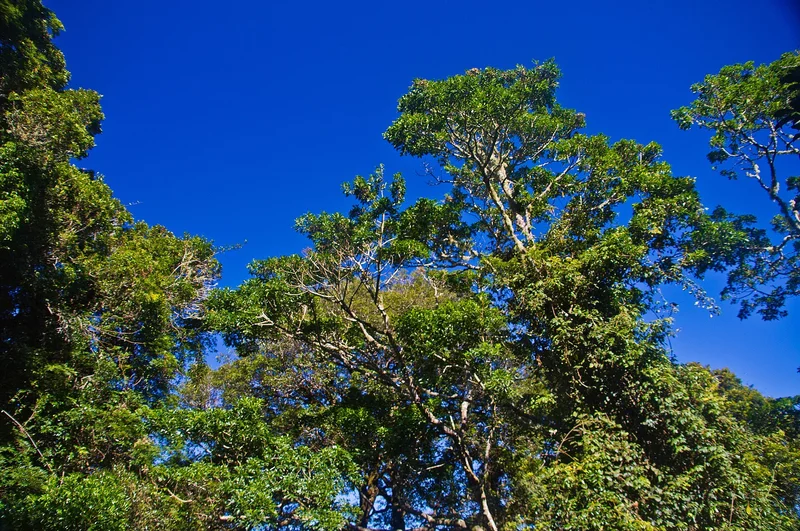
The 5 Oldest Forests on the Planet You Can Still Visit
Travel · Nature
From a Queensland rainforest with roots in the age of dinosaurs to a Chilean grove of giant alerce trees. These ancient woodlands are open to travelers who plan ahead.
The oldest forests on Earth are not locked away in a lab or a photograph. Several are open to anyone willing to make the trip.
These are places where the plant lineages go back to the age of the dinosaurs. Or where single trees have been standing since before the pyramids.
From Australia to Chile, here are five ancient woodlands you can still walk through today.
What Makes These the Oldest Forests on Earth
A quick word on what age means here. When guides call a forest the oldest, they usually mean the plant lineages have survived.
In one form or another, for a very long time. That is different from the age of any single tree you see.
Daintree, for example, is marketed as around 180 million years old because its Gondwanan flora is ancient. Not because the same trees have stood that long.
Scientists are careful to attribute these headline numbers rather than state them as hard fact. So treat the big figures as attributed claims, which is how tour operators and even Guinness World Records present them.
What is certain is that all five forests are extraordinary living survivors worth the journey.
Daintree Rainforest, Australia
Australia’s Daintree, in far north Queensland, is often described by Tourism Australia and Guinness World Records as the world’s oldest tropical rainforest. At roughly 180 million years old.
That age reflects its ancient Gondwanan lineage rather than continuous cover. It sits within the Wet Tropics of Queensland, a UNESCO World Heritage Site listed in 1988.
The rainforest tumbles right down to the reef, so you can pair canopy walks with a snorkel on the same trip. You reach it by road from Cairns, about two hours south, or from Port Douglas nearby.
To cross into the northern Daintree and Cape Tribulation you take the Daintree River car ferry. Which runs daily from 5:00 a.m. to midnight.
The forest itself is free to walk, with boardwalks and lookouts open to all. The ferry costs AUD 51 for a return car crossing (about US$36) or AUD 7 on foot or by bike (about US$5).
Bialowieza Forest, Poland and Belarus
Straddling the border of Poland and Belarus, Bialowieza is widely called Europe’s last large primeval lowland forest. It is a surviving fragment of the woodland that once blanketed the European plain, and it is a UNESCO World Heritage Site.
Meanwhile, it is also famous for its wild European bison, which roam the ancient oaks and hornbeams. The wider forest has trails, roads and guided excursions on both sides of the frontier.
The fully protected core, the Strict Nature Reserve, can only be entered with a licensed guide; independent walking there is forbidden. Guides are booked through local offices such as PTTK Bialowieza in the Polish village.
An adult ticket to the Strict Nature Reserve runs about 14 PLN, roughly US$4, on top of the guide fee. Book a day or two ahead in summer, when group slots fill quickly.
Yakushima, Japan
Off the southern tip of Japan. The island of Yakushima is cloaked in misty cedar forest and was made a UNESCO World Heritage Site in 1993.
Its yakusugi cedars are prized for their great age, with several passing 1,000 years. In fact, the star is Jomon Sugi.
A colossal cedar that Japanese government and tourism sources estimate at between 2,000 and 7,200 years old. The trunk is hollow, so the exact age stays a mystery, but the lower bound of about 2,000 years is well supported.
You get there from Kagoshima on the mainland. A high-speed hydrofoil takes roughly two hours.
While the slower car ferry takes about four hours and costs around 6,100 yen one way (about US$38). Reaching Jomon Sugi itself is a full-day hike on the Arakawa trail, so come with proper shoes and an early start.
Buses link the ports to the trailheads once you land.
Waipoua Forest, New Zealand
In New Zealand’s Northland, Waipoua Forest shelters the country’s mightiest kauri trees. The most famous is Tane Mahuta, the largest living kauri.
The Department of Conservation and local iwi estimate it at between 1,250 and 2,500 years old. Better still, the tree stands just a short two-minute walk off State Highway 12, on the scenic Kauri Coast.
Most visitors self-drive from Auckland or Whangarei, and coach tours also run from the north. There is no entry fee to see Tane Mahuta; the walk from the roadside car park is free.
That makes this one of the easiest ancient giants on the list to reach. Still, one rule matters a great deal here.
Kauri dieback, a soil-borne disease with no cure. Means you must scrub your shoes at the cleaning stations and stay strictly on the marked boardwalks.
Valdivian Rainforest, Chile
For a Latin American entry, head to the Valdivian temperate rainforest of southern Chile, another Gondwanan survivor packed with ancient conifers. Its signature tree is the alerce, or Fitzroya cupressoides, which can live up to about 3,600 years.
The best place to meet one is Alerce Costero National Park in the Los Rios region. It guards the Gran Abuelo, or Alerce Milenario, a giant long cited at around 3,500 years old.
A 2022 study by dendrochronologist Jonathan Barichivich modelled the tree at roughly 5,484 years. With an 80 percent chance of being over 5,000 years old.
That estimate relies on modelling and is not yet fully peer-reviewed, so it remains debated. You reach the park by road from Valdivia or La Union.
Foreign adult tickets run in the region of CLP 8,000 to 10,000 (about US$9 to US$12). And entry to the viewpoint sector is timed and accompanied by a ranger.
What These Ancient Forests Cost to Visit
The good news for budget travelers is that several of these forests cost nothing to walk. Waipoua’s Tane Mahuta and Daintree’s boardwalks are free, and you only pay for extras like guided tours or the Daintree ferry.
Where you do pay, the sums are modest. A Strict Reserve ticket in Bialowieza is about 14 PLN (US$4), the Yakushima car ferry is around 6,100 yen (US$38).
And Chile’s Alerce Costero charges foreign adults roughly US$9 to US$12. Instead, the bigger costs are usually getting to the region and hiring local guides.
Budget for flights, car hire and, in a couple of cases, a full day of your itinerary per forest.
Tips for Visiting Ancient Forests Responsibly
These woodlands have survived for ages precisely because they are fragile, so tread lightly. Stay on marked tracks and boardwalks, and never carve, pick or take anything home.
Follow the local biosecurity rules to the letter. In New Zealand that means the kauri dieback cleaning stations.
And in Chile it means respecting timed, ranger-led entry to protect the Gran Abuelo. Finally, book guides and tickets ahead in peak season, and give yourself time.
An ancient forest is best met slowly, at the pace it has always kept.
Frequently Asked Questions
Which are the oldest forests you can actually visit?
Five stand out: Daintree in Australia, Bialowieza in Poland and Belarus, Yakushima in Japan, Waipoua in New Zealand, and Chile’s Valdivian rainforest. Each is open to travelers and reachable by road or ferry.
How old are these forests really?
Ages are usually attributed claims about plant lineages, not single trees. Daintree is cited at around 180 million years.
How much does it cost to visit them?
Several walks are free, including Waipoua’s Tane Mahuta and Daintree’s boardwalks. Where you pay, expect small sums such as 14 PLN in Bialowieza (US$4) or Chile’s roughly US$9 to US$12 foreign entry.
How do I get to these ancient forests?
Reach Daintree via Cairns and its river ferry, Yakushima by ferry from Kagoshima. Waipoua off State Highway 12 in Northland, Bialowieza on the Polish-Belarusian border, and Chile’s alerce parks from Valdivia.
This article was produced by The Rio Times’ automated newsroom system. How we use AI · Report an error