World Press Photo Lands in Havana: A Free Waterfront Show in Cuba
Cuba · Culture
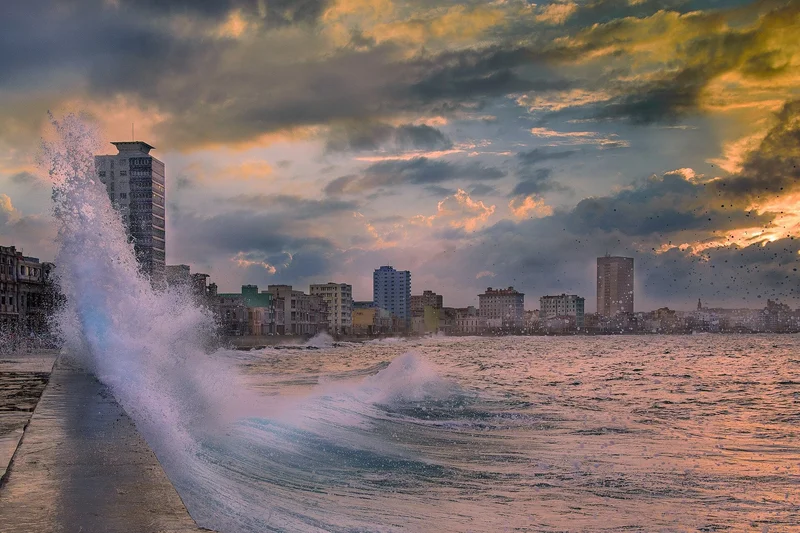
Twenty-one award-winning climate stories go up along the Malecon. Turning one of Havana’s most famous stretches of seafront into an open-air gallery for the better part of a month.
The World Press Photo exhibition has arrived in Havana. And for once one of the world’s most important photojournalism shows costs you nothing to see.
From now until early September, twenty-one award-winning photo stories about climate change are on display in the open air on the Malecon. The city’s famous seafront promenade.
If you are living in or visiting Cuba, it is one of the easiest cultural outings you can add to a walk along the water. So here is exactly what it is, where it is, when it runs and how to make the most of it.
A World Press Photo Show on the Malecon
Every year the World Press Photo Foundation, based in Amsterdam. Runs the best-known photojournalism contest in the world and then sends the winning images on a global tour.
This year one of those shows has landed in Havana, and it could not be in a more Cuban setting. The exhibition is titled ‘Con los pies en la tierra’, which translates roughly as ‘Down to Earth’.
With the English subtitle ‘Climate Change and Climate Futures’. Rather than fill a museum.
The organizers have mounted it outdoors on the esplanade of an old harbor fortress, right on the seafront. Because it sits in the open air on a public promenade, you do not need to plan much.
You can wander in off the street, take your time, and leave whenever you like. For a newcomer still finding their feet in Havana, it is a gentle.
Free introduction to one of the city’s most walkable corners.
What You’ll See: Climate Stories From Around the World
The theme this year is the climate. And the show gathers twenty-one award-winning photo projects that look at how a warming planet is reshaping lives from the Amazon to the Arctic.
These are the images that won or placed in the 2026 World Press Photo contest, so the standard is very high. Photographers featured include Lalo de Almeida, Ami Vitale, Kadir van Lohuizen, Luca Locatelli.
Amber Bracken, Matthew Abbott, Sandra Mehl and Simone Tramonte, among others. Between them they cover wildfires, floods, disappearing ice, drought and the quieter ways communities are adapting.
It is serious, moving work, but it is also easy to take in. Each picture comes with a short caption, so you can move through the whole show in under an hour.
Or linger over the ones that grab you. For anyone curious about photojournalism, it is a rare chance to see world-class reporting up close and for free.
When It’s On and How Long You Have
The exhibition opened on Wednesday, 12 August 2026 and stays up through Monday. 7 September 2026, so you have most of a month to catch it.
That is a generous run by festival standards, but the weeks slip by. So it is worth putting a date in your diary now.
Because it is an outdoor installation on a public esplanade, there are no fixed gallery hours in the usual sense. In practice you can stroll past it at almost any time of day.
Which makes it easy to fit around work, the beach or an evening walk. If you want the best light and the fewest crowds.
Go early in the morning or in the golden hour before sunset, when the Malecon is at its most photogenic anyway. The midday sun here is fierce, so most people naturally avoid the middle of the day.
Where It Is and How to Get There
The show is set on the esplanade of the Castillo de San Salvador de la Punta. The small stone fortress that guards the mouth of Havana harbor.
You will find it where the Prado promenade meets the Malecon, at the northern edge of Old Havana. Getting there is simple.
If you are staying in Old Havana or Centro Habana, it is an easy walk along the seafront. From farther out, a shared taxi or a classic-car cab to the Prado or the Malecon will drop you within a couple of minutes of the fortress.
And drivers all know ‘La Punta’. The spot is a landmark in its own right.
So pair the visit with a walk down the Prado’s marble boulevard or along the Malecon toward the Hotel Nacional. It is one of the most scenic corners of the city, day or night.
What It Costs: Free, No Ticket Needed
Here is the best part for anyone watching their budget: the exhibition is completely free. There is no ticket to buy, no line to join and no booking to make in advance.
You simply turn up. That makes it one of the best-value cultural outings in Havana right now.
Especially compared with the entry fees at some of the private galleries and museums around town. Bring a little cash anyway for water or a snack from a nearby stand.
Since the sun and the salt air will leave you thirsty. If you are weighing up the wider cost of settling in Cuba, our separate guide breaks down rents and everyday prices in detail.
A Havana apartment, for context, runs somewhere around US$300 to US$800 a month. A free evening on the Malecon is a welcome balance to all that.
Where to Stay and Eat Nearby
The fortress sits at the seam between Old Havana and Centro Habana. Two of the best neighborhoods to base yourself as a visitor or a new resident.
Both are full of ‘casas particulares’, the private guesthouses that are the friendliest and most affordable way to sleep in the city. For food, walk a few blocks inland into Old Havana and you will find everything from simple peso eateries to the pricier ‘paladares’.
The private restaurants that serve some of the island’s best cooking. The streets around Plaza Vieja and Calle Obispo are a good place to start.
After the show, the Malecon itself becomes the plan. As the sun goes down, locals gather on the sea wall with music and rum.
And it turns into the longest open-air living room in Cuba. Join them for a while before heading to dinner.
Who’s Behind the Exhibition
The Havana edition is a joint effort. Locally it is organized by Fototeca de Cuba, the country’s main photography institution.
Together with the Office of the City Historian, which looks after Old Havana’s heritage sites. The Embassy of the Kingdom of the Netherlands in Cuba is the driving international partner.
Fitting given that the World Press Photo Foundation is Dutch, with additional collaboration from the European Union’s delegation on the island. The images and the curation come from World Press Photo itself.
So what you are seeing on the Malecon is the same standard of work shown in cities around the world. It is a small, welcome sign of Havana’s continuing links to the global cultural circuit.
Practical Tips for Your First Visit
A few simple habits make the outing better. Wear a hat and sunscreen, because there is little shade on the esplanade.
And carry your own water since the nearest shops can be a walk away. Comfortable shoes help, as you will likely keep strolling once you are down by the water.
Photography of the panels is fine and encouraged, so bring a phone or camera. Keep it close and stay aware of your surroundings after dark, as you would on any busy seafront.
But the area is well used by families and couples well into the evening. Finally, do not rush.
The whole appeal of this World Press Photo stop is that it blends into a slow Havana evening. See the pictures, then let the Malecon do the rest.
With the sea on one side and the old city glowing on the other.
A Little Cuban Culture While You’re Here
If the exhibition leaves you wanting more of Havana’s creative side, you are in the right city at the right time. Music spills out of doorways across Centro Habana, and the local sound of the moment, reparto, was born in these very neighborhoods.
Combine an afternoon of photojournalism on the Malecon with an evening of live music. And you have a proper taste of the city in a single day.
For newcomers, weekends like this are the fastest way to feel at home on the island. The exhibition will not be here forever, though, so treat it as your nudge to get out and explore.
Once it closes in September, the Malecon carries on, and there is always something else worth walking toward.
Frequently Asked Questions
How much does the World Press Photo exhibition in Havana cost?
Nothing. Entry is completely free, with no ticket and no advance booking required.
When is it open and when does it close?
The show runs from Wednesday, 12 August to Monday, 7 September 2026. Because it is outdoors on the Malecon rather than inside a museum.
Where exactly is it and how do I get there?
It is on the esplanade of the Castillo de San Salvador de la Punta. Where the Prado meets the Malecon at the edge of Old Havana.
What is the exhibition about?
It is titled ‘Con los pies en la tierra’ (Down to Earth) and gathers twenty-one award-winning photo stories about climate change from the 2026 World Press Photo contest. Featured photographers include Lalo de Almeida, Ami Vitale and Kadir van Lohuizen, covering fires, floods, melting ice and how communities are adapting.
This article was produced by The Rio Times’ automated newsroom system. How we use AI · Report an error