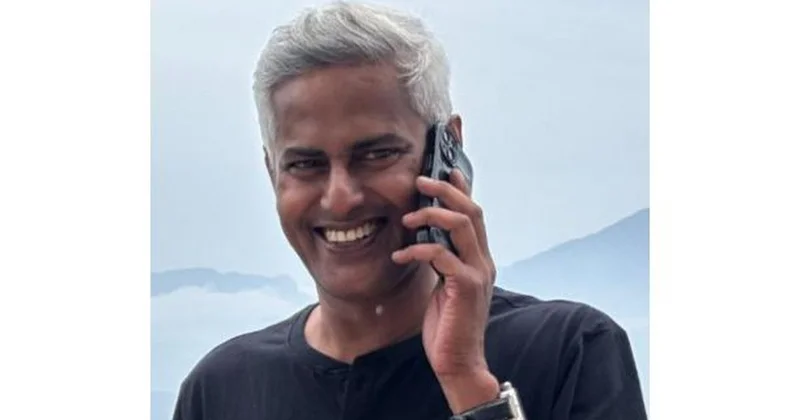
The Gujarat Police seized electronic devices of journalist Ravi Nair, his son and a colleague in simultaneous raids on Monday afternoon in Kerala and Delhi, said a person familiar with the situation.
The matter pertains to social media posts by Nair in October relating to an article he had written in The Washington Post about the Life Insurance Corporation’s investments into the Adani Group, said Paranjoy Guha Thakurta, who has co-authored a book and several articles with Nair.
An employee had filed an FIR on behalf of Adani Ports and Special Economic Zone Limited alleging that Nair “wrote and posted false and fabricated information” that “attempted to tarnish the image and reputation of the Adani Group of Companies”.
Earlier in the day, a court in Ahmedabad had allowed the police to search Nair’s home in Delhi to seize “incriminating evidence, essential documents and electronic devices”.
Nair was not in Delhi, but his son’s laptop and the iPad of a colleague who happened to be there were seized even though they had nothing to do with the case, said Guha Thakurta. Nair was in Kerala. Two of his phones were seized, said Guha Thakurta.
The FIR against Nair lists the sections of the Bharatiya Nyaya Sanhita pertaining to cheating and dishonestly, forgery committed with the intent to harm the reputation of any party and using fake or forged paper or digital file as real.
The devices were seized six days after the Gujarat High Court on August 11 refused to quash the FIR against Nair, The News Minute reported.
The Washington Post report alleged that the LIC, a public sector company, had made investments of $3.9 billion in industrialist Gautam Adani’s Adani Group following directions from the Union government at a time when the conglomerate was facing financial and legal challenges.
The LIC had at the time rejected the report, describing the allegations “that the investment decisions of LIC are influenced by external factors are false, baseless and far from truth”.
The Adani Group had also categorically denied involvement in “any alleged government plans” to direct LIC India funds, according to the newspaper.
The first information report against Nair is based on his social media posts relating to the report, not the article itself.
The complainant stated that the LIC had issued another clarification on October 28 categorically stating that the firm had “neither received any such document nor issued any such document”.
The insurance company had also “clarified that it had not received any information or instructions from the government regarding making investments in companies of the Adani Group”, the complainant said.
The complainant claimed that the clarifications establish that the article written by Nair, “the statements made therein, and the documents and information relied upon in support of those statements were false and fabricated from the very beginning”.
The social media posts by Nair had caused “substantial financial losses” to the Adani Group and its domestic and international investors, the complainant alleged.
The complainant demanded an investigation into the post.
Nair had moved the High Court against the FIR.
The lawyer representing Nair argued before the High Court that a mere denial issued by LIC cannot make the journalist liable for the offence alleged against him.
“...and also mere denial of the facts narrated in the article by the LIC, would not make the documents, based upon which, the article was published by the petitioner in The Washington Post, forged, and therefore, the petitioner herein cannot be prosecuted for the offence in question,” the counsel added.
Guha Thakurta claimed that the FIR was “not just to harass Ravi Nair but to find out the source of the information that he has used in an article in The Washington Post”.
We welcome your comments at letters@scroll.in.