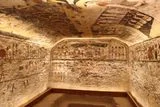
In 1923, the fifth Earl of Carnarvon died, aged 56, in a hotel room in Cairo. It did not matter that the cause of death was reported as pneumonia brought on by an infected mosquito bite or that a near-fatal car crash in 1903 had left the aristocrat prone to severe lung infections. The newspapers attributed his demise to a more supernatural cause.
Just months earlier, Lord Carnarvon had been at the opening of King Tutankhamun’s tomb, and many believed his death was a result of the mummy’s curse, according to The Lancet.
While the curse is fiction, handling mummified remains is not a danger-free activity. Scientists writing in the International Journal of Cultural Property have discovered signs of potentially hazardous growth on artifacts sold online. This, the study’s authors said, poses a risk to buyers, sellers and postal workers.
“The rise of the internet, especially social media, has amplified international trafficking and driven demand for unique cultural heritage, including mummified humans and animals,” lead author Kirsty Squires, Professor of Human Bioarchaeology at the University of Staffordshire, U.K., said in a statement.
“However, these preserved remains pose health and biosecurity risks, due to the toxicity of embalming methods and/or suboptimal storage that can promote microbial growth.”
Read More: 700-Year-Old Mummy Reveals Bacterium That Causes Scarlet Fever in the Americas Before Europeans
Signs Of Microbial Growth On Mummified Remains
Mummies have been a source of fascination for centuries. In the nineteenth century, members of European high society would gather for unwrapping parties. Today, a murky — and often illicit — trade in mummified remains exists online. This, according to researchers, raises certain health and safety concerns.
To find out more, Squires and colleagues analyzed 128 posts uploaded to various e-commerce sites, auction houses, and Meta platforms between 2015 and 2025. These included images of hands, feet, and heads in varying states of completeness, some for sale and others just for display. Almost half (43.1 percent) were listed as originating from Egypt, and around a fifth (20.6 percent) as originating from South America.
Of these, 13 posts (all collected from Facebook) contained signs of fungal colonization, suggesting inappropriate storage practices, the researchers said. While the team was unable to identify the bacteria, fungi, or yeast responsible for microbial growth, they observed visible evidence, including black spots and biofilms.
The researchers added that buyers and sellers may avoid showing tissue that is obviously degraded, and microbial growth might not always be visible, which would suggest the true number could be higher.
Meanwhile, the researchers note, little information on safe handling was included in sales posts. This is despite the fact that mummified remains can contain toxic chemicals used in the embalming process (such as arsenic, mercury and lead), and that poor storage conditions can accelerate fungal growth. Some images even showed people holding remains without gloves.
In response, the researchers call for clearer guidance and stronger oversight.
“There is also evidence to show that mummified remains are being mailed to buyers, both nationally and internationally, with little (if any) consideration of the health and safety implications of these actions,” said Squires. “Clearer, more prominent guidelines are needed to ensure buyers and sellers are unable to misinterpret or find loopholes in shipping policies.”
The Mummy’s Curse — Or A Fungus?
There continues to be debate over the death of Lord Carnarvon, with some suggesting that inhalation of Aspergillus spores in King Tut's tomb was a contributing factor.
Fungal spores that have lain dormant for centuries can become airborne when disturbed, posing a danger to human health — especially for immunocompromised individuals. In the 1970s, ten of twelve conservators present at the opening of King Casimir IV Jagiellon’s tomb died shortly thereafter, and it is widely believed that these deaths were caused by inhalation of Aspergillus spores present in high concentrations in the tomb, according to the study.
The researchers note there is a small likelihood that historical mummified remains will cause disease in an otherwise healthy person, but point out that those with an already weakened immune system may be more at risk.
Read More: 2,000-Year-Old Mummies Show Ancient Egyptians Had Back and Hip Pain, Too
Article Sources
Our writers at Discovermagazine.com use peer-reviewed studies and high-quality sources for our articles, and our editors review for scientific accuracy and editorial standards. Review the sources used below for this article:
- This article references information from a study published in the International Journal of Cultural Property:The real mummy’s curse: Health risks associated with the sale and trade of mummified remains
- This article references information from The Lancet: The death of Lord Carnarvon
- This article references information from The Lancet: Lord Carnarvon's death: the curse of aspergillosis?