Representatives from the aged-care sector are welcoming a mammoth report calling for major systemic reform, with one saying everyone agrees that doing nothing but pumping more money into it wasn't going to work.
Minister for Seniors Casey Costello says "there's no denying there's a significant price tag attached" to the report's recommendations.
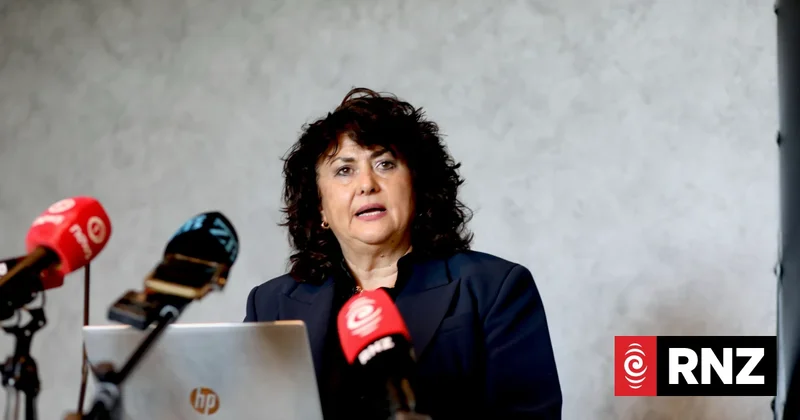
Aged Care Association head Tracey Martin says she's pleased to see a shift from conversations about the problem to having some about solutions.
"The system itself is fragmented and disconnected, and it's not just money that is sometimes falling through those cracks, it's human beings."
Aged Care Commissioner Erin James also welcomed the report, but said her key focus was ensuring the reforms were grounded in improving quality of care and upholding the rights of older people.
The Ministerial Advisory Group on Aged Care in New Zealand, chaired by former Labour health minister David Cunliffe, has made 40 recommendations, including the government committing to "significant price uplifts" and lowering the threshold at which people with assets must pay more towards their care.
The report stated current settings could not meet future demand "safely, equitably or sustainably, without major deliberate system change", and the cheapest option would be to reform the system.
Martin told RNZ the group was right to suggest a more integrated system.
"Aged care is healthcare," she said. "We're part of a continuum of care, so we need to be working more closely together."
She said there were a lot of "moving parts" in their recommendations, but where people were willing, "anything's achievable".
Some of the suggestions - including differentiated room prices - were new to her and she'd need to make her way through them.
"A higher amount being paid on a daily basis for a brand new room compared to a new room compared to an old room," she explained.
"I really need to get my head around that, because on first blush, I'm worried that it will negatively impact small owner operators, charities, and not-for-profits, because they have the oldest stock."
Martin wasn't surprised at the overall costs and said the reality was this group of New Zealanders who had recently been "the bulk of the taxpaying public" were getting older.
"This was always going to cost more money", but she suggested ensuring every dollar spent was done so efficiently and effectively.
There would also need to be a conversation about intergenerational wealth, and "those who have money paying for their living expenses and their accommodation expenses", Martin said.
She encouraged the government to take time to digest the report - "let's not do anything rash".
In the next few months, she hoped to meet with sector representatives to look at where they agreed, and also the "niggly bits" that needed to be discussed and "make sure there's no unintended consequences".
Aged Care Commissioner Erin James told RNZ the current aged-care system was under significant strain and wanted quality of care to remain the focus of any future system.
She acknowledged urgency was needed to consider how care was delivered to a "rapidly ageing population", but the critical question was whether it would make care for older people better and safer.
James supported increasing access to home-based care, which was "highly desirable" for many older people. She said it also introduced increased risk of harm.
Previously, concerns had been raised about the lack of regulatory levers in respect of home care, James said, which was provided by a "largely unregulated workforce in a person's home".
She said accessibility of care, wherever it was provided, was a critical component of "safe, rights-based, person-centered care".
"My role as the aged-care commissioner is to ensure that older people's rights remain embedded in in the design of any future system."
James was also pleased the advisory group engaged with the issue of workforce.
"A comprehensive strategy about future workforce is a critical part of of any discussion about changes" and it wasn't just capacity, but capability too.
Costello was asked about the report on Checkpoint on Monday, acknowledging the "significant price tag" that came with it.
Asked about the cost to provide the funding uplifts recommended by the group, she was reluctant to be drawn on any specifics, until the Ministry of Health considered the report and reported back with its advice.
"There is significant investment needed, but if we don't invest in the system, everyone ends up in hospital or we end up with really poor health outcomes, further burdening the health system."
She said improving the health of older New Zealanders and keeping them well as long as possible would "produce a return on investment".
Asked about increasing the amount paid by individuals for their care, Costello said the burden of this system to future generations had been discussed repeatedly.
She said there needed to be a "really honest conversation" about the future of aged care. Costello said it was important to put some perspective around whether that was paid for by taxing more New Zealanders or a discussion of "where does that cost recovery come from".
She agreed that healthcare should be delivered by the state, but suggested other components could be considered to make the system more sustainable.
Costello was not prepared to answer in detail who should be considered wealthy enough to pay for care.