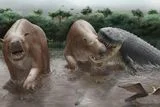
Around 10 million years ago, during the Miocene epoch, an enormous wetland complex more than 300,000 square miles in size covered much of South America. The area, which now includes parts of Brazil, Peru, Ecuador, and Colombia, provided an abundant ecosystem where giant herbivores and fierce predators thrived in the tropical, hyper-diverse landscape.
But which prehistoric hunter would take home the crown as the most feared of them all? Alongside saber-toothed mammals, gigantic flightless birds, and anacondas, crocodilians (some of which grew to 23 feet long) helped keep the booming prey population in check. Now, in a study published in the Journal of Vertebrate Paleontology, an international team of researchers suggests that crocodilians may have been the region’s most significant predator group
"Our new study shows that [crocodilians] in particular were the region's most important predators,” said the study's first author Oscar Wilson, postdoctoral researcher at the University of Helsinki, in a press release. “Especially when it came to hunting large prey."
Giant Crocodiles Thrived in South America’s Miocene Wetlands
Giant ground sloths, armadillo-like glyptodonts, and several groups of ungulates, including astrapotheres and toxodontids — picture a prehistoric rhino with rodent teeth — flourished along the shores of South America’s ancient wetlands. And where large herbivore populations bloom, predators aren’t far behind.
Today, large mammalian carnivores are usually the dominant predators in these environments. However, that may not have been the case during the Middle Miocene.
"There was so much prey available that mammalian predators couldn't have eaten it all," Wilson added in the press release.
One particularly predator-packed location was La Venta in Colombia. Researchers have identified nine different crocodilian species in its fossil record, making it an unusually diverse group of hunters. The sprawling network of rivers, lakes, and other freshwater habitats across northern South America may have fueled this diversity.
Read More: A 25-Inch Crocodile Relative Walked on Two Legs in Late Triassic Forests 225 Million Years Ago
Ancient Caiman Predator Left Its Mark
The biggest predator of the bunch was Purussaurus neivensis, a relative of modern caimans that stretched about 23 feet long and weighed an estimated 4,000 pounds. As the wetland’s apex predator, it may even have helped shape the size and abundance of herbivores.
To investigate how these giant reptiles actually interacted with their prey, the researchers turned to fossils stored in museum collections. Bones can preserve more than just the shape of an extinct animal: bite and tooth marks can act like snapshots of ancient encounters between predators and prey.
The team examined fossils dating to between 10.5 million and 16 million years ago, including three large ungulates from La Venta. Several of their bones bear puncture marks that closely resemble those left by modern crocodiles. The researchers argue that the marks most likely came from Purussaurus.
How Giant Crocodylians May Have Shaped Ancient Ecosystems
"The frequency of marks likely made by Purussaurus suggests that it was an important predator in these tropical ecosystems," Wilson said.
Some of the damage may even reveal how the giant reptiles attacked. Three of the four specimens have tooth punctures around the face. Fractures surrounding the punctures indicate that the predator bit into fresh bone. The researchers propose that Purussaurus may have targeted prey in a way similar to modern saltwater crocodiles.
The parallels with living crocodilians also give researchers a useful window into the behavior of their enormous extinct relatives. Hunting and scavenging by these reptiles may have helped shuttle nutrients between the land and freshwater environments.
More fossils could reveal other clues about these ancient encounters and help paint a fuller picture of a South American ecosystem where crocodilians may have been running the show.
Read More: Ancient Crocodile-Like Babies Challenge What We Know About Tetrapod Evolution
Article Sources
Our writers at Discovermagazine.com use peer-reviewed studies and high-quality sources for our articles, and our editors review for scientific accuracy and editorial standards. Review the sources used below for this article:
- This article references information from a study published in the Journal of Vertebrate Paleontology:Physical evidence of crocodylian predation on ungulates in the Middle Miocene of Colombia
- This article references information from a study published in the Botanical Journal of the Linnean Society:The Miocene wetland of western Amazonia and its role in Neotropical biogeography