Reflecting on the price of her fame, Lady Gaga once said the transaction of celebrity effectively made her everyone’s property. “It’s legal to follow me. It’s legal to stalk me at the beach. And I can’t call the police or ask them to leave,” she said.
Another pop star, Billie Eilish, was more blunt. “I had a panic attack every single night,” she once told Rolling Stone, of the period in her life where fame came crashing in the front door. “I cried for two hours every night. It was really, really bad.”
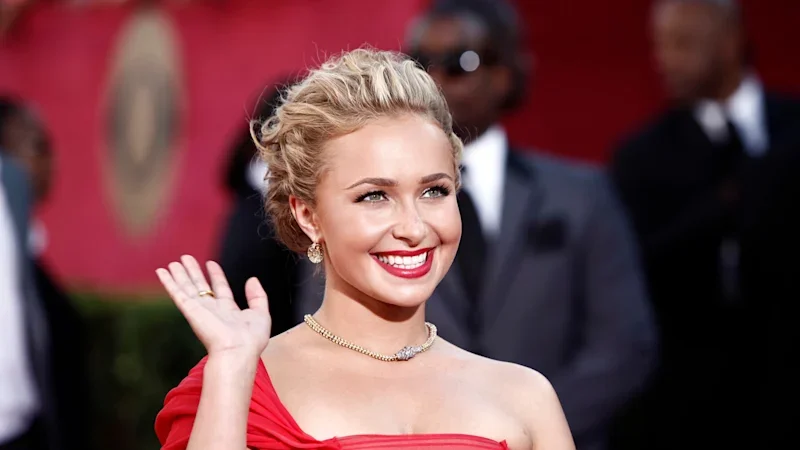
Just how bad can it be? You might well ask Hayden Panettiere the same question, but the 36-year-old New York-born singer and actress was found unresponsive and in cardiac arrest yesterday, and died at the scene. Panettiere can no longer answer that question but her recent memoir gave the world a clear picture of her personal struggles.
By her own admission, Panettiere struggled with addiction, anxiety and postpartum depression. In a May interview with British podcaster and author Jay Shetty, Panettiere said she “did not have a good reaction” to her former partner moving to Europe with their young daughter.
“I was struggling with mental health and anxiety and the postpartum and having to act my way through it and just feeling like I I completely lost myself,” Panettiere said. “I think a misconception is that I have been in the past forced into treatment when, in fact, I have been the one who sought it out.
“It became this horrible cycle for years of battling depression, alcoholism and substance abuse and me just trying to find my way out of this darkness,” Panettiere said. When her daughter was taken to Europe, “I did not have a good reaction to it. I went like mother lion. I would have burnt the world down for my child, so that was incredibly difficult.”
Extraordinarily, Panettiere’s candour cost her professionally. In response to her speaking publicly about her postpartum depression, American cosmetics company Neutrogena ended their 10-year relationship with her. According to Panettiere, the company had a morals clause, which was deemed violated by her talking about her experience with PPD.
The online reaction to her death was swift, and affecting. Known for the Scream film franchise, and the television series Heroes and Nashville, Panettiere’s fame ensured her death became a headline. More than that, it triggered a strong response from fans around the world, shocked and upset at the news.
While the die was not truly cast from the outset – many, many famous people live full and happy lives, without trauma or regret – it is also true to say that Panettiere’s early fame, including television commercials as a child, and American soap operas as a teenager, put her in a high-risk group.
The list of names is long: Britney Spears and Justin Bieber, Miley Cyrus, Lindsay Lohan and Ariana Grande. Corey Haim and Corey Feldman. Jonathan Brandis. Amanda Bynes, River Phoenix, Macaulay Culkin, Drew Barrymore, Gary Coleman. Even Michael Jackson, and as far back as Anissa Jones, Bobby Driscoll and Judy Garland.
Which is not to imply that child stardom is the path to difficulty, addiction and, in some cases, death. But it is true to say that the machinery of fame tends to leave children – at least those without clear, supportive management – vulnerable to exploitation, anxiety and risk.
For every Taylor Swift, who seems to have parlayed teen-aged success into a stable and happy adult career, there is a Jonathan Brandis, River Phoenix or Corey Haim, for whom fame and its associated pressures would cost them their lives.
The modern pressures of fame are so easily identifiable they are almost cliché. Children about whom the world had made up its mind, before they could themselves work out who they were. The fast-spinning social media mouse-wheel means that they hit the stage running, and rarely have time to catch their breath.
But social media alone cannot carry the can. Long before Facebook updates and smart-mouthed bloggers like Perez Hilton – who, in an ironic twist, seemed to have now fallen into the very wringer he famously pushed young celebrities through – child stars were uniquely at risk of abuse, or exploitation, financial or otherwise.
For some, it is the trap set by becoming the breadwinner: for their families, and for agents, managers, publicists and entourages, all of whom depend on their slice of the money to remain functional. Isolated from traditional school environments, child actors and singers lack peer relationships during the formative years of their childhoods. In her memoir, Panettiere revealed her abusive relationship with ex Brian Hickerson and the absence of her daughter drove her to substance abuse.
“Alcohol let me say ‘F--- it, I’ll deal with everything later,’ and within thirty seconds, I was in the zone,” she writes. “It was like coming up for air and breathing again.”
Fame itself – a trench in the battlefield papered with billboards, posters, fan cards, album and magazine covers, and contracts filled with provisions, clauses and caveats – becomes a distorted version of the real world.
Though she starred in films, television series and recorded albums, few people likely ever met the real Hayden Panettiere. They met the avatar – ever smiling, always enthusiastic, effusive and, dare she ever say no, always available. The tears of a clown might be another cliché, but there is a point where always being “on” comes with a cost.
Is there an answer? It’s difficult to see one, short of a complete system reset on the scale of fixing American healthcare, or rebooting the information ecosystem. And not every tragic headline is the end of the story. Drew Barrymore, Justin Bieber and Miley Cyrus have built long-lasting careers.
And for the legions of young fans who watched and listened to Panettiere, and consequently felt they knew her, the grief is fresh, and the pain is very real. While we all feel the depth of loss, it seems uniquely awful for the young. We might recall when John Lennon, Elvis Presley or Princess Diana died. Shock, denial, depression and ultimately acceptance.
For Panettiere’s fans, the death of a seemingly healthy and vibrant young woman, who should have been at the height of her power, at the tender age of 36, is understandably incomprehensible. For those who understand her inner world best, though, there is surely no surprise.
Or, as Australian singer-songwriter Sia said: “People aren’t honest about the horrors of fame, the downsides are so overwhelming that, for me, there is no payoff.”
More: