As space agencies around the world prepare for a historic return to the moon, one of the greatest dangers confronting future astronauts remains an invisible threat: cosmic radiation.
To help map this hazardous environment, Korea’s newly formed space agency has secured a key partnership with NASA to land a domestically developed radiation detector on the lunar south pole.
The Korea AeroSpace Administration (KASA) said Tuesday that it signed an implementation agreement with NASA to fly its Lunar Vehicle Radiation Dosimeter (LVRAD) aboard a commercial American lander targeted for launch in 2030. Developed by the Korea Astronomy and Space Science Institute, the compact instrument will analyze radiation levels directly on the moon's surface, gathering vital data to protect human crew members and sensitive electronics during future long-term missions.
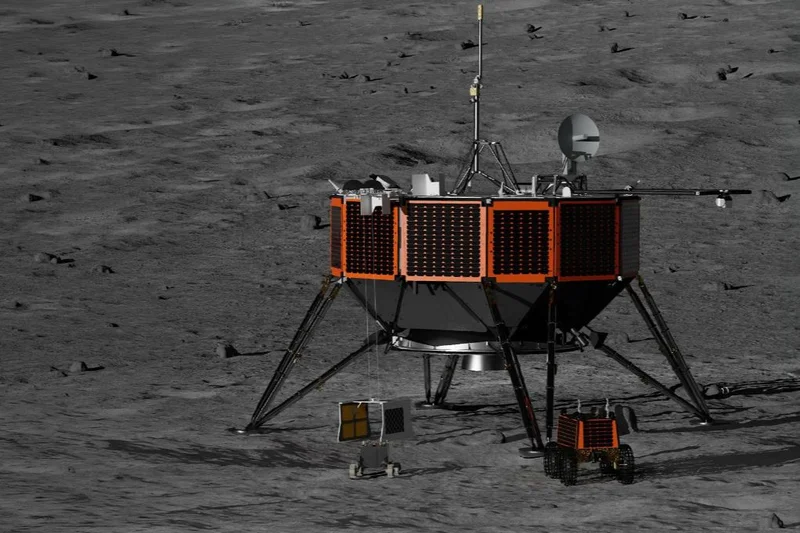
The mission forms part of NASA’s Commercial Lunar Payload Services program, an initiative that contracts private aerospace companies to transport scientific instruments to the moon. Korea’s LVRAD will be integrated into a lander built by Houston-based Intuitive Machines, joining six other scientific payloads designed to study everything from engine plume interactions with lunar dust to the presence of volatile water compounds.
Measuring radiation on the lunar south pole — a prime target for future base camps due to its rich water-ice deposits — presents a complex engineering challenge. Unlike Earth, which is shielded by a thick atmosphere and a powerful magnetic field, the moon is constantly bombarded by high-energy galactic cosmic rays and solar particle events.
To break down these hazards, the LVRAD module combines two primary instruments. A radiation dosimeter and spectrometer will measure total radiation absorption using materials that mimic human tissue, allowing scientists to assess biological impact. Simultaneously, an onboard neutron spectrometer will detect fast and thermal neutrons, mapping the immediate environmental risks on the surface.
KASA plans to complete the flight model of the LVRAD by 2027 before delivering it to NASA for integration onto the Intuitive Machines lander. Once deployed on the moon, NASA will manage data transmissions back to Earth, sharing the findings with international scientific teams.
The agreement underscores Korea’s growing ambition to establish itself as a major player in deep-space exploration following the launch of KASA earlier this year. It also reinforces the deepening bilateral space cooperation between Seoul and Washington as NASA builds out its broader Artemis framework.
"This agreement will serve as a momentum to solidify KASA and NASA's cooperation for future lunar bases," said Oh Tae-seok, KASA administrator. "We will continue to expand international partnerships, advancing our lunar exploration capabilities while strengthening our contributions to the global space science community."
This article was published with the assistance of generative AI and edited by The Korea Times.