In Western Sahara, hospitality is more than a social custom. It is part of the moral character of Sahrawi society. Sahrawis traditionally lived in tents open in four directions, expressing a simple idea: the guest can arrive from any side and will be welcomed. Food, tea, protection and conversation are offered without first asking where the visitor comes from.
But hospitality also carries a responsibility. Visitors are expected to respect the place, its people, their identity and their way of life.
The principle applies to those who come to Western Sahara today, including international filmmakers. Sahrawis do not reject cinema, creativity or cultural exchange. They welcome contact with the world. But entering their land should not require leaving its people, history and identity outside the frame.
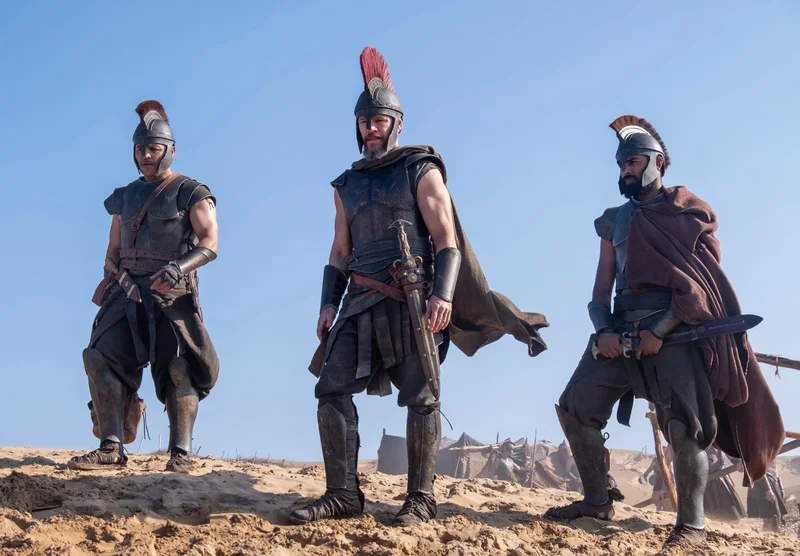
Christopher Nolan’s The Odyssey is built around one of humanity’s oldest stories: war, separation, endurance and the longing to return home. Yet filming part of the epic near Dakhla, in Western Sahara, creates a contradiction that the production cannot simply ignore.
To a filmmaker, the region may offer spectacular coastlines, dunes and a sense of timeless distance. To a major cinematic production, it may appear to be an ideal setting for Homer’s world. But Western Sahara is not an empty landscape available only for cinematic imagination. It is a land with a people, a history and a political status that remains unresolved.
The Sahrawi people did not emerge as a modern nation overnight. For centuries, Western Sahara was home to a network of tribes connected by Hassaniya Arabic, shared cultural traditions and a common relationship with the land. As colonial expansion intensified across north-west Africa, the communities increasingly united to defend their territory and freedom. Sahrawis became known for resisting foreign domination in the region, while many also participated alongside neighbouring peoples in anti-colonial struggles that contributed to the liberation of countries such as Mauritania and Morocco.
Over time, the communities developed a distinct national identity. Today, the Sahrawis are recognised as the Indigenous people of Western Sahara. Their historical homeland is the territory itself, while Sahrawi communities also maintain deep social, cultural and familial ties across neighbouring countries, including Mauritania, Mali, Niger, Algeria and Morocco, reflecting centuries of movement and shared history across the Sahara.
Spain colonised Western Sahara in the late 19th century. When it withdrew in 1975, it did not complete the decolonisation process by allowing the Sahrawi people to exercise their right to self-determination. Instead, under the Madrid Accords, Spain ended its administration while Morocco and Mauritania moved into different parts of the territory. The Polisario Front rejected the arrangement and war followed.
Mauritania withdrew from the conflict in 1979 after signing a peace agreement with the Polisario Front. The conflict with Morocco continued until the United Nations brokered a ceasefire in 1991 on the basis that the people of Western Sahara would decide their future through a referendum on self-determination.
More than three decades later, that referendum has not taken place. Western Sahara remains on the United Nations list of Non-Self-Governing Territories, meaning that its decolonisation process remains unfinished.
The conflict has displaced a significant part of the Sahrawi population. Many continue to live in refugee camps near Tindouf, while others remain in Western Sahara under Moroccan administration. Families have been divided for generations. A military wall continues to separate communities, families and memories.
The Sahrawi people have therefore spent nearly half a century living through an odyssey of their own. The emotional force of The Odyssey comes from the belief that home is not merely a physical location. It is identity, dignity, memory and belonging. These are precisely the things the Sahrawi people have struggled to preserve.
Their aspiration, despite decades of war, exile and separation, is not revenge but a just and lasting peace. Many Sahrawis support peaceful coexistence, including with Morocco, which is itself part of the same African geographical and historical space. They believe the future of North-West Africa should be built on cooperation, mutual respect and shared prosperity rather than prolonged conflict.
For Sahrawis, a lasting peace can be achieved only by respecting the principle at the heart of the United Nations peace process: allowing the people of Western Sahara to freely express their will regarding their political future through a free and fair act of self-determination.
This is what makes the filming of The Odyssey near Dakhla ethically significant. The issue is not hostility towards cinema. Sahrawis can welcome art, creativity and cultural exchange. Culture can connect societies and allow people to encounter histories that politics frequently ignores. The question is whether international productions enter a disputed territory with sufficient awareness of the people whose lives, memories and rights are connected to it.
When a film uses the landscape while ignoring the political and human reality surrounding it, the territory becomes visible while its people remain invisible. The land is welcomed into the image but those who belong to it are left outside the frame. This absence is not neutral.
Cinema has the power to shape how places are understood. When a location is presented as an ordinary and uncontested part of another state, it can gradually acquire that meaning in the public imagination, even when its legal and political status remains unresolved. Cultural representation can therefore normalise what diplomacy has not settled.
Nolan may not have intended to adopt a political position but neutrality does not eliminate the consequences of a production’s choices. Filming permits, logistical arrangements and official partnerships in a disputed territory operate in a structure of power.
A production of this scale should ask more than whether filming is technically possible. It should ask who authorised access, which narrative benefits from the production’s presence and whether the people most affected were consulted or even acknowledged.
Official permission from the authority controlling a territory should not automatically be treated as complete ethical consent. In disputed lands, legality, representation and consent require deeper examination.
The African dimension also matters. Western Sahara is not merely a dispute over territory or diplomatic language. It is a test of whether the continent can protect human dignity when a people’s wait for freedom becomes almost permanent. Africa cannot consider its liberation complete while one of its peoples is expected to become invisible simply because their existence makes political arrangements less convenient.
This should not become a campaign against one director or one film. It should instead become an invitation to greater responsibility.
Nolan and Universal Pictures have an opportunity to acknowledge the status of the territory, listen to Sahrawi voices and ensure that the film’s presentation does not erase the people connected to its locations. A clear statement recognising the disputed status and human reality of Western Sahara would carry genuine meaning.
Cultural institutions should also develop stronger standards for working in disputed territories. Human-rights assessments, legal due diligence and consultation with affected communities should become normal parts of production planning.
The Sahrawi people are not asking cinema to solve their conflict. They are asking filmmakers and audiences not to reproduce the same disappearance they have resisted for half a century.
Sahrawi hospitality keeps the doors open to the world. But entering through the doors carries a responsibility: to respect the home, to recognise its people and not to erase the identity of those offering the welcome.
The question is not whether the world should watch The Odyssey. It is whether, while watching it, the world will also see the people left outside the frame.
Mohamed Elbaikam is an independent activist from Western Sahara