Brazil · Politics
Key Facts
—Who is Carlos Bolsonaro? A Rio de Janeiro city councilman and the second son of former President Jair Bolsonaro.
—What is ABIN? The Brazilian Intelligence Agency, the country's civilian spy service responsible for collecting and analyzing threats.
—What is the parallel ABIN case? An investigation into an alleged shadow intelligence structure that illegally surveilled politicians, journalists, and Supreme Court justices during the Bolsonaro administration.
—What does 'first instance' mean? The case moves from the Supreme Court to a standard lower federal court, where formal charges, evidence presentation, and a trial can proceed.
—Who else was investigated? Over 30 individuals, including former President Jair Bolsonaro and ex-ABIN director Alexandre Ramagem, though charges against them were dismissed by the Supreme Court.
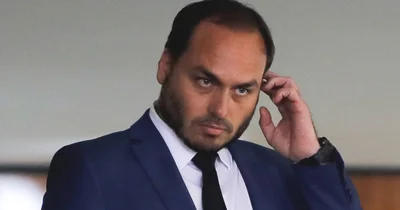
Carlos Bolsonaro, a Rio de Janeiro city councilman and son of former President Jair Bolsonaro, will now face investigation in a lower federal court after Brazil’s Supreme Court shifted his case out of its own jurisdiction on July 20, 2026.
Carlos Bolsonaro is a Brazilian politician and city councillor in Rio de Janeiro.
One-stop reference
Company Intelligence
Every listed company in Latin America — financials, ownership and structure for 1,450+ companies across 26 exchanges, in one place.
RTAsk Rio TimesWhat this means, and what's next›
What the Parallel ABIN Case Alleges
The case centers on accusations that a shadow intelligence structure operated inside the Brazilian Intelligence Agency (ABIN) during Jair Bolsonaro’s 2019–2023 presidency.
Federal Police allege the group illegally monitored Supreme Court justices, legislators, journalists, and political adversaries without judicial authorization.
The scheme reportedly went beyond simple surveillance, with prosecutors describing a systematic effort to intercept communications and unlawfully access devices.
The goal, according to investigators, was to shield family members from legal proceedings while targeting political rivals with the stolen information.
The Alleged Role of Carlos Bolsonaro
Prosecutors place Carlos Bolsonaro in what they describe as the “political core” of the scheme.
He is accused of using illegally obtained information to attack individuals on social media and help run a so-called “hate office” that spread disinformation about Brazil’s electoral system and the Supreme Court.
This “hate office” allegedly functioned as a digital propaganda unit, churning out false narratives to undermine public trust in democratic institutions.
For foreign observers, the accusations paint a picture of a coordinated effort to weaponize state intelligence for personal and political gain, a serious charge in any democracy.
Why the Case Moved to the First Instance
In Brazil’s legal system, the Supreme Court (STF) holds special jurisdiction only over certain high-ranking officials, such as the president and members of Congress.
When STF Justice Alexandre de Moraes concluded that the remaining facts no longer involved officials with that special standing, he ordered the case against Carlos Bolsonaro and others sent to a first-instance federal court in the Federal District.
This procedural shift is significant because it signals that the core of the investigation has moved away from figures with privileged legal status.
For readers unfamiliar with Brazil’s multi-tiered judiciary, think of this as a case moving from a high constitutional court down to a standard federal trial court where everyday criminal proceedings unfold.
What Comes Next in the Lower Court
The transfer to the first instance allows prosecutors to file formal charges and present evidence in a standard criminal proceeding.
Unlike a Supreme Court inquiry, a lower court trial can move through witness testimony, defense arguments, and ultimately a ruling from a federal judge.
This means the case could now advance at a faster pace, with more procedural transparency as evidence is openly debated.
For expats and investors watching Brazil’s political stability, a swift and fair lower-court process would signal that the judiciary can handle sensitive cases without indefinite delays.
Background: A Family Under Legal Scrutiny
The parallel ABIN case is just one of several legal fronts facing the Bolsonaro family, a political dynasty that has dominated Brazilian right-wing politics for years.
Court documents from July 2024 had already revealed that ABIN allegedly surveilled tax auditors investigating Flavio Bolsonaro, Carlos’s brother, hinting at a pattern of using state resources for family protection.
Former President Jair Bolsonaro and ex-ABIN director Alexandre Ramagem were also named in the Federal Police report, though Justice Moraes dismissed the investigation against them on July 20, 2026, citing a lack of direct link to anti-democratic aims.
The dismissal for the elder Bolsonaro does not erase the broader cloud over his political legacy, especially as the 2026 election cycle intensifies.
What It Means for Expats and Investors
For foreign residents and investors, the case highlights both the resilience and the complexity of Brazil’s democratic institutions.
The fact that a former president’s son can be investigated in a standard court demonstrates that judicial oversight functions, yet the slow pace and political overtones may worry those seeking stable governance.
Any prolonged legal saga involving the Bolsonaro name could fuel political polarization, potentially affecting market sentiment and the broader investment climate in Latin America’s largest economy.
Still, the transfer to a lower court may also be read as a normalization of the case, moving it away from the politically charged atmosphere of the Supreme Court.
Frequently Asked Questions
What did the Supreme Court decide about Jair Bolsonaro?
Justice Alexandre de Moraes dismissed the investigation into former President Jair Bolsonaro and ex-ABIN director Alexandre Ramagem, citing a lack of direct link to anti-democratic aims. This means the former president will not face charges in this specific case, though he remains entangled in other legal proceedings.
Has Carlos Bolsonaro responded to the allegations?
Yes, his defense has consistently denied any involvement, stating he had "no connection with ABIN" and never requested or received information from agency personnel. In June 2025, after being formally charged, he posted on social media implying the investigation was politically motivated by President Lula's administration ahead of the 2026 elections.
How many people were implicated in the Federal Police report?
Over 30 individuals were named in the investigation, including former ABIN officials, a Federal Police officer, and an Army lieutenant previously convicted in a separate attempted coup case. The wide net cast by investigators underscores the scale of the alleged shadow intelligence operation.