Back on March 24, a little over three weeks into an Iran Conflict which President Donald Trump initially estimated would last for “2 to 4 weeks,” I wrote here that drivers should expect gasoline prices at the pump to be higher for longer than the White House was then projecting. That piece was in part based on a report from Enverus presciently titled “The Return of $100 Oil,” and partly on my own assessment of the forces then in play in global oil markets.
Drivers and consumers enjoyed a break in June following the announced ceasefire and Memorandum of Understanding between the U.S. and Iran’s multi-pronged ruling regime. The break was so substantial that the West Texas Intermediate domestic index prices briefly dropped below $70/bbl before President Trump declared the ceasefire to be over on July 10 after repeated violations of the MOU by both sides. Much has changed related to the conflict since that time, and identifying the positive developments is increasingly difficult.
Houthi Rebels Toss Another Match On The Fire
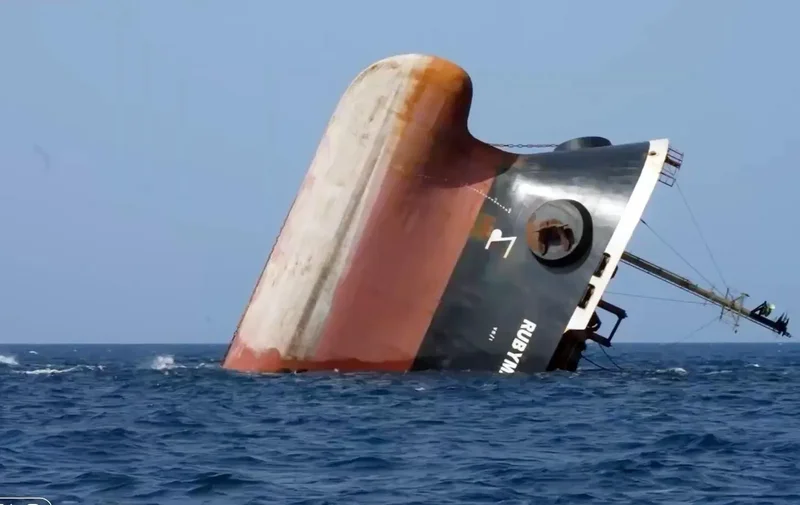
The latest wild card tossed into the inflammatory mix came early this week in the form of renewed threats by the Iran-sponsored Houthi rebels in Yemen to once again fire at shipping traffic attempting to transit the Bab el-Mandeb Strait at the southern end of the Red Sea. The Houthi threat carried enough weight to force several big tankers loaded with Saudi Arabian crude to make U-turns on Tuesday as they approached the Strait and head back to the King Fahd Industrial Port in Yanbu where tankers are loaded.
The new Red Sea-centered crisis escalated Wednesday when a Houthi missile hit the Saudi flagged tanker Encelia, setting it aflame. That act of war will almost certainly heavily impede further tanker traffic through Bab el-Mandeb, if not shut it down entirely for the time being. It also sent crude prices - which were already up more than 30% from the June lows - soaring again, with the international Brent index breaking above the $100/barrel mark as of this writing on June 23.
Thus does the specter of $100 oil - and the higher gasoline prices which will inevitably result - rear its head again in the middle of the U.S. summer driving season. This time, the factors currently influencing the global oil market are more concerning than those that existed in March, leading to an outlook for gasoline prices at the pump to again rise higher for longer.
Oil Market Cushions Are Rapidly Diminishing
Here, it’s key to remember that, when this conflict began on March 1, oil markets enjoyed several cushioning factors which have thus far helped keep a lid on oil price spikes.
Those cushions included:
- Healthy inventories of oil already on the water, i.e., in storage on tanker ships around the world.
- High volumes of crude stored in land-based tank farms like Cushing, Oklahoma.
- Big volumes of crude stored in strategic petroleum reserves maintained by the United States and other nations.
- Saudi Arabia’s ability to bypass Hormuz by loading as much as 7 million barrels per day (bpd) into its own East/West pipeline.
Soon after March 1, member countries of the International Energy Agency (IEA) agreed to tap their SPRs to add several million barrels per day (bpd) to the global supply. China decided around the same time to add another cushion to the mix, tapping its own strategic reserves for as much as 4 million bpd to offset lost imports from the Middle East.
All those cushioning factors, along with rising production in the U.S., Venezuela, Guyana, and other Western Hemisphere nations, combined to cut what many initially feared would become a supply deficit of up to 20 million bpd down to a fraction of that. When the Strait of Hormuz briefly reopened to healthy tanker traffic in mid-June, the market quickly returned to a glut balance.
Factors Impacting Gasoline Prices Have Radically Shifted
Now, the situation is radically different. The healthy inventories of oil on the water and in land-based tank farms are heavily depleted, as are the balances held in IEA-member SPRs. China’s government is now making noises about a need to resume crude imports as its own national reserve falls below comfort levels. And now, the Houthis have dramatically diminished Saudi Arabia’s ability to ship its crude out onto the open market.
With Bab el-Mandeb passage now problematic, Saudi Arabia’s 7 million bpd transported via pipeline to the Red Sea have only one outlet - the Suez Canal - out to the open market. The trouble there is that the Suez cannot handle VLCC’s, the largest class of oil tankers which can carry upwards of 2 million barrels in a single load.
Absent a quick resolution, the Saudis will be forced to source a higher number of smaller ships to carry their oil, and the tankers carrying cargoes to Asian markets must now transit all the way around the African continent to get there, adding weeks to their journeys.
White House Offers Little Hope For Lower Gasoline Prices
Unfortunately, recent comments by U.S. Secretary of State Marco Rubio offer little comfort that any such quick resolution is in the offing. As reported by CNBC, Rubio told reporters Wednesday night that Iran is still unwilling to make a deal with the U.S. administration, “at least not one they are willing to live by.”
When asked about the situation related to the Houthis firing on Red Sea shipping, Rubio would only say “I hope that they will stop. They shouldn’t really do that. They got suckered into this by the Iranians.” The U.S. government offering only hope that the Houthis will reconsider their aggression offers little comfort to Middle East oil producers or shipping companies who don’t want their ships and seaborne personnel placed in harm’s way.
The latest remarks by President Trump also fail to offer much hope for a quick resolution. Speaking to a rally on Wednesday, the President said, "We don't need straits. We don't need anything. We don't need the Hormuz Strait, but we do it because we have to do it, because we cannot let Iran have a nuclear weapon. It’s very simple."
The President is right in his contention that America doesn’t necessarily need these choke points to be open in order to have enough oil for its own needs. The U.S. produces more oil than any other nation by far, controls the flow of another 1.3 million or so bpd from Venezuela, and can obtain the imports it needs from other countries in the Western Hemisphere.
High Gasoline Prices Mean Economic Pain
But that doesn’t mean there will be no economic pain for Americans from all of this. The average price for a gallon of regular is already back over the $4/gallon mark, and current crude prices would sustain a $4.50 price in the near future. The higher the crude price goes, the closer gas prices will climb back near the crucial benchmark of $5.00/gallon borne by consumers for weeks or months during the presidencies of George W. Bush, Barack Obama, and Joe Biden.
So, brace for impact, drivers: $100 oil is back, with all the attendant impacts to your pocketbooks that means. Expect gasoline prices at the pump to go even higher than they already are, and possibly for longer than anyone currently expects.