- MORE: New twist in mystery of dead and missing scientists: Experts uncover chilling link that ties four unsolved cases together
- See more Daily Mail on Google - save us as a Preferred Source
The mysterious death of a US nuclear laboratory worker has taken a chilling turn one year after she vanished without a trace.
New Mexico State Police confirmed to the Daily Mail that a handgun discovered near Melissa Casias’ remains had been purchased by her husband, Mark, who is an avid hunter.
The 53-year-old’s skeleton was discovered on May 28 in a remote section of Carson National Forest, approximately six miles from her Taos home.
A newly released autopsy revealed that Casias had been shot in the head around the time of her death, but medical investigators could not determine whether she died by suicide or if foul play was involved.
State Police told the Daily Mail that the investigation is still active but did not reveal if they have named any suspects in the case, if Mark has been interviewed regarding the gun found near his wife's body or if that weapon was fired.
Casias’ parents and siblings recently said they did not believe she had taken her own life, claiming shocking irregularities at the scene pointed to foul play.
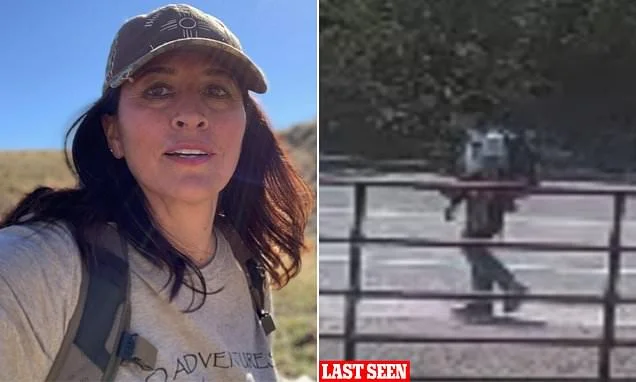
Casias was last seen leaving her home on foot on June 26, 2025, nearly 11 months before her remains were found. Shortly before disappearing, she had dropped her husband off at Los Alamos National Laboratory, where they both worked as non-scientific staff.
She later returned home, reportedly because she had forgotten her security badge, delivered lunch to her daughter’s workplace and was last spotted walking alone along State Road 518 at approximately 2.20pm.
Melissa Casias worked at the Los Alamos National Laboratory, a long-running nuclear research facility, before disappearing on June 26 last year. Her remains were found on May 28
Casias pictured with her husband, Mark Casias
The New Mexico Office of the Medical Investigator revealed the skeletal remains of Casias, which were recovered from a remote location in Carson National Forest
Casias' relatives and a team of volunteers searched the remote area where the woman's body was found and unearthed a treasure trove of evidence which had been left behind by police when they officially ruled the scene was clear.
According to attorney David Adams, a lawyer the family hired due to their concerns over the handling of the investigation, this new evidence included bloody clothing and bones, hair appearing to be from someone other than Casias and a tobacco pouch.
Adams told the Daily Mail last month that Casias was not known to ever use tobacco.
On August 7, Casias' relatives wrote on Facebook: 'We want to make something very clear: The Mondragon family AND Melissa's closest friends do not believe Melissa took her own life!'
'Those who knew and loved Melissa know how deeply she loved her daughter. From the very beginning, her family has maintained that Melissa would not willingly leave her daughter behind, and they do not believe she would have ended her own life,' they continued.
'The condition and circumstances in which Melissa's remains were ultimately discovered have only raised more questions for her family.'
Casias' daughter, Sierra, who is believed to be the last person to see Casias alive, said in a separate statement that she is not connected to her relative's private investigation and pushed back against claims of foul play.
In a statement reported by KOAT 7, she said: 'The ruling of “undetermined” does not mean that anyone has been found responsible for my mother’s death, nor should it be used as an opportunity to create a narrative that the evidence does not establish.'
Melissa Casias (Left) pictured with her daughter, Sierra. Her daughter is believed to be the last family member to see Casias alive on June 26, 2025
Authorities have revealed the suspected trajectory of the bullet which may have killed Melissa Casias
Casias' daughter added the investigation has revealed that her mother was carrying a backpack when she disappeared in 2025.
'Her backpack was located near her body, and a gun holster was found inside of that backpack. A bottle of alcohol was also located in the vicinity, along with pieces of paper that investigators indicated could potentially be notes,' Casias' daughter continued.
'We understand that evidence from the scene has been subject to additional forensic examination that we are still waiting on answers for.'
Sierra did not address the revelation that her father's weapon, reported to be a black Springfield handgun purchased in 2020, was found near the skeletal remains.
Casias' daughter had previously insisted the LANL employee did not own any handguns and did not carry a weapon to her job at the nuclear lab.
While she urged the public and media to avoid speculating on the case beyond what the autopsy has revealed, the circumstances surrounding Casias' final moments continue to set off alarms for both law enforcement and national intelligence experts.
The latest red flag has been tied directly to the medical investigator's examination of Casias' skull, which showed a large exit wound on the left side of the skull.
Newly released diagrams of the death revealed the suspected trajectory of the bullet authorities believe may have killed Casias - traveling through the right side of Casias' cranial base, around the area where the lower jaw and neck meet the head.
The bullet is said to have damaged the topmost neck bone, known as the C1 vertebra, before exiting through the left temple. The bullet has not been recovered.
The nuclear lab worker's body was found alongside a handgun in the McGaffey Ridge area of Carson National Forest
This suspected path through Casias' skull has raised serious doubts that such a gunshot wound would point to a suicide.
An anonymous source within law enforcement told the Daily Mail that the angle Casias would have needed to be holding the handgun at was extremely implausible.
'The kickback would have made the gun go straight up. That's ridiculous,' the source claimed, alleging that the medical investigator's findings point to murder.
Officially, New Mexico authorities said the decomposition of Casias' body was so severe there is no way to tell if the death was a suicide or murder, and also no way to tell how close the gun was to Casias' head when it was fired.
Former members of the FBI have also questioned the circumstances of Casias' disappearance, including the fact that both of her phones were left behind in her home and had been completely wiped of all information on the day she vanished.
Former FBI agent Ben Hansen told the Brian Entin Investigates podcast: 'Just what they have shared is highly, highly suspicious. I don't know if I give a percentage, but it's kind of more like an 80 percent foul play versus someone who's depressed, is the way I see it.'
'I think either there was an influence from the outside and I'm not saying that it's energy-directed anything, but foreign adversary influence of some sort,' Hansen alleged.
'The other option is they were enticed. This is the behavior in all these cases; it looks like they thought they were coming back.'
The final image of Casias alive came from a surveillance camera near State Road 518 in New Mexico, approximately three miles from her home
Casias' work at LANL has also raised fears that the administrative assistant may have been the target of a larger plot to steal classified government data on nuclear research or rocket technology.
Her disappearance has been linked to several other missing person cases in the Southwest, including a retired employee from LANL and former US Air Force General William Neil McCasland, who oversaw the military's ties to research at the nuclear lab.
Overall, more than ten nuclear lab workers, NASA scientists and military personnel have been connected to the so-called 'missing scientist' case over the last year, with the White House ordering the FBI to investigate for any ties between the deaths and disappearances.
According to Adams, however, there have been no signs that the FBI has been looking into the death of Casias.